What happened
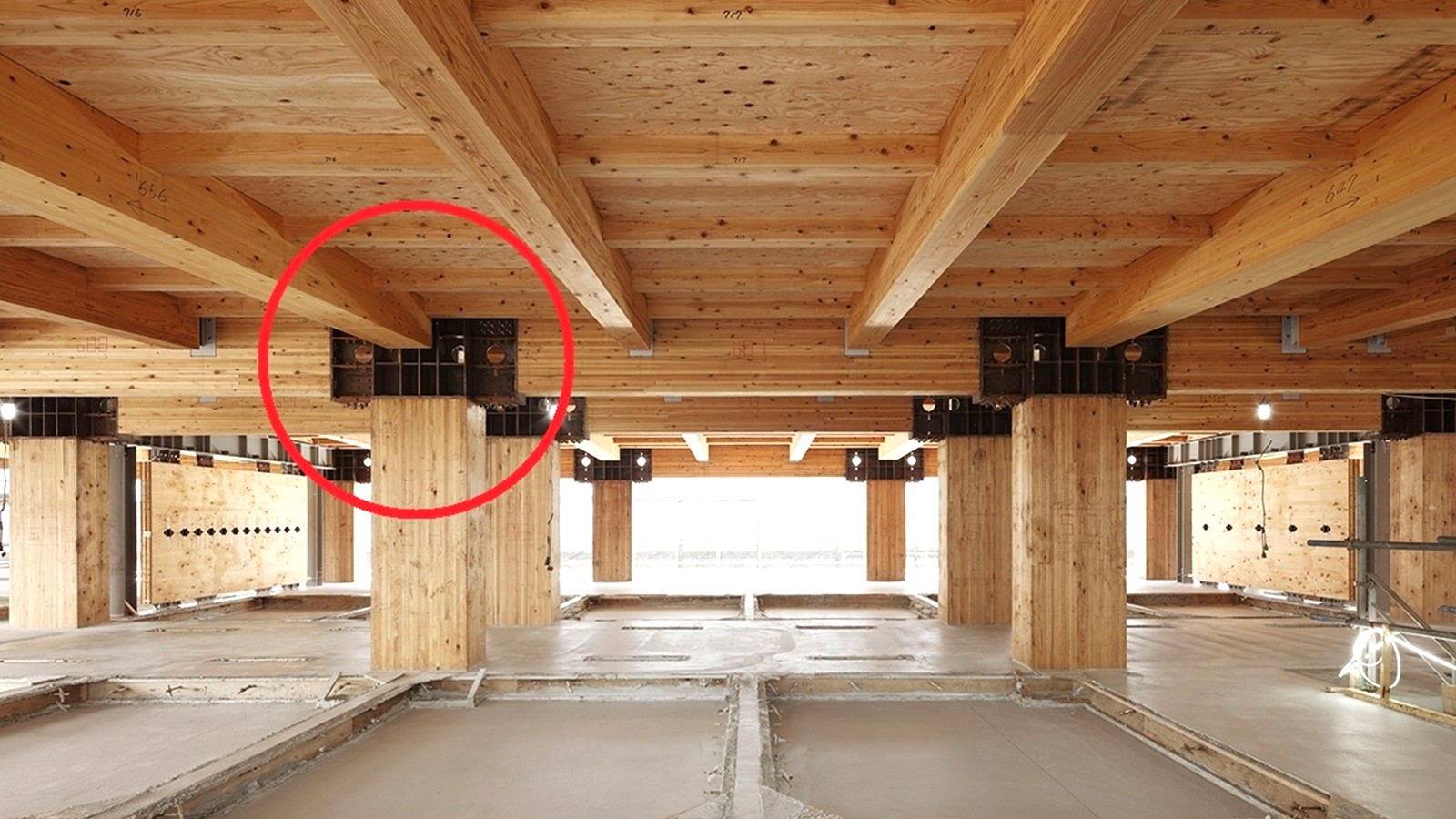
Nishimatsu Construction and 20 other partners (including structural design firms, universities, and timber suppliers) jointly developed a new timber construction method called P&UA (Panel & Unbonded Anchor). The method was first deployed in a 5-story wooden dormitory for Itochu Corporation employees in Kawasaki, completed in March 2025. The structure uses about 280m³ of domestic Japanese cypress and cedar, and reduces carbon dioxide emissions by about 460 tons compared to an equivalent steel-frame building.
Why it matters
The P&UA method allows timber beams and columns to be joined using the same assembly logic as steel-frame construction, making it practical for builders already experienced in steel work. The core innovation—a technique called GIUA (Glued-in Unbonded Anchor)—uses epoxy adhesive to anchor steel rods to timber ends with a non-bonded section that absorbs seismic energy and deformation, lowering the structural risk of tall timber buildings.
What to watch
The consortium plans to expand deployment beyond the dormitory to university facilities and apartment buildings next, signaling a broader shift toward timber in mid-rise construction segments that have historically relied on steel or reinforced concrete.
Ask the AI about this article →
For example, today's edition would include:
AI-summarized, only the topics you pick — one digest a day via Email, Slack, or Discord.
Free · takes 30 seconds · unsubscribe anytimeWhat is AIToday? →
Ask AI anything about this article. Q&As are published on this page for other readers too.
BHP, the world's largest mining company by market capitalization, has deployed AI across its operations

Team Liquid announced a new five-year extension of its long-running collaboration with Dell Technologies' Alie…

A University of Mississippi study published in Journal of Interactive Advertising found that AI ads succeed wh…

Goldman Sachs Research says AI supply and demand won't balance until the first half of 2028
Lam Research broke ground yesterday on a new lab in Tualatin, Oregon

Visa, Mastercard, and Fiserv joined the Agentic Payments Alliance (APA), a 26-company coalition led by stablec…