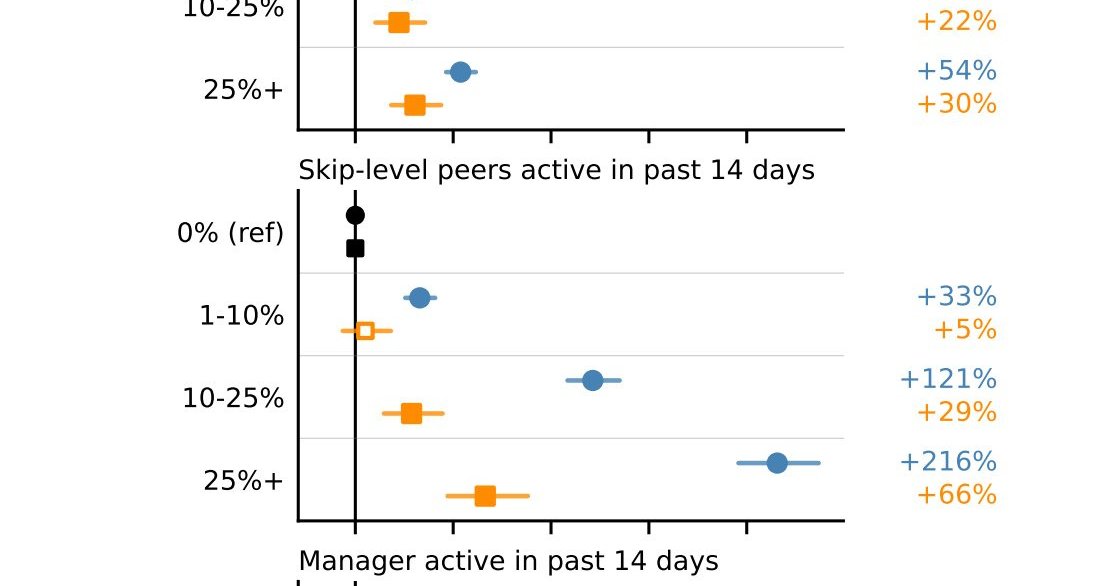
What happened
NAEOS (Nusantara Engineering & Architecture Operating System), an open-source declarative platform written in Go, transforms software specifications (written in YAML) into working code across multiple languages—Go, TypeScript, Python, Java, Rust—and integrates with six AI coding tools (GitHub Copilot, Claude, Cursor, Gemini, Codex, OpenCode). Version 3.1.0 is currently active, adding pipeline caching and run-level profiling.
Why it matters
Instead of writing code directly, teams describe their system once in a specification file, and NAEOS orchestrates code generation, validation, and alignment across the project lifecycle. The platform includes an engineering runtime (NEIR—a unified internal model), 67 CLI commands, a marketplace for industry profiles, and governance/audit layers—addressing the shift toward specification-driven development and AI-assisted engineering.
What to watch
The roadmap includes v4.0 and beyond (LSP server for IDE integration, schema-based validation, and architecture pattern support). The framework is published under Apache License 2.0 on GitHub at github.com/NAEOS-foundation/naeos, with 57 specification documents and a whitepaper available for integration into AI tools and coding agents.
Summaries like this, in your inbox every morning.
NAEOS addresses a shift in software engineering toward specification-first and AI-assisted development. Rather than generating boilerplate or scaffolding, the platform treats a specification as the single source of truth throughout a project's lifecycle, with a parser, normalizer, resolver, and validator that catch circular dependencies, port conflicts, and module boundary violations before code generation begins. The framework's integration with six mainstream AI coding assistants (via a compiler that transforms NEIR into tool-specific instructions) positions it at the intersection of declarative infrastructure-as-code practices and LLM-driven development. Its marketplace for industry profiles (SaaS, AI Agent, FinTech, Healthcare, Government) and plugin ecosystem reflect an intent to be extensible across domains.
The roadmap shows active development: v1.0 stabilized the 67-command CLI; v2.x added multi-tenancy and compliance; v3.x focused on performance and caching. The project publishes 57 specification documents (NES-000 to NES-054) and offers a MCP (Model Context Protocol) server, enabling integration with AI agents that need structured access to project models. This makes NAEOS relevant not only to developers seeking to reduce manual coding, but to organizations scaling AI-driven development practices across teams and languages.
Pick your industry and the AI tools you use, and get news related to your work every day.
Free · 30 seconds with Google · unsubscribe anytimeWhat is AIToday? →
Ask AI anything about this article. The AI reads this article, earlier AIToday articles, and Wikipedia, and cites its sources. Q&As are published on this page for other readers too.
Reflection AI introduced Beam, an open-weight model for agentic coding and long-horizon tasks, with 501 billio…
The walkthrough points the CLI at a local mock via the ANTHROPIC_BASE_URL environment variable

A non-engineer operator says one person ships four smartphone apps on Google Play, three on the App Store, wit…
A Zenn guide explains systems to install before letting AI agents, bots or scheduled jobs post, send, publish…
A developer released agent-guardrails, a one-script Python standard-library plugin that guards Bash, Write, Ed…
Researchers at Microsoft published a paper titled "Adoption and Impact of Command-Line AI Coding Agents: A Stu…