What happened
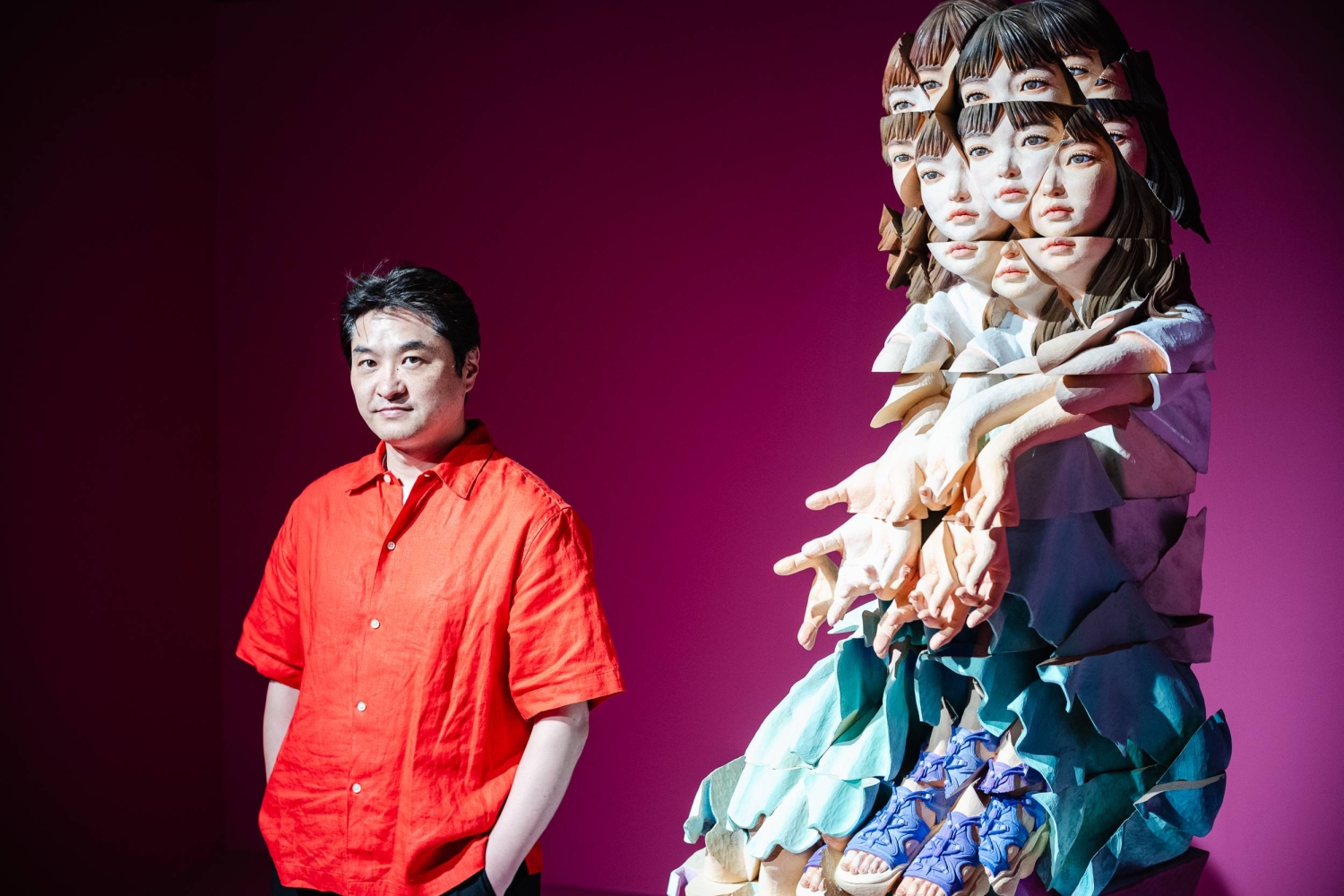
Yoshitoshi Kanemaki has created an ongoing sculpture series called "Prism" that features life-size and miniature wooden figures carved from a single block—camphor, cypress, ginkgo, cherry, and other types—then painted in vivid colors. The sculptures depict women and sometimes men with dozens of eyes, cascading faces, and extra fingers, appearing distorted as though from a corrupted digital file. His current exhibition at Shibuya Parco, titled "Emergence Entity," includes "Mirror Prism," a centerpiece based on actress Anna Yamada.
Why it matters
Kanemaki uses the sculptures to express human emotional complexity and the gap between a person's external appearance and hidden self. The figures deliberately evoke discomfort mixed with fascination, inviting viewers to reconsider what they assume about the people around them. The exhibition is deliberately positioned at Shibuya Parco's fourth-floor gallery, which lacks a front door and sits among fashion stores, to make art accessible to casual visitors without prior knowledge of his work.
What to watch
Kanemaki draws inspiration from Buddhist statues, especially depictions of arhats known for their deeply emotional expressions. Most of the women and men he carves come from his own imagination, though "Mirror Prism" is the exception—created after he saw Anna Yamada in a car advertisement and was impressed by her acting ability across different roles.
Summaries like this, in your inbox every morning.
Pick your industry and the AI tools you use, and get news related to your work every day.
Free · 30 seconds with Google · unsubscribe anytimeWhat is AIToday? →
Ask AI anything about this article. The AI reads this article, earlier AIToday articles, and Wikipedia, and cites its sources. Q&As are published on this page for other readers too.

