Nvidia stock is trading at its cheapest valuation in five years. The company dominates AI chip production and infrastructure, growing revenue 85% year over year.
Yet the market worries that faster-growing competitors and cheaper AI platforms could threaten its lead. Earnings are due Aug.
26.
What happened
Nvidia stock is trading at under 33.3 times trailing 12-month earnings, near a 5-year low, as the company prepares to report fiscal 2027 second-quarter results (ended July 27) on Wednesday, Aug. 26. Year-to-date, the stock is up 16.8%, trailing the S&P 500's 12.2% gain.
Why it matters
Nvidia dominates AI chips and infrastructure with revenue growing 85% year over year in the first quarter, and sits at the center of spending from hyperscalers like Amazon, Alphabet, and Microsoft—which are expected to invest about $1 trillion globally in 2026 alone, per Goldman Sachs. However, the market is concerned about rapidly changing AI competition and dozens of new platforms that may be cheaper to run, raising questions about whether Nvidia's advantage will hold.
What to watch
Nvidia reports earnings on Aug. 26. The company recently announced deals with Goldman Sachs and Blackstone to build data factories for lease, and is providing funding for OpenAI to lease a data center in Ohio for 20 years. On a price-to-sales basis, the stock trades at 21 times trailing 12-month sales, considered fairly expensive.
Ask the AI about this article →
Nvidia's valuation compression reflects a shift in market sentiment. While the company's growth metrics—85% revenue growth year over year, high profitability, and consistent earnings beats—remain exceptional, investors are pricing in uncertainty about its long-term competitive moat. The stock's 5-year valuation low comes at a time when Nvidia faces a paradox: AI spending is expected to reach about $1 trillion globally in 2026 alone (per Goldman Sachs), benefiting Nvidia as the primary infrastructure supplier to hyperscalers, yet faster cycles of innovation and the emergence of cheaper alternative platforms have reduced the certainty of that upside. The company has expanded beyond chips into integrated AI development systems—CUDA, AI supercomputers, and now data center leasing partnerships with Goldman Sachs and Blackstone—each designed to deepen its moat, but the market is wary that these moves alone cannot guarantee dominance in a rapidly shifting landscape.
For example, today's edition would include:
AI-summarized, only the topics you pick — one digest a day via Email, Slack, or Discord.
Free · takes 30 seconds · unsubscribe anytimeWhat is AIToday? →
Ask AI anything about this article. Q&As are published on this page for other readers too.
Israeli startup DataAgent Ltd

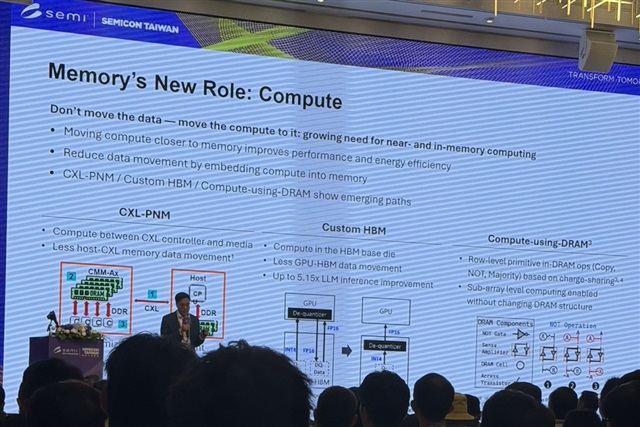
SK Hynix presented a custom HBM concept at SEMICON Taiwan 2026, where compute functions are placed in the base…
Taoyuan is positioning itself as a northern hub for AI data centers (AIDC), citing the Tatan area and an LNG c…
The U.S. Department of Defense announced on August 31 that it has deployed ChatGPT Mil, a customized version o…

Nvidia reported earnings that were both remarkable and boring, reflecting its focus on avoiding a consolidated…

Anthropic has agreed to a $35bn cloud-computing contract with Lambda, a Nvidia-backed cloud provider