What happened
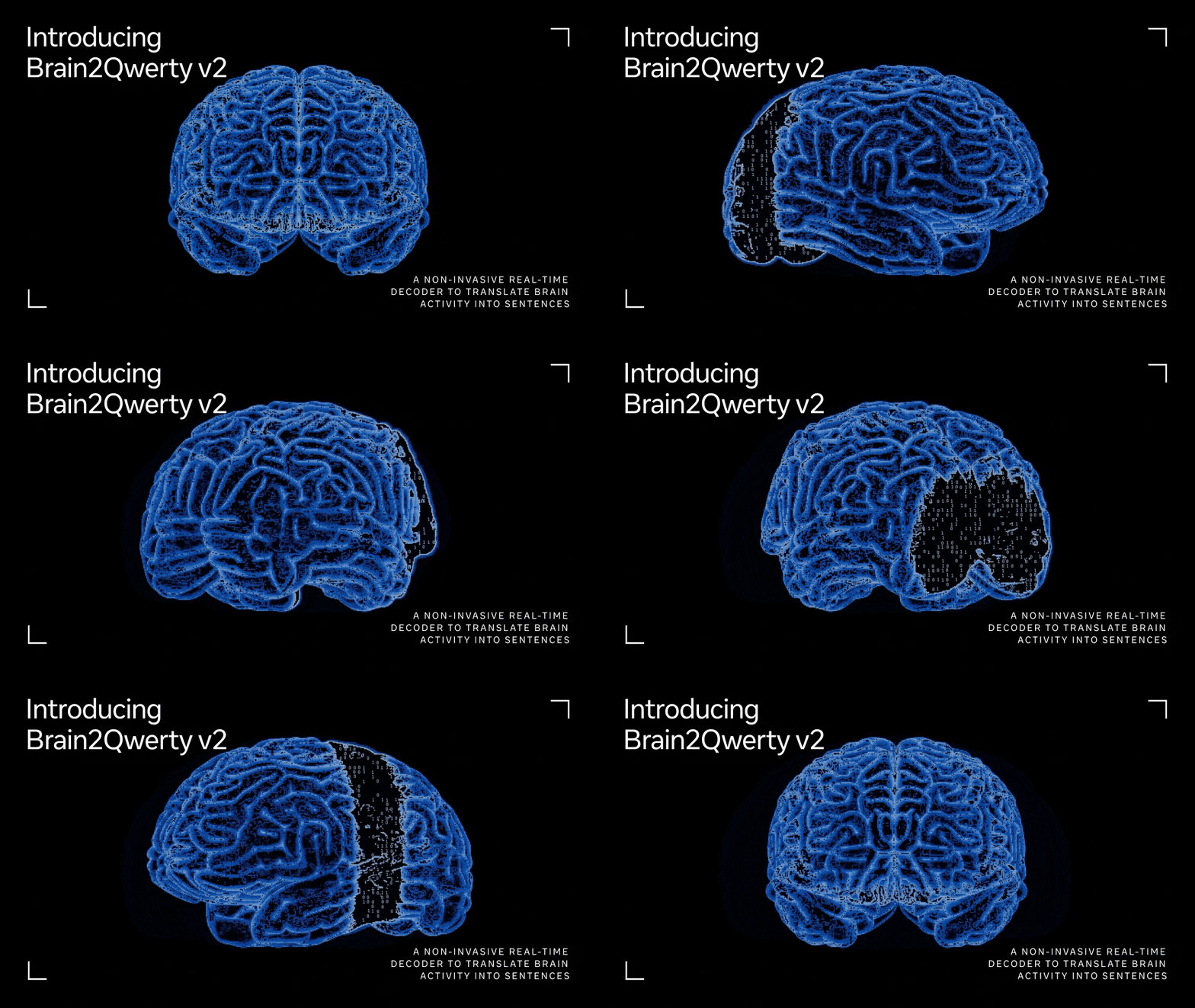
A research team released Brain2Qwerty v2, an AI system that decodes brain activity into text using non-invasive brain recordings (magnetoencephalography), achieving a word accuracy rate of 61%, and for the best participant, 78% word accuracy. The team trained the system on approximately 22,000 sentences from nine volunteer participants, each recorded for 10 hours while wearing an MEG device and actively typing, and is releasing the full training code and datasets to accelerate neuroscience research.
Why it matters
Current brain-computer interfaces that restore communication for people with brain lesions require invasive surgery, which limits how widely they can be deployed. This non-invasive approach could help bridge that gap for millions of people who suffer from brain lesions preventing them from communicating. The findings suggest that decoding accuracy improves log-linearly with data volume, indicating the performance gap with surgical approaches could be narrowed further through data scaling alone.
What to watch
The team is releasing code for both v1 and v2, and their partner, the Basque Center on Cognition, Brain, and Language (BCBL), is releasing the v1 dataset. The research is part of broader efforts including a $5 million(約8億円) fund to stimulate open datasets in the Digital Brain Project, aimed at building foundational models of the brain for identifying, diagnosing, and treating neurological disorders.
Summaries like this, in your inbox every morning.
Pick your industry and the AI tools you use, and get news related to your work every day.
Free · 30 seconds with Google · unsubscribe anytimeWhat is AIToday? →
Ask AI anything about this article. The AI reads this article, earlier AIToday articles, and Wikipedia, and cites its sources. Q&As are published on this page for other readers too.
Wells Fargo hired an AI executive based in San Francisco, a move The Business Journals describes as part of em…

Amazon launched two Bee "personal AI" devices on Thursday: the $74.99 Bee Frontier wristband and the $99.99 Be…
Apple released MLX today, which runs the 816B-parameter Muse Spark Open on four Mac Studios at over 36 tokens…

Bloom Energy stock fell 4% to $229.83, still up 165% year to date, while Caterpillar slipped 3% to $727.55 and…
LogicMonitor announced its 2026 Elevate Award winners at its Elevate Community Conference in Chicago, honoring…

Sandisk, AMD shares fall as Anthropic adds to AI concerns, per Barron's