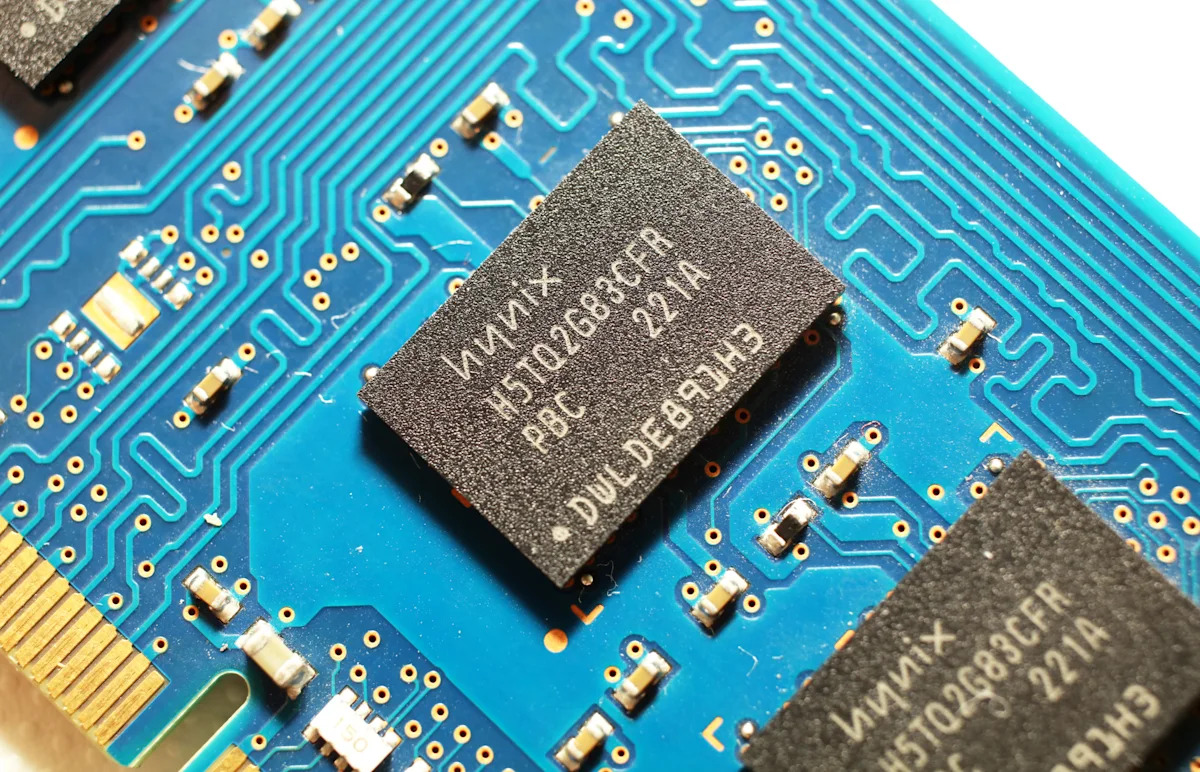
Semiconductor stocks fell more than 3% on Tuesday as investor concerns about AI infrastructure spending intensified. Memory chip makers Micron and SK Hynix dropped more than 8%, while the broader sector has tumbled into bear-market territory, falling more than 20% from June highs. The sell-off reflects growing skepticism about whether billions in AI spending will generate adequate returns, compounded by reports of Nvidia's potential $250 billion(約40兆円) OpenAI funding commitment and competition concerns from Chinese chipmaker CXMT's recent Shanghai debut.
Summaries like this, in your inbox every morning.
Sign up free →What happened
The PHLX Semiconductor Index fell more than 3% on Tuesday. Memory makers Micron Technology and SK Hynix dropped more than 8%, Sandisk fell 13%, and equipment makers ASML, Applied Materials, and Lam Research also declined. Nvidia reversed early losses to close higher after a 5% drop Monday, while AMD fell more than 7%.
Why it matters
Semiconductor stocks have tumbled more than 20% from their June highs into bear-market territory as investors grow skeptical about whether massive AI infrastructure spending will generate adequate returns. The sell-off was triggered by reports of Nvidia in talks to backstop $250 billion(約40兆円) in OpenAI funding, SK Group's $500 billion(約80兆円) collaboration announcement, and concerns that Chinese competitor CXMT's rapid expansion could pressure memory chip prices.
What to watch
Earnings reports this week from Microsoft, Amazon, and Meta are expected to announce further increases in AI-related spending. Investors are monitoring whether hyperscalers' massive AI spending spree can justify the capital outlays.
On Tuesday, semiconductor stocks fell sharply as the market repriced the AI trade. The PHLX Semiconductor Index declined more than 3%, with memory and storage leaders bearing the brunt: Micron Technology (MU) and SK Hynix (SKHY) tumbled more than 8%, while SanDisk (SNDK) dropped 13%. Equipment makers ASML (ASML), Applied Materials (AMAT), and Lam Research (LRCX) also moved lower. Nvidia (NVDA), the AI chip heavyweight that has anchored much of the sector's rally, reversed early morning losses to close in positive territory after falling 5% on Monday. AMD (AMD) declined more than 7%, while Intel (INTC), Marvell (MRVL), and Qualcomm (QCOM) also slid.
The sell-off was not confined to US markets. In South Korea, SK Hynix fell more than 14%, and Samsung Electronics (005930.KS) dropped more than 13%. European semiconductor stocks moved lower as well, driven by concerns about circular financing and intensifying competition from China. The weakness abroad reflected shared investor anxiety about the sector's valuation and the sustainability of AI-driven demand.
Multiple factors combined to trigger the retreat. On Monday, after a 5% drop, Nvidia lost its crown as the world's most valuable company to Apple following reports that the chipmaker was in talks to backstop $250 billion(約40兆円) in funding for OpenAI (OPAI.PVT) tied to a major data center project. That report came just days after SK Group announced a $500 billion(約80兆円) strategic collaboration on Friday. These announcements, while demonstrating confidence in AI infrastructure, also signaled the enormous capital outlays required to sustain the AI build-out—and raised questions about whether such spending would generate adequate returns. Chinese memory maker CXMT's (688825.SS) blockbuster Shanghai debut this week exacerbated concerns; CXMT's rapid expansion raised the prospect of memory chip price pressure that could weigh on established producers like Micron and SK Hynix. Additionally, The Information reported that a Chinese state-backed company had begun mass-producing a key piece of chipmaking equipment, news that fueled a sell-off in ASML shares.
The current sell-off marks a dramatic shift in sentiment. Semiconductor stocks had been at the center of the AI trade this year, propelling the sector to a record high in June. Since then, the group has tumbled into bear-market territory, falling more than 20% from its peak. Investors have grown increasingly skeptical about the payoff from the billions of dollars being committed to AI infrastructure, raising concerns about whether the massive spending by hyperscalers will deliver returns commensurate with the capital deployed. Last week, Alphabet (GOOG, GOOGL) stock plummeted after the company announced it would raise its capital spending outlook to build out AI infrastructure—a signal that investors now view such announcements with alarm rather than enthusiasm. This week brings earnings from Microsoft (MSFT), Amazon (AMZN), and Meta (META), all expected to announce further increases in AI-related spending, which may face a skeptical market given the current sentiment shift.
Semiconductor stocks, which have been central to the AI trade this year, have entered a pronounced reversal as investor sentiment shifts from euphoria to skepticism. The sector's June record high marked the peak of confidence in AI spending, but the subsequent 20%+ decline into bear-market territory reflects deeper concerns about capital allocation and returns. Two major catalysts compounded Tuesday's losses: reports of Nvidia's potential $250 billion(約40兆円) commitment to backstop OpenAI funding—which cost Nvidia its position as the world's most valuable company to Apple—and SK Group's $500 billion(約80兆円) strategic collaboration. These announcements, while framed as major AI commitments, appear to have triggered concerns about the sustainability and profitability of such massive deployments.
Additionally, competitive and supply-side pressures have mounted. Chinese memory maker CXMT's blockbuster Shanghai debut this week renewed investor fears that the company's rapid expansion could weigh on memory chip prices, threatening margin compression for established players like Micron and SK Hynix. A separate report that a Chinese state-backed company has begun mass-producing key chipmaking equipment further fueled selling pressure in equipment stocks like ASML. The convergence of these factors—uncertainty about AI spending returns, massive capital commitments that signal long-term uncertainty, supply-side competition from China, and upcoming earnings from major hyperscalers (Microsoft, Amazon, Meta) where further AI spending increases are expected—has created a feedback loop of caution among investors reassessing the AI infrastructure thesis.
AI-summarized, only the topics you pick — one digest a day via Email, Slack, or Discord.
Free · takes 30 seconds · unsubscribe anytime
No comments yet. Be the first to share your thoughts!
Log in to join the discussion


Get curated AI news from 200+ sources delivered daily to your inbox. Free to use.
Get Started FreeFree · takes 30 seconds · unsubscribe anytime
