What happened
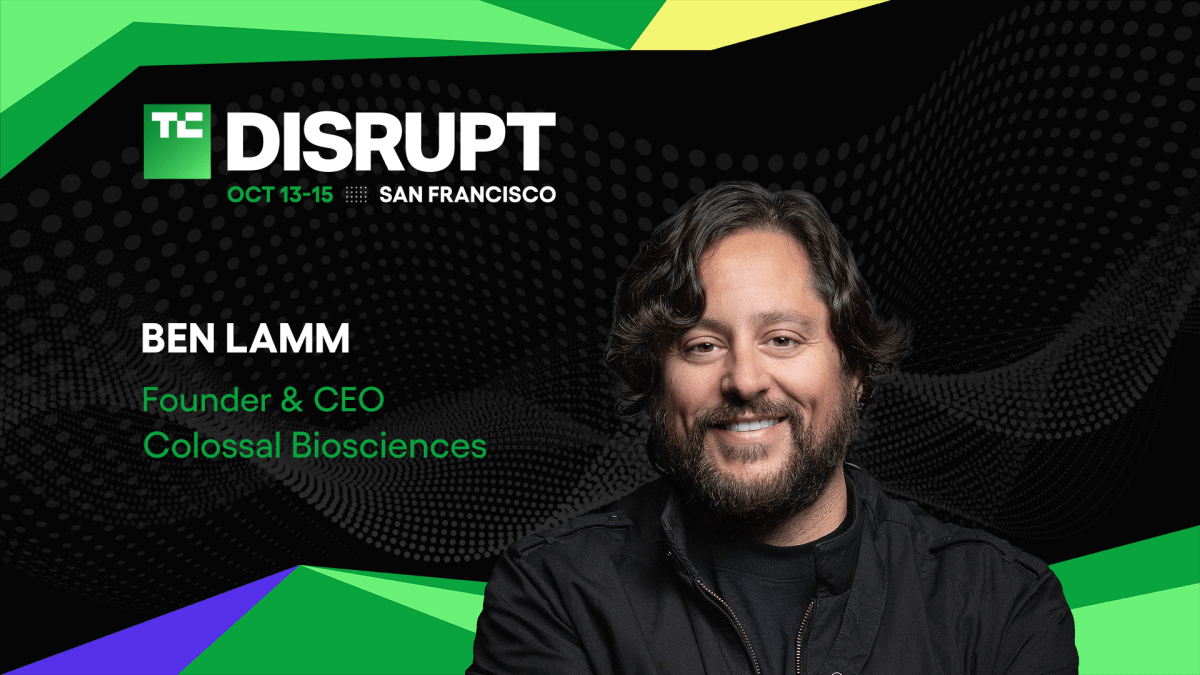
Ben Lamm, Co-Founder and CEO of Colossal Biosciences, will join the "Can We Engineer Nature's Comeback?" fireside chat at TechCrunch Disrupt 2026 on the Real World AI Stage.
Why it matters
The session moves the debate from lab science to open question — whether engineering nature is a conservation breakthrough or a distraction from protecting existing ecosystems, at a time when Colossal is described as a billion-dollar startup.
What to watch
The discussion hinges on how AI's role in de-extinction is framed for founders in deep tech and life sciences. Disrupt runs October 13–15 at Moscone West in San Francisco, with passes discounted up to $200.
WHO IT HITSFounders and investors working at the intersection of deep tech, life sciences, and AI get a direct look at how Colossal Biosciences is approaching de-extinction as a conservation tool. The session is also aimed at executives weighing the responsibilities that come with engineering living systems.
Ask the AI about this article →
Summaries like this, in your inbox every morning.
The session arrives at a moment when bringing an extinct species back to life has moved from science fiction to the mission of a billion-dollar startup. Colossal Biosciences is described as pioneering de-extinction through synthetic biology and AI, and its CEO, Ben Lamm, has spent more than two decades building companies at the intersection of AI and emerging technologies.
Lamm's track record includes launching Hypergiant, Conversable, and Chaotic Moon, which were later acquired by Trive Capital, LivePerson, and Accenture. That entrepreneurial background frames the Disrupt conversation less as a science lecture and more as a case study in what happens when breakthrough technology challenges how we think about what is possible.
The broader questions may prove more significant than de-extinction itself. As AI becomes part of scientific discovery, the debate extends beyond software into medicine, biology, conservation, and climate science, raising difficult questions about how and where these tools should be used, and who gets to decide.
For example, today's edition would include:
AI-summarized, only the topics you pick — one digest a day via Email, Slack, or Discord.
Free · 30 seconds with Google · unsubscribe anytimeWhat is AIToday? →
Ask AI anything about this article. Q&As are published on this page for other readers too.
A Korean office worker wrote on the community "リメンバー" that he asked ChatGPT about chest tightness and breathin…

Anil Kane, executive director and global head of technical & scientific affairs at Thermo Fisher Scientific, t…

Asus vice president Kuo-Hao Huang, of the Asus AI Research Center, said hospitals' biggest obstacle to adoptin…

In an Emerj series sponsored by CDD Vault, Novartis's Xiong Liu and CDD Vault's Barry Bunin urged R&D leaders…

At ADLM, Thermo Fisher Scientific's Puneet Sarin said global demand for advanced specialty diagnostics remains…

Apple researchers introduced SimpleDesign, a single-stage end-to-end model that trains directly on over 2M seq…