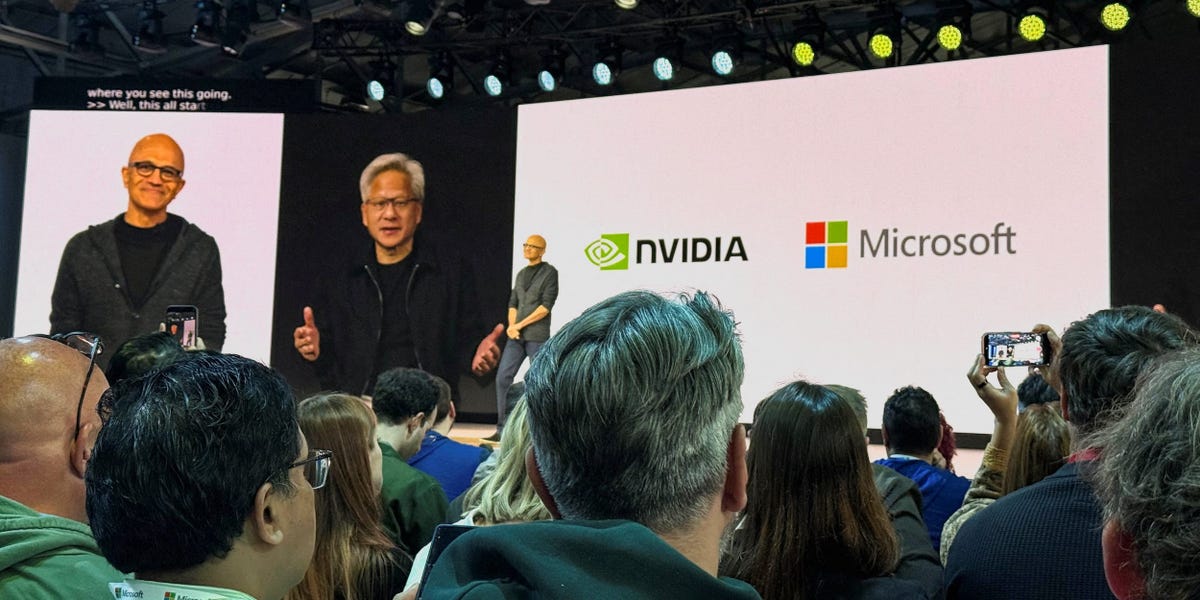
A coalition of 32 tech companies and organizations, including Nvidia, Microsoft, Meta, OpenAI, Mistral, and others, signed an open letter on Friday calling on US policymakers to protect open-weight AI models from restrictive regulation. The letter defends open models as essential to American competitiveness, innovation, and cybersecurity at a time when Trump administration officials have suggested taking action against China-based Moonshot AI and its Kimi K3 model. The signatories argue that open models should be governed through targeted legal frameworks rather than sweeping restrictions, though they acknowledge legitimate concerns about unlawful intellectual property extraction.
Summaries like this, in your inbox every morning.
Sign up free →What happened
On Friday, Nvidia, Microsoft, Meta, OpenAI, Mistral, and 26 other companies and organizations signed an open letter urging US policymakers not to restrict open-weight AI models. The signatories, totaling 32 entities as of Friday evening, argue that open models strengthen safety, cybersecurity, and innovation. OpenAI signed the letter by Friday evening, after initially being absent when it was first published.
Why it matters
The letter comes as Trump administration officials, including White House Office of Science and Technology Policy director Michael Kratsios, have signaled potential action against Moonshot AI, creator of the Kimi K3, described as the world's most powerful open-weight AI model. The signatories frame open-weight models as critical to US competitiveness, writing that "AI leadership will be judged not by one frontier AI model, but by whether the United States builds a strong, open ecosystem that diffuses into every sector." China has dominated open-weight AI development despite the US' historical strength in open-source software.
Why it matters
The signatories defend distillation—the controversial technique of training a weaker model on a stronger model's outputs—as important to AI innovation, though they acknowledge "unlawful efforts to extract value from closed models raise legitimate concerns." This positioning suggests the companies want to preserve distillation as a tool while potentially accepting targeted enforcement against proven bad actors, rather than sweeping bans.
On Friday, July 24, 2026, Nvidia CEO Jensen Huang announced in his first-ever post on X that a coalition of major AI and tech companies had signed an open letter defending open-weight AI models. "AI will transform every industry, power every company, and be built by every country," Huang wrote. "Open models strengthen safety and cybersecurity, accelerate innovation and diffusion, and enable sovereignty." The letter, initially signed by Nvidia, Microsoft, Meta, Mistral, and others, urged US policymakers not to crack down on open-weight AI models. By Friday evening, OpenAI joined the signatories, and by Saturday, Google added its support. In total, 32 companies, organizations, and platforms signed the letter, including major names such as Palantir, IBM, Mozilla, the Linux Foundation, GitHub, Hugging Face, Cisco, CrowdStrike, Palo Alto Networks, Palo Alto Networks, and others.
The letter comes amid escalating US government concern about open-weight AI models, particularly Moonshot AI's Kimi K3, which is described as the world's most powerful open-weight AI model. On Wednesday, Michael Kratsios, director of the White House Office of Science and Technology Policy, publicly accused Moonshot of developing Kimi K3 by distilling the model from Anthropic's Fable 5. Distillation—the process of training a weaker model on the outputs of a stronger one—is a controversial but widely used practice in AI development. Treasury Secretary Scott Bessent suggested that the US could sanction companies engaged in such distillation, comparing it to theft. The signatories' letter frames open-weight development as essential to American competitiveness and technological sovereignty, comparing it to how open-source software revolutionized computing in the 1980s: "Open source did more than lower the cost of software; it created a shared foundation of knowledge on which generations of American engineers and entrepreneurs built their institutional sovereignty."
The letter defends distillation as a legitimate AI innovation technique but acknowledges that "unlawful efforts to extract value from closed models raise legitimate concerns." The signatories propose that such concerns "should be addressed through targeted legal and commercial frameworks rather than sweeping restrictions on techniques that play an important role in AI innovation." This language suggests the companies may accept narrow enforcement against proven intellectual property theft while resisting broad prohibitions on open-model development. OpenAI CEO Sam Altman stated on Friday that he was "glad to see" the support for open-weight models and wrote "i want the US to win in AI both in open source and proprietary models." Meanwhile, Elon Musk, whose SpaceX/AI company was not listed as a signatory, signaled support on X: "This has my full support. Jensen is right."
Notably, Anthropic—widely viewed as a world leader in frontier AI alongside OpenAI—has not yet signed the letter. Both Anthropic's Fable 5 and OpenAI's GPT-5.6-Sol are mentioned as closed proprietary models, meaning they remain restricted to their creators. In contrast, open-weight models like Kimi K3 will be available for download and customization. Anthropic and other closed-model companies have accused Chinese counterparts of abusing distillation to essentially steal intellectual property. China has thus far dominated the development of open-weight AI models despite America's historical dominance in open-source software. In the US, Nvidia's Nemotron model is among the largest open-weight models, though its performance is described as paling in comparison to Kimi K3. Meta's chief AI officer, Alexandr Wang, has committed to developing an open variant of Meta's Muse Spark model, and Reflection AI, founded by former Google DeepMind researchers, is preparing its own open model.
The open letter represents a rare alignment among competing AI powerhouses—Nvidia, Microsoft, Meta, and OpenAI—on a political and policy issue. While these companies compete fiercely in proprietary frontier models (Anthropic's Fable 5 and OpenAI's GPT-5.6-Sol are mentioned as closed systems), they share a common interest in preventing government restrictions on open-weight models. The timing is significant: the Trump administration's focus on Moonshot AI and distillation techniques reflects broader US concerns about Chinese technological leadership in open-source AI, a domain where China has historically been stronger despite America's legendary role in creating open-source software.
The signatories' framing of open models as analogous to the open-source software revolution of the 1980s suggests they want to position themselves as defending innovation broadly rather than defending specific actors. However, their willingness to acknowledge "unlawful efforts to extract value from closed models" and support "targeted legal and commercial frameworks" indicates they may accept some enforcement against Moonshot specifically, provided it is narrowly tailored rather than a blanket restriction. This opens a possible political compromise: targeted sanctions against proven bad actors, coupled with legal protections for legitimate open-model development. The notable absence of Anthropic—often viewed as a world leader in frontier models alongside OpenAI—suggests that company may see a strategic advantage in stricter open-model regulation, since Anthropic's own proprietary models would face less competition from open alternatives.
AI-summarized, only the topics you pick — one digest a day via Email, Slack, or Discord.
Free · takes 30 seconds · unsubscribe anytime
No comments yet. Be the first to share your thoughts!
Log in to join the discussion


Get curated AI news from 200+ sources delivered daily to your inbox. Free to use.
Get Started FreeFree · takes 30 seconds · unsubscribe anytime
