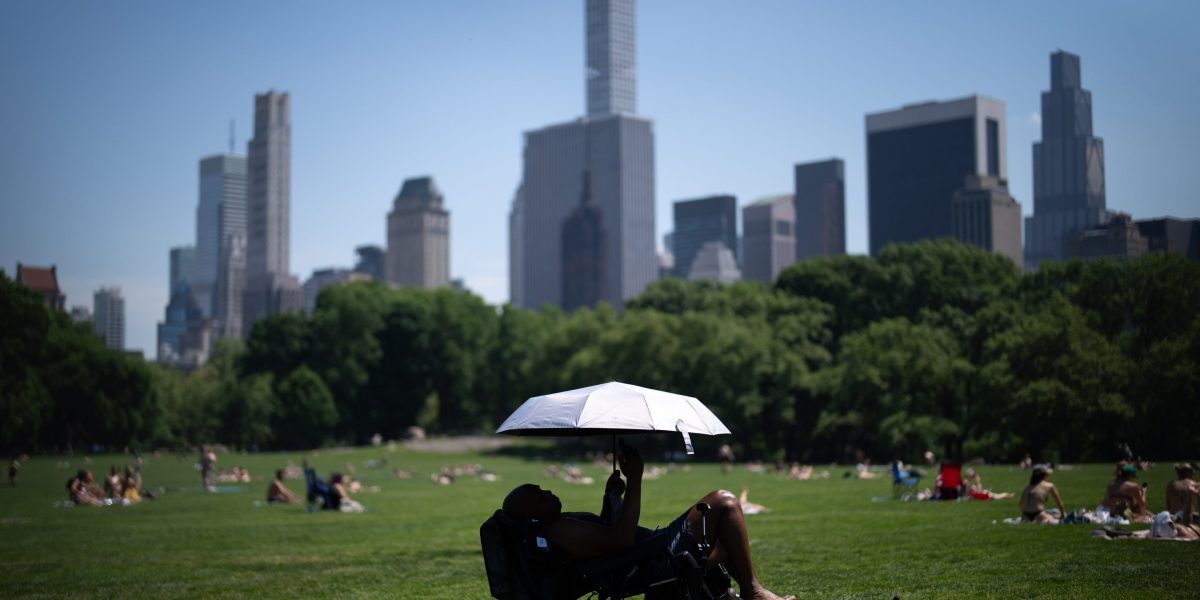
The Eastern United States faces an incoming heat wave as heat domes—atmospheric systems that trap heat and humidity—intensify across the globe. Scientists link the worsening severity and frequency of these events directly to climate change driven by fossil fuel burning. Nighttime conditions pose particular danger because humidity prevents the body from cooling down, making access to air conditioning critical for vulnerable populations.
Summaries like this, in your inbox every morning.
Sign up free →What happened
Much of the Eastern U.S. is expected to face a prolonged heat wave in the coming days, while the Southwest is already experiencing temperatures around 100 degrees Fahrenheit this week. Heat domes—high-pressure systems that trap heat and humidity—have affected multiple regions worldwide in early 2026, including record heat in the continental U.S. in March, Europe in mid-June, and parts of India and the French Open venue in May.
Why it matters
Heat domes are becoming more severe and frequent as the planet warms from burning fossil fuels and cutting forests, according to climate scientists. The risk is especially acute at night, when heat domes prevent the body from cooling down; people without adequate air conditioning face compounded heat stress, particularly when humidity is high.
What to watch
Nighttime conditions will be critical—experts stress that staying hydrated, avoiding midday outdoor exercise, accessing air conditioning or cooling centers, and finding shade are essential. The body's inability to recover from high temperatures at night makes daytime and evening cooling strategies important.
No discussion yet for this article
Get curated AI news from 200+ sources delivered daily to your inbox. Free to use.
Get Started FreeFree · takes 30 seconds · unsubscribe anytime
1 minute a day. The AI essentials.
200+ sources · Email / LINE / Slack
