
Verizon has secured a more than $1 billion agreement with Google to provide dark-fiber connectivity between data centers, tapping into the surging demand for high-speed, low-latency AI infrastructure.
The deal validates Verizon's strategy of leveraging its existing fiber network and edge data center conversions to capture growth in the AI connectivity market, with the company expecting to announce additional hyperscaler agreements by year-end that could represent multiple billions of dollars in revenue over several years.
What happened
Verizon Communications signed a more than $1 billion agreement with Google under which Google will use Verizon's dark-fiber routes to connect data centers. The company expects to announce additional agreements with hyperscalers by year-end, potentially worth multiple billions of dollars over the next several years.
Why it matters
AI workloads are driving rapid growth in demand for high-capacity, low-latency connections between data centers—exactly what Verizon's extensive long-haul and metro fiber network is built to deliver. The company is also converting existing central offices into edge data centers to support AI inference closer to end users, positioning itself in a market segment projected to grow substantially.
What to watch
Verizon expects to announce additional hyperscaler agreements by year-end. Competitors including AT&T and Lumen Technologies are also pursuing AI infrastructure deals; Lumen has already signed agreements with Microsoft, Amazon, Google Cloud, and Meta Platforms for network capabilities supporting AI.
Ask the AI about this article →
Verizon's pivot toward AI infrastructure reflects a fundamental shift in how hyperscalers (large cloud providers) are organizing their networks. The rapid expansion of AI workloads has created acute demand for dedicated, high-capacity connections between data centers with minimal latency—a requirement that plays to Verizon's existing strengths as a long-haul and metro fiber operator. Rather than building new infrastructure from scratch, Verizon is monetizing assets it already controls, including its dark-fiber routes and central office real estate, making the economics of entry particularly attractive.
The $1 billion Google deal serves as what the body describes as an "early validation" of a broader opportunity. By securing agreements with multiple hyperscalers, each with distinct geographic and workload requirements, Verizon stands to convert its legacy telecommunications backbone into a critical piece of AI supply chain infrastructure. The company's willingness to commit capital to edge data centers—bringing inference processing closer to users rather than centralizing it in large regional hubs—signals confidence that the demand for latency-sensitive AI applications will persist and grow.
However, Verizon enters a crowded field. AT&T is emphasizing 5G backhaul, spectrum depth, and dense fiber as enablers for low-latency edge workloads, while Lumen Technologies reports momentum in its Network-as-a-Service business and has already signed multiple deals with Microsoft, Amazon, Google Cloud, and Meta. The body notes that fiber capacity is becoming "highly valuable and potentially scarce," suggesting that first-mover advantage and existing relationships will matter significantly in the years ahead.
For example, today's edition would include:
AI-summarized, only the topics you pick — one digest a day via Email, Slack, or Discord.
Free · takes 30 seconds · unsubscribe anytimeWhat is AIToday? →
Ask AI anything about this article. Q&As are published on this page for other readers too.
Visko raised $10 million in pre-seed funding from Llama Ventures and opened public access to its first foundat…

U.S. markets ended August higher, with the S&P 500 up 2.6% and the Nasdaq up 3.9%

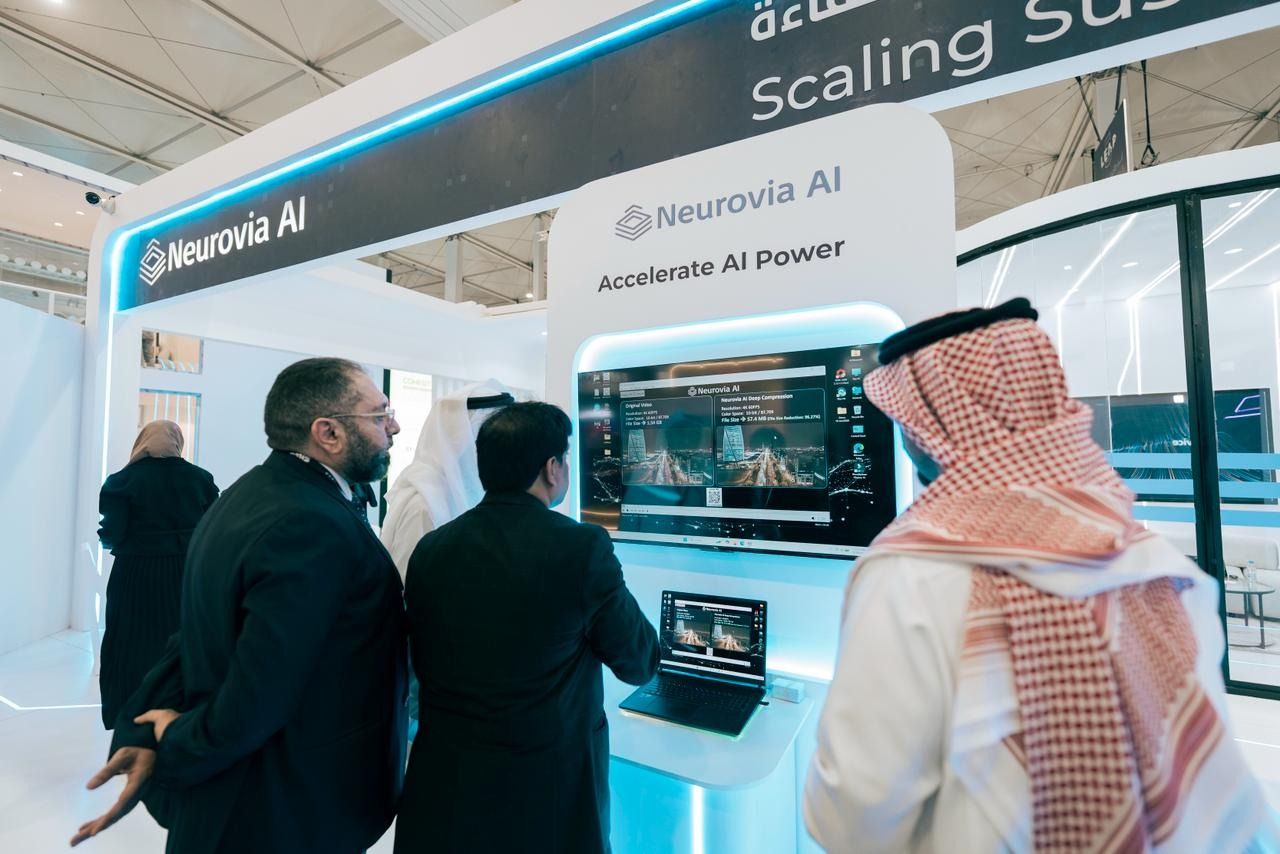
Neurovia AI, an Abu Dhabi-based company, is pitching Saudi security agencies software that it says can compres…
AI company Runway has unveiled Solaris, the first model in a new category it calls "Interface World Models." I…

John Deere introduced JD, a conversational AI tool that lets farmers ask open-ended questions about their hist…

Nvidia CEO Jensen Huang said on Fox Business that AI is creating 'hundreds of thousands' of jobs, including in…