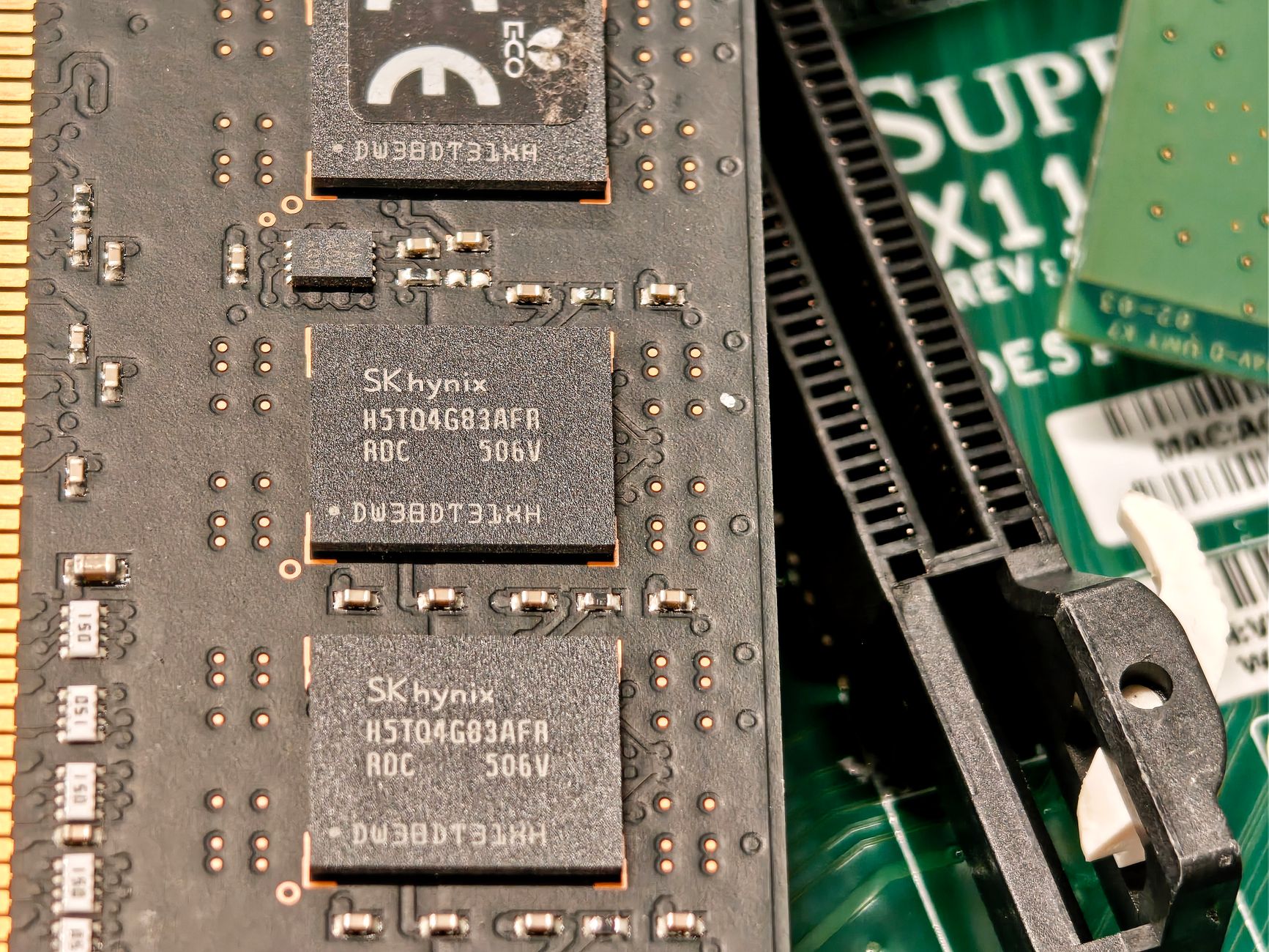
SK hynix reported strong revenue growth of 257% year-over-year in its second quarter, but the earnings fell short of analyst expectations due to shipment delays that limited pricing gains on DRAM chips. Even though the company said major tech firms are increasing AI infrastructure spending and it has signed long-term supply deals with about 10 customers, the miss spooked global semiconductor investors, with Nvidia, AMD, and Micron all falling 3–6% and Japan-listed chip stocks including Tokyo Electron dropping as much as 11%.
Summaries like this, in your inbox every morning.
Sign up free →What happened
SK hynix reported second-quarter revenue of 79.32 trillion won, up 257% from a year earlier, and operating profit of 60.5 trillion won, up from 9.2 trillion won—but both figures missed analyst estimates. The company cited shipment delays for advanced memory products that limited pricing gains for DRAM chips. Nvidia fell about 3%, Advanced Micro Devices dropped nearly 6%, and Micron Technology declined about 3%; Tokyo Electron fell nearly 11% and Kioxia slid about 14%.
Why it matters
Despite SK hynix saying major technology companies continue to increase AI infrastructure spending and that it has signed long-term supply agreements with about 10 customers, the earnings miss signaled that supply constraints rather than demand may be the near-term limiter for AI chip makers. Investors interpreted the results as a sign of broader uncertainty over memory pricing and AI-related demand going forward.
What to watch
SK hynix emphasized that demand for AI memory chips remained strong and that it has secured long-term contracts with about 10 major customers, suggesting the supply-side friction may be temporary; the trajectory of memory pricing and the pace of shipment recovery will be critical signals for the sector.
SK hynix reported second-quarter results on Wednesday that exposed a supply-side constraint within the booming AI chip market. Revenue reached 79.32 trillion won, nearly 2.6 times the prior-year quarter, and operating profit surged to 60.5 trillion won from 9.2 trillion won. Yet both metrics fell short of analyst estimates, sending a shockwave through semiconductor stocks worldwide.
The company attributed the miss to shipment delays affecting advanced memory products, which crimped pricing power on DRAM chips. Despite this setback, SK hynix stressed that major technology companies are aggressively increasing AI infrastructure spending. The company has secured long-term supply agreements with about 10 customers, a sign that demand for AI memory remains robust and that high-volume commitments are being locked in.
The earnings report triggered a broad selloff across chip makers. In South Korea, Samsung Electronics fell about 5%. In Japan, Tokyo Electron dropped nearly 11% and Kioxia slid about 14%. Across the U.S., Nvidia fell about 3%, Micron Technology declined about 3%, Advanced Micro Devices dropped nearly 6%, Qualcomm lost nearly 3%, and Broadcom slipped about 2%. Supporting chipmakers Applied Materials, Lam Research, Taiwan Semiconductor Manufacturing, Marvell Technology, and KLA also traded lower as investors reassessed the outlook for memory pricing and AI demand in light of SK hynix's supply constraints.
SK hynix's second-quarter results present a paradox that rattled chip investors: the company is seeing surging demand from major technology companies for AI memory and has locked in about 10 long-term supply agreements, yet earnings fell short of expectations. The culprit, according to SK hynix, is not demand but supply—shipment delays on advanced memory products constrained pricing power on DRAM chips. This distinction matters because it suggests the near-term bottleneck is manufacturing and logistics, not customer appetite for AI infrastructure.
The selloff across the semiconductor ecosystem reflects investor concern that if a major supplier like SK hynix cannot convert strong demand into pricing gains due to supply friction, the entire AI chip rally may be more fragile than previously assumed. The magnitude of the stock declines—from 3% drops at U.S. peers like Nvidia and Micron to double-digit falls at Japan-listed Tokyo Electron and Kioxia—indicates that global supply chain tightness, rather than demand destruction, is now the market's focus. Whether SK hynix can resolve its shipment delays and translate its long-term customer agreements into improved margins will be a key measure of whether current AI infrastructure spending can sustain chip valuations.
AI-summarized, only the topics you pick — one digest a day via Email, Slack, or Discord.
Free · takes 30 seconds · unsubscribe anytime
No comments yet. Be the first to share your thoughts!
Log in to join the discussion


Get curated AI news from 200+ sources delivered daily to your inbox. Free to use.
Get Started FreeFree · takes 30 seconds · unsubscribe anytime
