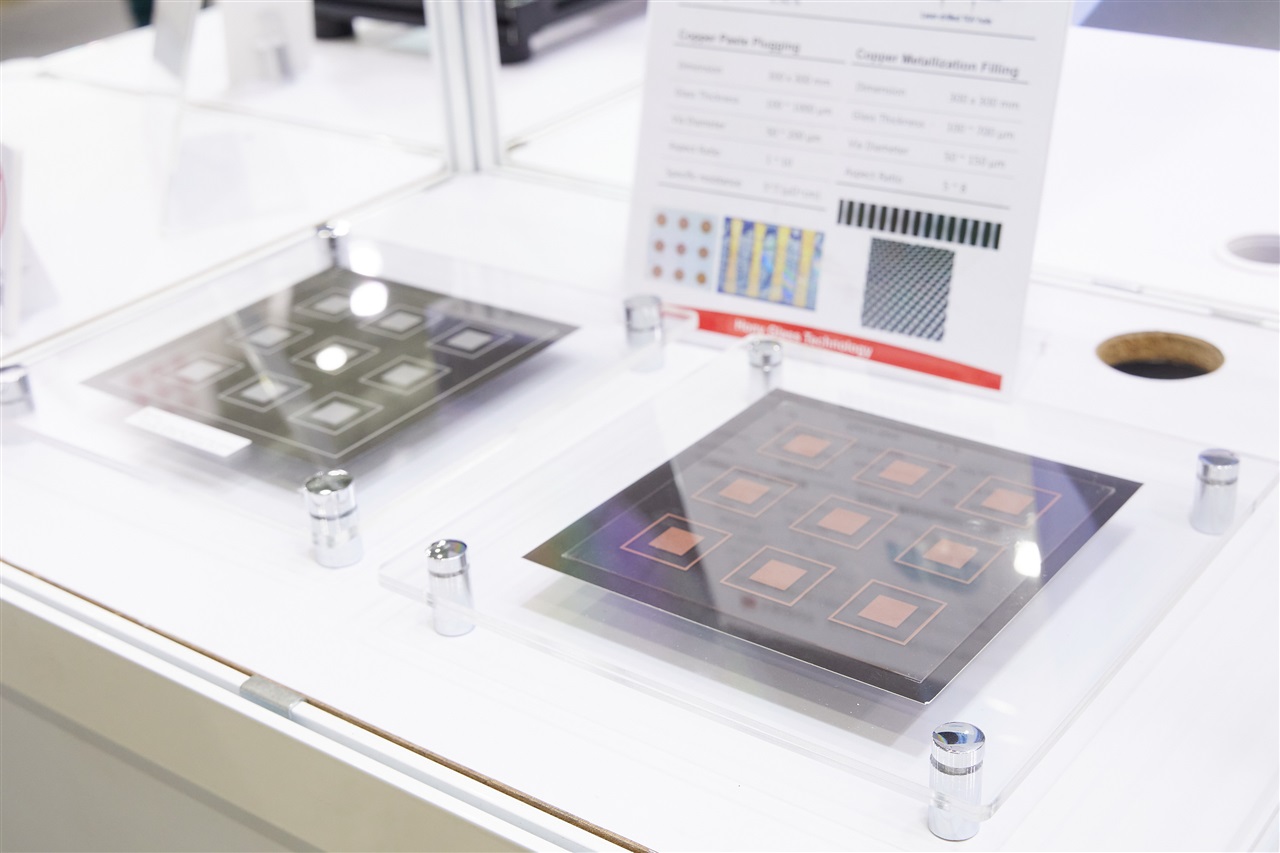
Chinese semiconductor equipment makers are winning their first production orders for through-glass via (TGV) tools used in advanced chip packaging. This marks the shift from experimental prototypes to real commercial manufacturing, as the industry pursues glass substrates as an alternative to traditional packaging materials.
Summaries like this, in your inbox every morning.
Sign up free →What happened
Chinese semiconductor equipment suppliers are securing production orders for through-glass via (TGV) manufacturing tools, moving from prototype testing toward commercial deployment as the industry develops glass substrates for advanced chip packaging.
Why it matters
TGV — a technique that drills holes through glass to connect chip layers — is emerging as a key packaging innovation for next-generation semiconductors. Chinese suppliers gaining traction in this space signals the technology is transitioning from laboratory research to real manufacturing, potentially shifting the competitive landscape in semiconductor equipment.
What to watch
The pace at which glass substrate adoption spreads across the industry, and whether other regional equipment makers can compete as production volumes scale.
Chinese semiconductor equipment suppliers are beginning to secure production orders for through-glass via (TGV) manufacturing tools, signaling a major transition in the packaging industry. TGV is a technique that drills small holes through glass substrates to create vertical electrical connections between different layers of a semiconductor package, enabling denser and more efficient chip designs. For years, the technology remained largely confined to research and development, with manufacturers building and validating prototypes. Now, as the industry pursues glass substrates as a strategic alternative to traditional organic or ceramic packaging materials, equipment makers are moving toward actual production deployment. Chinese suppliers are among the first to secure these orders, suggesting they have developed tools that meet commercial reliability and cost requirements. This represents not just a technological milestone but a potential shift in the competitive dynamics of semiconductor equipment supply, as newer entrants from China begin to compete in a space traditionally dominated by established regional players.
The shift from prototype validation to production orders represents a critical inflection point for TGV technology. Chinese equipment suppliers' early wins suggest they have achieved the technical maturity and cost competitiveness needed for commercial deployment. As glass substrates gain traction in advanced chip packaging, the equipment supply chain — historically dominated by established players — may see new entrants gain meaningful market share. The transition also reflects broader industry momentum toward alternative packaging approaches to support next-generation chip architectures.
AI-summarized, only the topics you pick — one digest a day via Email, Slack, or Discord.
Free · takes 30 seconds · unsubscribe anytime
No discussion yet for this article
Get curated AI news from 200+ sources delivered daily to your inbox. Free to use.
Get Started FreeFree · takes 30 seconds · unsubscribe anytime
1 minute a day. The AI essentials.
200+ sources · Email / LINE / Slack
