Snowflake held CTO Circle, an inaugural gathering of more than 350 engineering leaders at its 2026 summit, to share lessons on building AI-native organizations.
Rather than stopping at coding assistants, the most successful companies are redesigning their entire engineering systems—treating developer productivity as a product, institutionalizing proven AI workflows, and investing in data architecture so AI agents can operate reliably in production.
Organizations that fully commit to distributing AI ownership across teams and building shared context for their systems are seeing measurable gains in both velocity and operational discipline.
What happened
Snowflake convened CTO Circle, an inaugural event at Snowflake Summit 2026 in San Francisco with more than 350 CTOs from financial services, telecommunications, retail and technology sectors, to discuss how engineering organizations are being redesigned for AI. The discussion centered on three themes: using AI in production, balancing velocity and risk, and designing engineering teams for AI.
Why it matters
Organizations are moving beyond coding assistants to fundamentally rethink how engineering teams operate. Snowflake's experience treating developer productivity as a product—interviewing engineers about friction points and running experiments—increased its internal developer Net Promoter Score by more than 30 points in 18 months, resulting in a 4:1 ratio of satisfied to dissatisfied developers. Success now depends not on generating the most code, but on building the simplest, fastest engineering system and institutionalizing proven workflows across teams.
What to watch
Engineering leaders are shifting from separate AI teams to distributing AI ownership across product teams. Organizations must invest in data architecture and shared context (ontologies, knowledge graphs, APIs) to allow AI agents to reason reliably over production environments. The transition requires full organizational commitment—what one speaker called "burning the boats"—rather than partial adoption, since AI is becoming foundational to how businesses operate.
Ask the AI about this article →
The CTO Circle event reflects a maturing view of AI in engineering organizations. Early enthusiasm centered on productivity gains from coding assistants—faster code, easier documentation—but the conversation at Snowflake Summit 2026 revealed a shift toward structural transformation. The key insight from Snowflake's own experience is that treating developer productivity as a product problem, rather than a culture or management problem, generates measurable returns: a 30-point improvement in Net Promoter Score and a 4:1 satisfaction ratio.
This shift has practical consequences for how engineering teams are organized and where they invest. Rather than deploying AI tools and hoping adoption spreads, the most successful organizations are institutionalizing workflows. Snowflake's internal engineering design patterns—born from early experimentation with prompting techniques and debugging approaches—became competitive advantage only when documented and made available across the entire organization. Similarly, Netflix's automated root cause analysis succeeded because years of investment in data architecture (connected telemetry, ontologies, knowledge graphs) preceded the AI agent deployment. The common thread: infrastructure and shared organizational knowledge matter more than the model itself.
The tension between velocity and risk also emerged as central. As AI shortens the path from idea to production, engineering leaders must simultaneously invest in observability, governance, and operational discipline. Organizations cannot afford to be "partially AI native"—they must commit fully by restructuring decision-making and team ownership. This commitment appears most viable when AI responsibility is distributed across product teams rather than siloed in a dedicated AI unit, as Hex discovered when it disbanded its centralized AI organization and saw product velocity increase.
For example, today's edition would include:
AI-summarized, only the topics you pick — one digest a day via Email, Slack, or Discord.
Free · takes 30 seconds · unsubscribe anytimeWhat is AIToday? →
Ask AI anything about this article. Q&As are published on this page for other readers too.
Israeli startup DataAgent Ltd
Taoyuan is positioning itself as a northern hub for AI data centers (AIDC), citing the Tatan area and an LNG c…
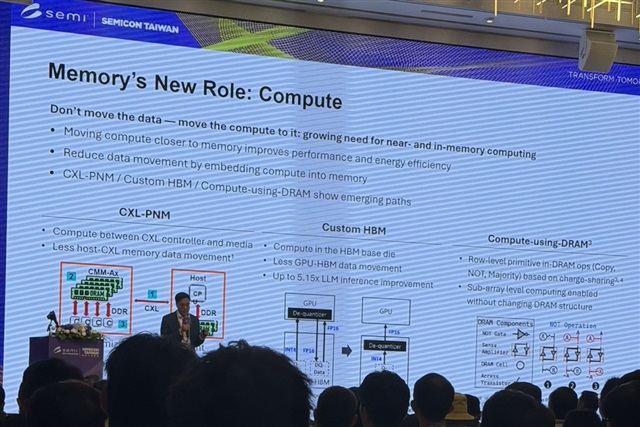
SK Hynix presented a custom HBM concept at SEMICON Taiwan 2026, where compute functions are placed in the base…
The U.S. Department of Defense announced on August 31 that it has deployed ChatGPT Mil, a customized version o…

Nvidia reported earnings that were both remarkable and boring, reflecting its focus on avoiding a consolidated…

Anthropic has agreed to a $35bn cloud-computing contract with Lambda, a Nvidia-backed cloud provider