
The Model Context Protocol, an open-source standard for connecting AI applications to external systems, received its largest update since launch, replacing a complex metadata workflow with a simpler stateless design that improves scalability and reliability.
The update also strengthens authorization controls and adds protections against OAuth credential-theft attacks, addressing operational and security concerns for businesses deploying AI agents to access databases, online stores, and other critical systems.
What happened
Anthropic and the Agentic AI Foundation released a major update to the Model Context Protocol (MCP), an open-source technology that lets AI applications interact with external systems like databases and online stores. The core change replaces a complex metadata workflow called a handshake with a stateless protocol that packages metadata directly into requests, plus improved authorization controls and a new extension framework with pre-packaged tools.
Why it matters
The new stateless design eliminates a single point of failure that previously made MCP systems vulnerable to outages and harder to scale during traffic spikes. The authorization improvements reduce errors and close a cybersecurity gap called OAuth mix-up attacks that can steal login credentials—a direct risk for businesses relying on MCP-powered AI agents to access sensitive systems.
What to watch
The update ships with new extensions including MCP Apps (for managing long-running AI agent workflows) and EMA (for cybersecurity tasks), signaling that the protocol is moving beyond basic integrations into more complex, production-grade deployments.
Ask the AI about this article →
The Model Context Protocol has become a foundational piece of the AI application infrastructure since Anthropic open-sourced it in November 2024. By donating it to the Agentic AI Foundation roughly a year later, Anthropic signaled industry-wide commitment to a shared standard for connecting AI systems to external tools and data sources. Today's update addresses a critical architectural weakness: the previous handshake mechanism created a bottleneck and a single point of failure that could disrupt service when MCP-powered applications attempted to scale or recover from infrastructure problems.
The stateless protocol core is a technical reorientation that eliminates the complexity of a separate metadata management layer. By bundling metadata directly into requests, the new design distributes load and decision-making across multiple servers rather than funneling all traffic through one. This shift has immediate implications for production deployments: businesses running AI agents that access databases, inventory systems, or other critical infrastructure can now scale more reliably and defend themselves better against outages.
The security enhancements—tighter authorization checks and OAuth mix-up protection—address real attack vectors in AI-driven integrations. As AI agents take on more sensitive tasks (fetching records, updating catalogs, triggering workflows), the ability to prevent credential theft and unauthorized access becomes essential. The addition of pre-packaged extensions like MCP Apps and EMA suggests the protocol is evolving from a low-level integration layer into a platform with higher-level abstractions, signaling maturity for enterprise use.
For example, today's edition would include:
AI-summarized, only the topics you pick — one digest a day via Email, Slack, or Discord.
Free · takes 30 seconds · unsubscribe anytimeWhat is AIToday? →
Ask AI anything about this article. Q&As are published on this page for other readers too.
Israeli startup DataAgent Ltd
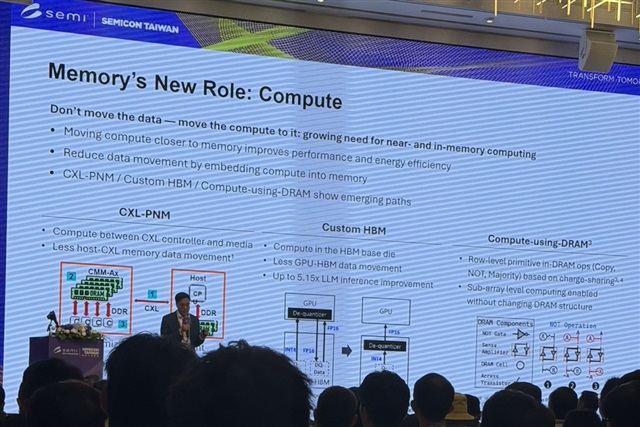
SK Hynix presented a custom HBM concept at SEMICON Taiwan 2026, where compute functions are placed in the base…
Nvidia reported earnings that were both remarkable and boring, reflecting its focus on avoiding a consolidated…

Anthropic has agreed to a $35bn cloud-computing contract with Lambda, a Nvidia-backed cloud provider

The Supreme Court of Japan has included about ¥60 million in its fiscal 2027 budget request for AI-related exp…

The Consumer Affairs Agency said Tuesday it will use generative AI to analyze about 900,000 annual consultatio…