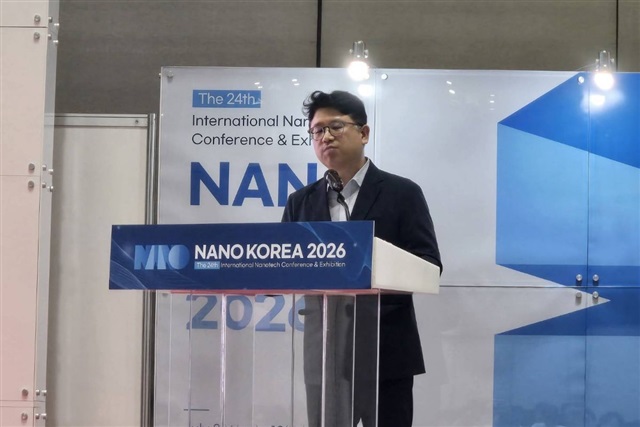
South Korean academics and industry observers say the memory industry must shift to a foundry model—where manufacturers design custom memory solutions for specific clients—to resolve bottlenecks in AI inference. The call reflects pressure from AI workloads that demand larger data transfers and higher GPU efficiency, pushing memory beyond standardized products toward customized designs.
Summaries like this, in your inbox every morning.
Sign up free →What happened
A Sungkyunkwan University professor and South Korean industry observers are calling for memory manufacturers to adopt a "memory foundry" model in response to AI's growing demands for larger data transfers and higher GPU efficiency.
Why it matters
AI development is pushing memory toward customization, and the current memory supply chain may not scale efficiently to meet these specialized requirements without structural change in how memory is designed and produced.
What to watch
The proposal signals growing concern among Korean semiconductor watchers about whether traditional memory manufacturers can keep pace with AI infrastructure needs, particularly around custom memory solutions for inference workloads.
AI development is placing unprecedented demands on memory systems, driving a push toward customization that traditional memory manufacturers may not be equipped to handle. According to South Korean industry watchers and scholars including a professor at Sungkyunkwan University, the memory industry should adopt a "memory foundry" model—a structural shift where manufacturers move from producing standardized memory products to designing and building custom memory solutions for specific clients. The call reflects two converging pressures: AI workloads require larger data transfers between processors and memory, and GPUs (graphics processors) are becoming more efficient, creating a mismatch with memory performance that standardized designs cannot easily resolve. Current memory manufacturers have operated primarily as commodity producers, optimizing for volume and compatibility rather than application-specific customization. A foundry model would invert this approach, allowing memory designers to work closely with AI infrastructure companies to engineer memory configurations that align with specific inference workloads—the computational step where a trained AI model produces answers. South Korean observers view this shift as necessary to prevent memory from becoming a structural bottleneck in AI infrastructure, particularly as AI inference deployment accelerates globally and custom solutions become competitively essential.
The memory industry faces a structural challenge as AI inference workloads become more demanding. Traditional memory manufacturers have operated on a standardized product model, designing chips for broad market compatibility rather than specific use cases. However, AI systems—particularly inference (the step where an AI produces an answer from a trained model)—require memory configurations tailored to unique data movement patterns and GPU integration needs. South Korean observers, represented by scholars like those at Sungkyunkwan University, are flagging this mismatch as a potential constraint on AI infrastructure scaling. The foundry model they propose would mirror the semiconductor design-to-manufacturing separation that has become standard in chip production, allowing memory to be customized per application rather than produced as a one-size-fits-all commodity. This signals that memory, like logic chips before it, may need to fragment from a mass-production business into a more specialized, service-oriented one to keep pace with AI's evolving requirements.
AI-summarized, only the topics you pick — one digest a day via Email, Slack, or Discord.
Free · takes 30 seconds · unsubscribe anytime
No discussion yet for this article
Get curated AI news from 200+ sources delivered daily to your inbox. Free to use.
Get Started FreeFree · takes 30 seconds · unsubscribe anytime
1 minute a day. The AI essentials.
200+ sources · Email / LINE / Slack
