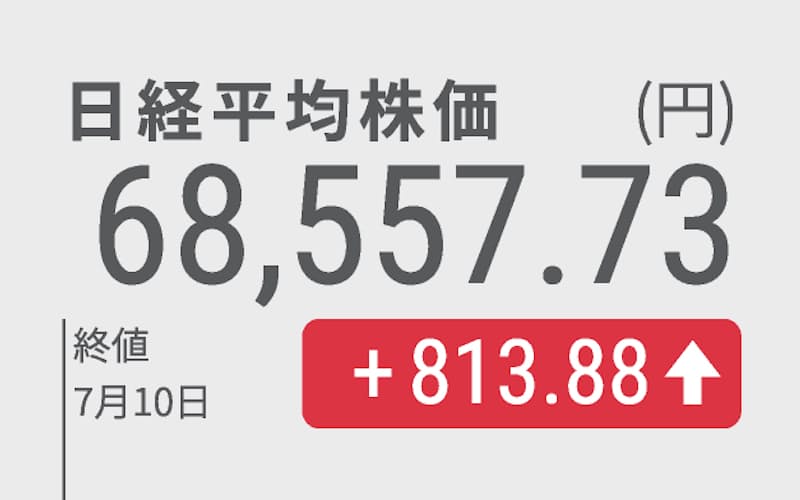
Japan's Nikkei 225 index rose 1.20% on July 10, led by AI and semiconductor stocks riding strength from U.S. markets and buoyed by easing inflation concerns after U.S. military action in Iran. Profit-taking and routine ETF distribution sales capped gains by day's end, though Finance Minister 片山 Satsuki's signal to encourage pension and household investment in Japanese assets provided underlying support.
Summaries like this, in your inbox every morning.
Sign up free →What happened
Japan's Nikkei 225 index closed up 813.88 yen (1.20%) at 68,557.73 yen on July 10, driven by buying in AI and semiconductor-related stocks following gains in U.S. markets the prior day. The index briefly surged over 1,600 yen before profit-taking and ETF distribution-linked selling pressure trimmed gains.
Why it matters
Falling oil prices (following U.S. military action against Iran on July 8) eased inflation concerns and supported equities. AI and semiconductor stocks—including SoftBank Group, Tohoku Electric, and Fujikura—led the rally, and gains in South Korea's KOSPI index boosted investor risk appetite. Finance Minister Satsuki片山 signaled intent to encourage households and pension funds to increase investment in Japanese financial assets, which market participants viewed as a positive signal for equities.
What to watch
Profit-taking from scheduled ETF distribution payouts dampened afternoon gains; this is an annual July event that does not alter market trends. Market focus is shifting to the earnings season, which formally begins with Yasukawa Electric.
The July 10 rally reflects two converging support factors: relief from easing inflation fears after U.S. military operations on July 8 lowered crude oil prices, and carryover strength from U.S. semiconductor stocks the prior day. Semiconductor and AI names were the natural beneficiaries in Tokyo, positioning them as the market's primary engine. Finance Minister 片山's public statement favoring increased household and pension-fund investment in Japanese assets added a policy tailwind, though analysts noted that concrete measures remain forthcoming. However, the market faced a familiar structural headwind: routine ETF distribution cash management in early July, an event the body describes as an annual occurrence that does not alter the longer-term trend. Market participants have already pivoted attention to the earnings season beginning with Yasukawa Electric, suggesting that the intraday volatility reflects temporary positioning rather than a shift in underlying sentiment toward equities.
No comments yet. Be the first to share your thoughts!
Log in to join the discussion




Get curated AI news from 200+ sources delivered daily to your inbox. Free to use.
Get Started FreeFree · takes 30 seconds · unsubscribe anytime
1 minute a day. The AI essentials.
200+ sources · Email / LINE / Slack
