What happened
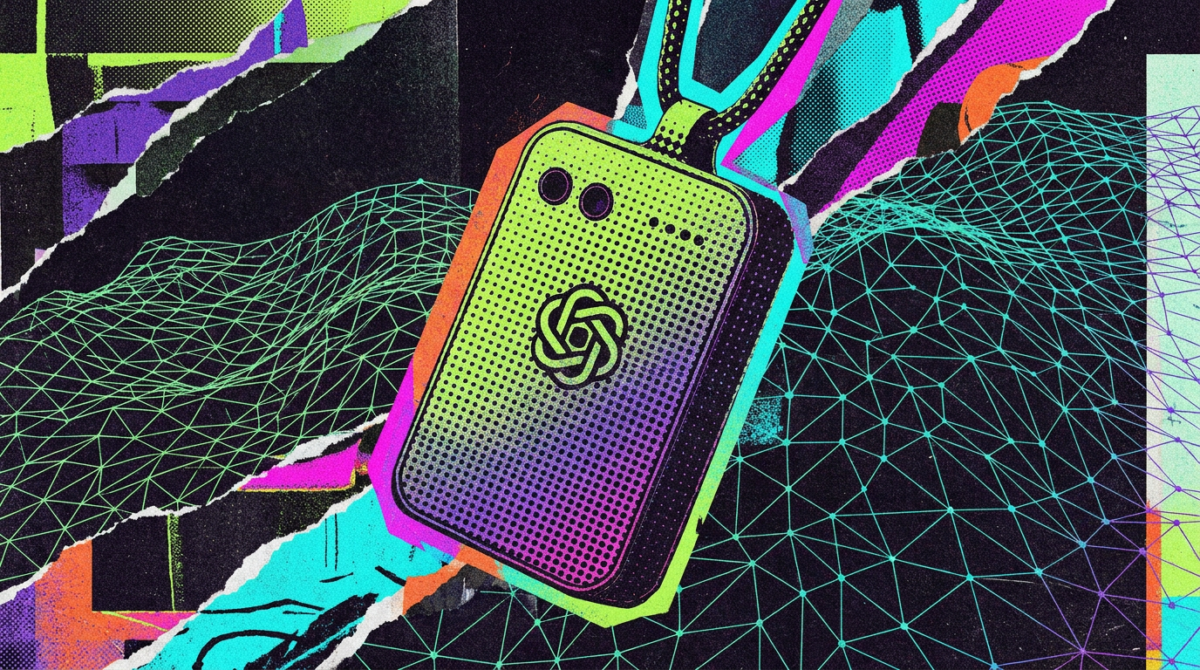
OpenAI is developing a portable, screenless smart speaker designed to work as a human-like AI companion. The device includes a camera, sensors, a rechargeable battery, and mechanical parts that move to make it appear alive. It will run on GPT-Live, an expanded version of ChatGPT Voice Mode that listens and speaks simultaneously. OpenAI plans to unveil it later this year and release it in 2027, but Apple's lawsuit alleging trade secret theft—focused partly on OpenAI's chief hardware officer Tang Tan, a former Apple iPhone designer—could delay the launch.
Why it matters
This represents OpenAI's entry into consumer hardware, positioning AI as a home companion rather than a tool. The device's design philosophy—making it "feel alive" with personality and mechanical movement—reflects CEO Sam Altman's stated goal of building a computer like the one in the film "Her." For businesses and consumers, this signals a shift toward always-on, context-aware AI that integrates with smart homes and personal data, though the anthropomorphic design has drawn criticism for potential psychological risks.
What to watch
The Apple lawsuit's outcome will determine whether the 2027 launch proceeds; Apple is seeking an injunction. The speaker is only the first of about five hardware projects OpenAI's division is developing, which also reportedly include a portable device to replace a phone, a wearable pendant, and home robotics.
Summaries like this, in your inbox every morning.
OpenAI's hardware ambitions mark a fundamental shift in how the company envisions AI's role in daily life. Rather than a tool summoned on demand, the speaker is positioned as a proactive companion—one that learns its owner's patterns, accesses personal data, and uses mechanical movement to cultivate emotional connection. This philosophy directly reflects CEO Sam Altman's stated goal of creating a "Her"-like computer, signaling that OpenAI sees the future of AI less as software and more as embodied presence.
The timing and scope reveal serious competitive intent. The speaker is explicitly the first of about five hardware projects, including a portable phone-replacement device, a wearable pendant, and home robotics. This breadth suggests OpenAI is not merely experimenting but building a hardware ecosystem. Significantly, this directly challenges Apple, which is preparing its own family of AI-focused home devices, including a smart home command center with a 7-inch display and facial recognition.
The Apple lawsuit introduces legal risk that could reshape the timeline. Apple's focus on Tang Tan—OpenAI's chief hardware officer and a former iPhone designer—raises the stakes beyond typical IP disputes. If the injunction succeeds, it could block or delay the 2027 launch. Even if OpenAI prevails, the discovery process may air sensitive details about how the company sources talent and designs hardware, exposing competitive friction between two of the most ambitious technology companies.
Pick your industry and the AI tools you use, and get news related to your work every day.
Free · 30 seconds with Google · unsubscribe anytimeWhat is AIToday? →
Ask AI anything about this article. The AI reads this article, earlier AIToday articles, and Wikipedia, and cites its sources. Q&As are published on this page for other readers too.
Chunghwa Telecom president Rong-shy Lin said the shift from conversational AI to autonomous AI agents is resha…
CoreWeave fell 5% in premarket trading Friday and was on track to finish the week down 15%, after rebounding f…

Apple and Meta said they would jointly release a new open-weight AI model designed to run on high-end Macs, ai…
Investors put $38.5 billion into Asian startups in Q3, per Crunchbase data

A longtime Anthropic investor told Fortune he expects shares priced around $1.8 trillion, below the company's…

In Q2, billionaires or their funds sold six 'Magnificent Seven' AI stocks