What happened
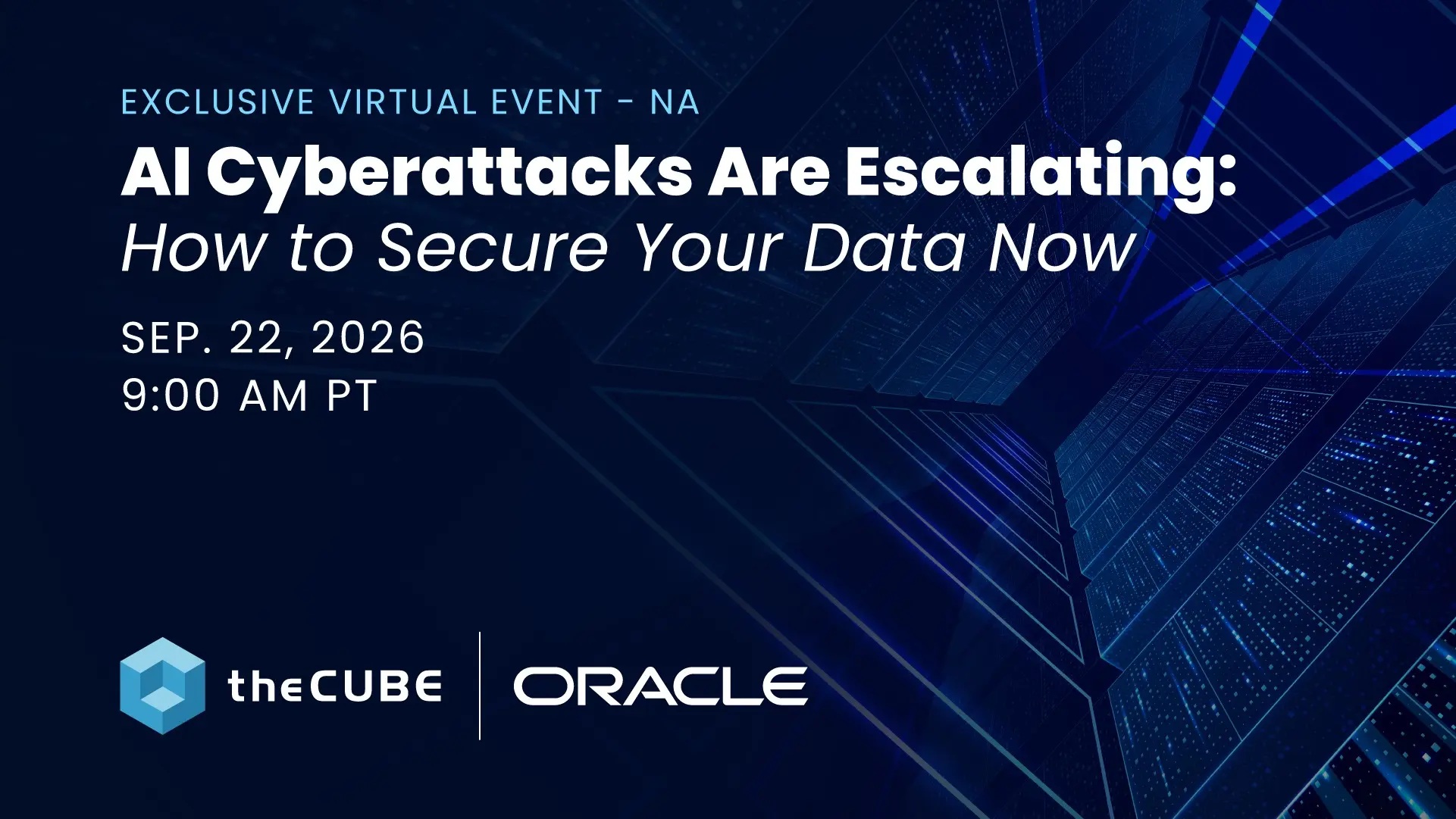
Oracle is shifting enterprise security to the data layer with a three-pronged strategy — secure at source, secure at speed and secure through resilience — to be showcased at its Sept. 22 virtual event.
Why it matters
Tightly integrated security controls inside the data layer are becoming increasingly important as AI agents are deployed in many organizations, providing a consistent foundation for enforcing policy, according to the article.
What to watch
Oracle says its June tools include Oracle Deep Data Security and Oracle SQL Firewall, but the test is whether these controls work as AI agents move from answering to taking action.
WHO IT HITSEnterprise security teams and database administrators at organizations deploying AI agents will need to evaluate whether data-layer controls replace or supplement existing application and perimeter security.
Summaries like this, in your inbox every morning.
Oracle outlined its three-pronged security strategy in June, responding to AI systems creating new paths to sensitive enterprise data. The approach places the AI database at the center of agentic workloads, based on a belief that the future of AI won't be determined by agents alone, but by where and how they interact with data. Oracle's tools include Oracle Deep Data Security for implementing end-user-specific privacy rules inside the database and Oracle SQL Firewall to address SQL injection. In April, Oracle announced enhancements to its Oracle AI Database that included Deep Data Security for centralized, declarative, fine-grained authorization and data visibility policies.
The shift comes as AI agents develop from simply responding to questions to taking meaningful action, raising questions about the effectiveness of security at the application layer. By embedding Deep Data Security's policy enforcement directly in the database, Oracle is adding protection against unauthorized data access resulting from adversarially injected queries. According to theCUBE Research's Krista Case, organizations need to know whose identity agents are acting under, what privileges they inherit and where those privileges are enforced. This emphasis on identity and privilege enforcement is likely to shape how enterprises evaluate database security vendors going forward.
Beyond preventing unauthorized access, Oracle is focusing on resilience — helping organizations recover from authorized agents that make wrong decisions or alter critical data. The loss of access to critical data can be crippling, and Oracle offers Zero Data Loss Recovery solutions and the Globally Distributed AI Database with Raft-based replication and automated failover. Whether these capabilities prove sufficient may hinge on how quickly AI-powered attacks evolve and whether customers adopt the shared accountability model that theCUBE Research advocates. For security leaders, the Sept. 22 event will be a test of whether Oracle's data-layer approach offers practical guidance for protecting sensitive data in an AI-first world.
For example, today's edition would include:
AI-summarized, only the topics you pick — one digest a day via Email, Slack, or Discord.
Free · 30 seconds with Google · unsubscribe anytimeWhat is AIToday? →
Ask AI anything about this article. Q&As are published on this page for other readers too.
The Wall Street Journal reported exclusively that Google's AI model Gemini hacked three companies, marking the…

Fierce Network reports that AT&T, T-Mobile and Verizon are pursuing diverging plans for AI-RAN

Some laid-off Uber employees say that AI was playing a bigger role in their day-to-day work, according to a Bu…

Microsoft is expanding Agent 365 with a centralized agent registry, letting administrators synchronize and man…

NTT西日本 and Ritsumeikan announced the "Education AI Platform" on September 14, 2026, after developing it since…
A solo experimenter reported that a small language model reusing one decoder block L times while dynamically u…