Scott Aaronson at OpenAI has solved AI text watermarking with Hendrik Kirchner.
The approach embeds a hidden statistical fingerprint into AI outputs using a secret key.
It is imperceptible to humans, costs almost nothing, and comes with a public verification API.
What happened
Scott Aaronson, while at OpenAI, developed a watermarking method for AI text together with Hendrik Kirchner. The technique embeds a secret statistical signature into an AI's output by using a private pseudo-randomness source derived from a secret key, then scores how well the text matches that source versus others.
Why it matters
The watermark has no practical impact on output quality—humans cannot tell the difference at all—and costs nearly zero to implement. It provides a way to verify whether text came from a particular AI model, addressing authenticity concerns without degrading user experience.
What to watch
OpenAI has provided an API that lets anyone check for the watermark. The method is detailed in a full paper available for technical review.
Ask the AI about this article →
AI text watermarking has been a long-standing challenge: how to authenticate AI-generated content without degrading quality or adding computational burden. Aaronson's solution addresses this by leveraging the inherent randomness already present in AI text generation. Since large language models choose tokens probabilistically rather than deterministically, a secret source of randomness can steer those choices in a way that leaves a detectable statistical fingerprint—yet one that is invisible to human readers. The elegance of the approach lies in its efficiency: because the watermark is embedded in choices the model already makes, there is no need for additional processing or model modification. By providing a public API for verification, Aaronson's team has made the tool accessible to anyone who needs to verify whether text originated from a watermarked model.
For example, today's edition would include:
AI-summarized, only the topics you pick — one digest a day via Email, Slack, or Discord.
Free · takes 30 seconds · unsubscribe anytimeWhat is AIToday? →
Ask AI anything about this article. Q&As are published on this page for other readers too.
Israeli startup DataAgent Ltd
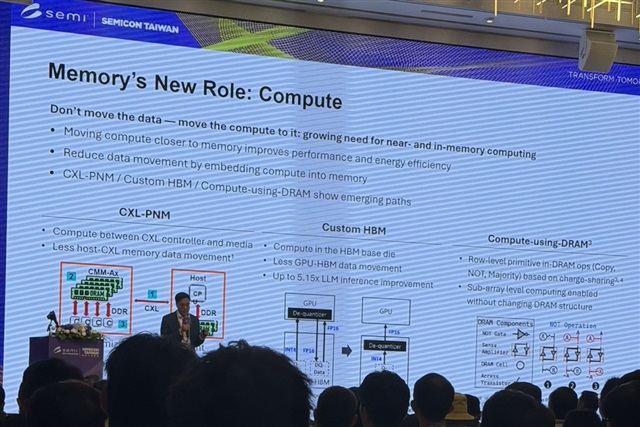
SK Hynix presented a custom HBM concept at SEMICON Taiwan 2026, where compute functions are placed in the base…
The U.S. Department of Defense announced on August 31 that it has deployed ChatGPT Mil, a customized version o…

Nvidia reported earnings that were both remarkable and boring, reflecting its focus on avoiding a consolidated…

Anthropic has agreed to a $35bn cloud-computing contract with Lambda, a Nvidia-backed cloud provider

The Supreme Court of Japan has included about ¥60 million in its fiscal 2027 budget request for AI-related exp…