A new initiative called the AI Safety Seeding Initiative has launched to identify and support student founders building AI safety groups at universities that lack them.
University groups are recognized as the most reliable source of AI safety talent, with a 2023 survey finding they were the single most common career influence for people working on catastrophic risks, yet dozens of strong schools remain without a group.
What happened
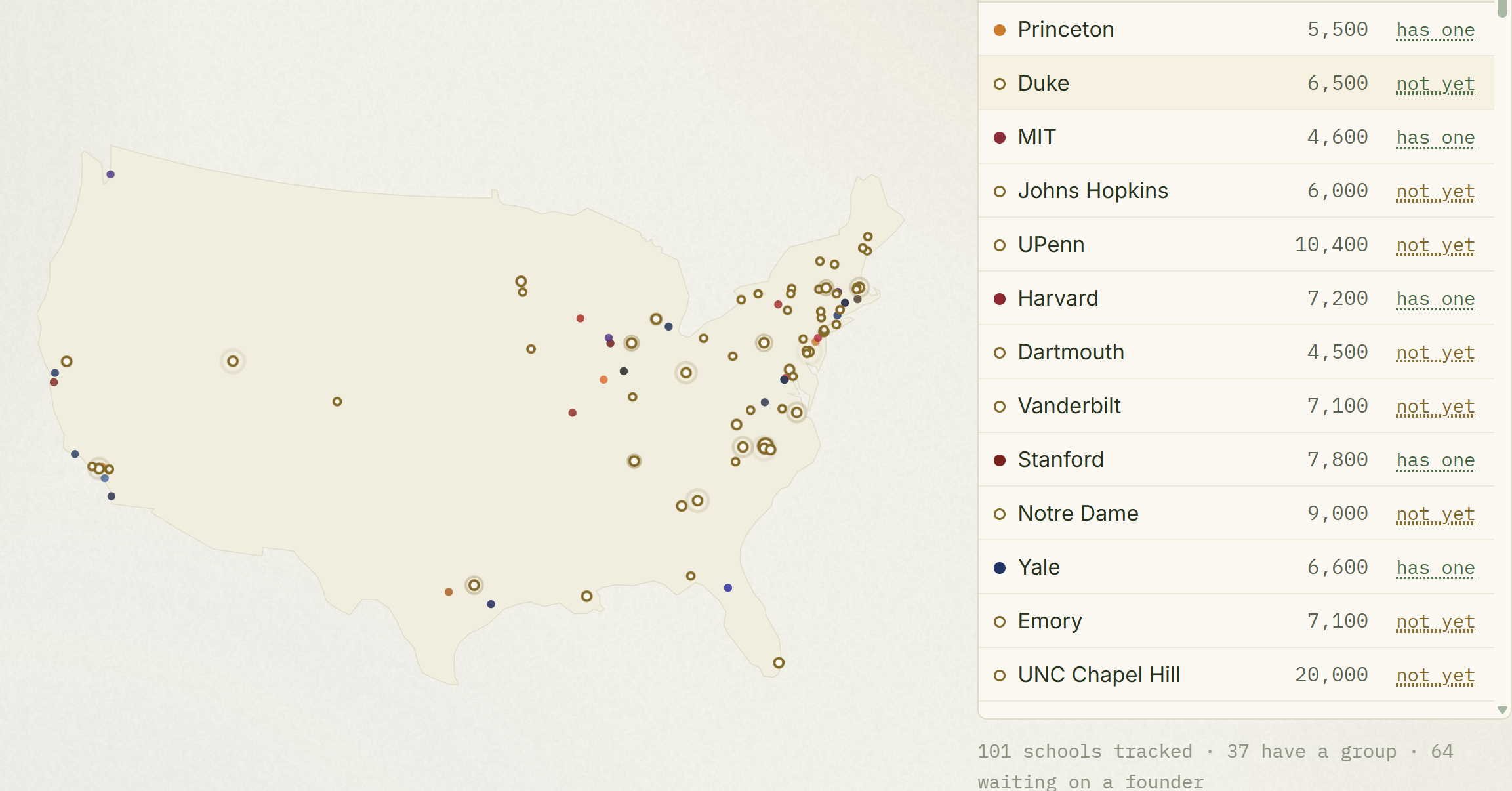
The AI Safety Seeding Initiative, launched in partnership with Kairos, aims to identify and support student founders at top universities that currently lack AI safety groups. The initiative will help prepare these founders to apply to Pathfinder and launch groups this fall.
Why it matters
University groups are the single most common career influence for people working on catastrophic risks, according to a 2023 survey. Dozens of strong universities could sustain such groups but do not have one, representing a gap in the pipeline for AI safety talent.
What to watch
The initiative is calling for referrals of potential student founders at universities without existing AI safety groups (a list of eligible schools is available on the initiative's website, aisafetyseeding.org).
Ask the AI about this article →
University-based AI safety groups have emerged as a critical talent pipeline for the field. According to a 2023 survey cited in the announcement, group involvement was the single most common career influence among people working on catastrophic risks—a finding that underscores the outsized impact these grassroots communities have in shaping career trajectories. Yet despite their proven value, dozens of universities with the resources and academic strength to sustain such groups remain without one, representing a significant untapped opportunity for field building.
The AI Safety Seeding Initiative addresses this gap by targeting the earliest bottleneck: identifying and supporting potential founders before they launch. By partnering with Kairos, an established field-building organization that already supports existing groups like MAIA, AISST, and BASIS, the initiative can leverage existing expertise and networks to accelerate the creation of new groups. The focus on preparing founders for a Pathfinder application and a coordinated fall launch suggests a structured approach designed to increase the likelihood of sustainable group formation.
For example, today's edition would include:
AI-summarized, only the topics you pick — one digest a day via Email, Slack, or Discord.
Free · takes 30 seconds · unsubscribe anytimeWhat is AIToday? →
Ask AI anything about this article. Q&As are published on this page for other readers too.
A UK study by UK AI Security Institute and Limbic AI surveyed 6,474 British adults

Broadcom's Clayton Donley says companies are doing mission-critical work with AI agents quickly, but without t…
Bank of England governor Andrew Bailey warned that advanced AI poses risks to financial infrastructure in a le…
As AI agents perform real business tasks, 'Agentic Identity' (giving each AI a unique employee-like ID) and 'D…

Andrew Bailey, head of the world's financial stability watchdog, warned in a letter to G20 finance ministers a…

Fortinet announced the acquisition of Virtue AI, a move aimed at expanding its AI security capabilities