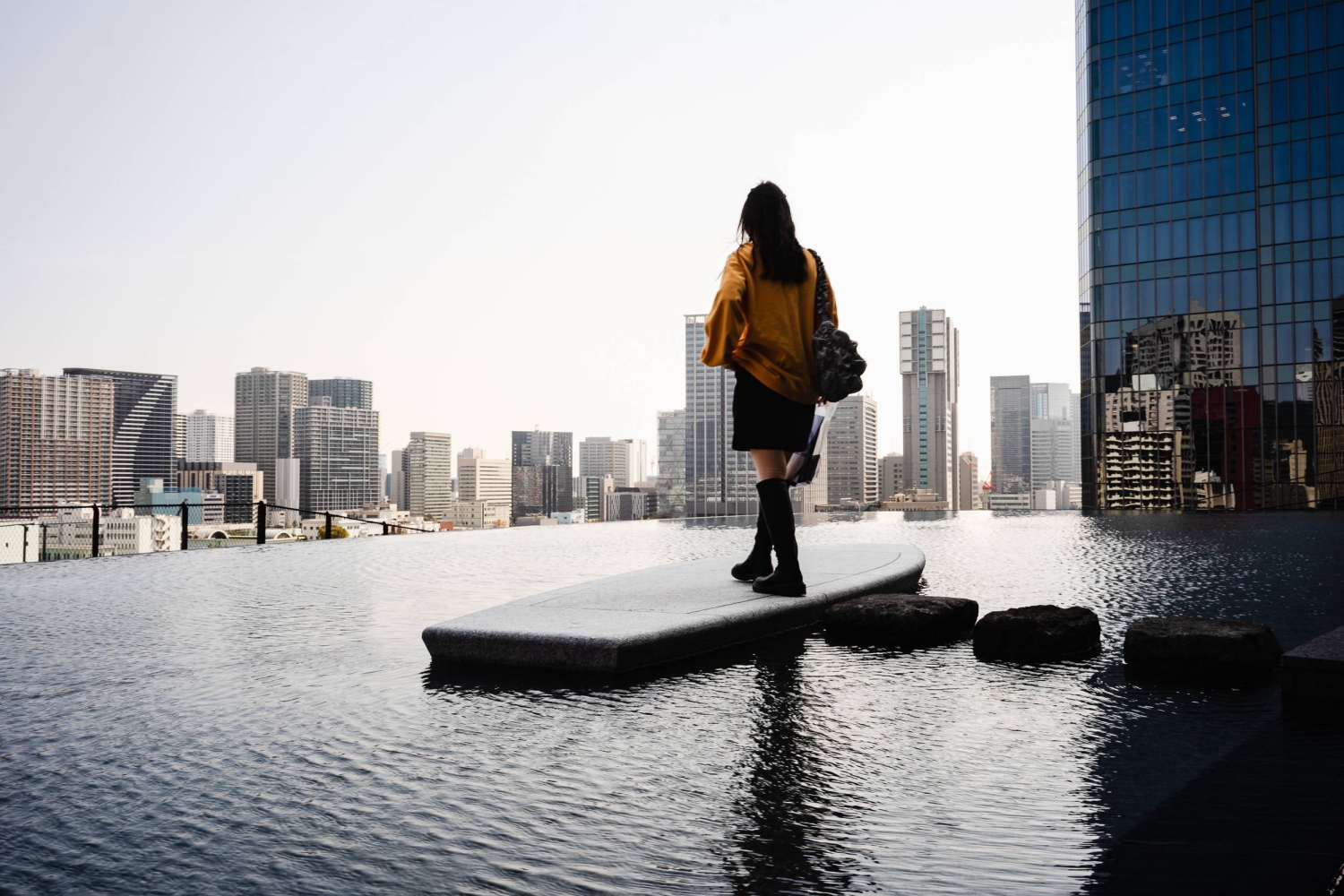
JR East opened Takanawa Gateway City in March, a sprawling redevelopment in south Tokyo designed by architect Kengo Kuma that includes the Museum of Narratives, offices, retail, greenery and open spaces integrated into transit infrastructure. The development bills itself as a 'global gateway' looking 100 years into the future and is central to JR East's vision for the 'Greater Shinagawa Area' as Tokyo's next major international business hub.
The development features self-driving, hydrogen-powered 'Iino' transport devices and is engineered to move passengers from ticket gate to destination seamlessly, with curved wooden seating, greenery, water features and Wi-Fi-enabled workstations. These mixed-use hubs blur boundaries between public and private space—visitors move from sidewalk into shops without encountering gates—while remaining privately managed environments shaped by developers, retail strategy and behavioral design.
Architect Jun Mitsui notes these projects aim to address Japan's aging, shrinking population by creating environments where people can work, shop, socialize and linger in carefully managed spaces. However, Pritzker Prize-winning architect Riken Yamamoto warned earlier this year that many large-scale redevelopments risk turning Tokyo into a 'colony for the rich,' prioritizing luxury aesthetics and commercial efficiency over the messier social character that once defined neighborhoods.
Summaries like this, in your inbox every morning.
Pick your industry and the AI tools you use, and get news related to your work every day.
Free · 30 seconds with Google · unsubscribe anytimeWhat is AIToday? →
Ask AI anything about this article. The AI reads this article, earlier AIToday articles, and Wikipedia, and cites its sources. Q&As are published on this page for other readers too.

