What happened
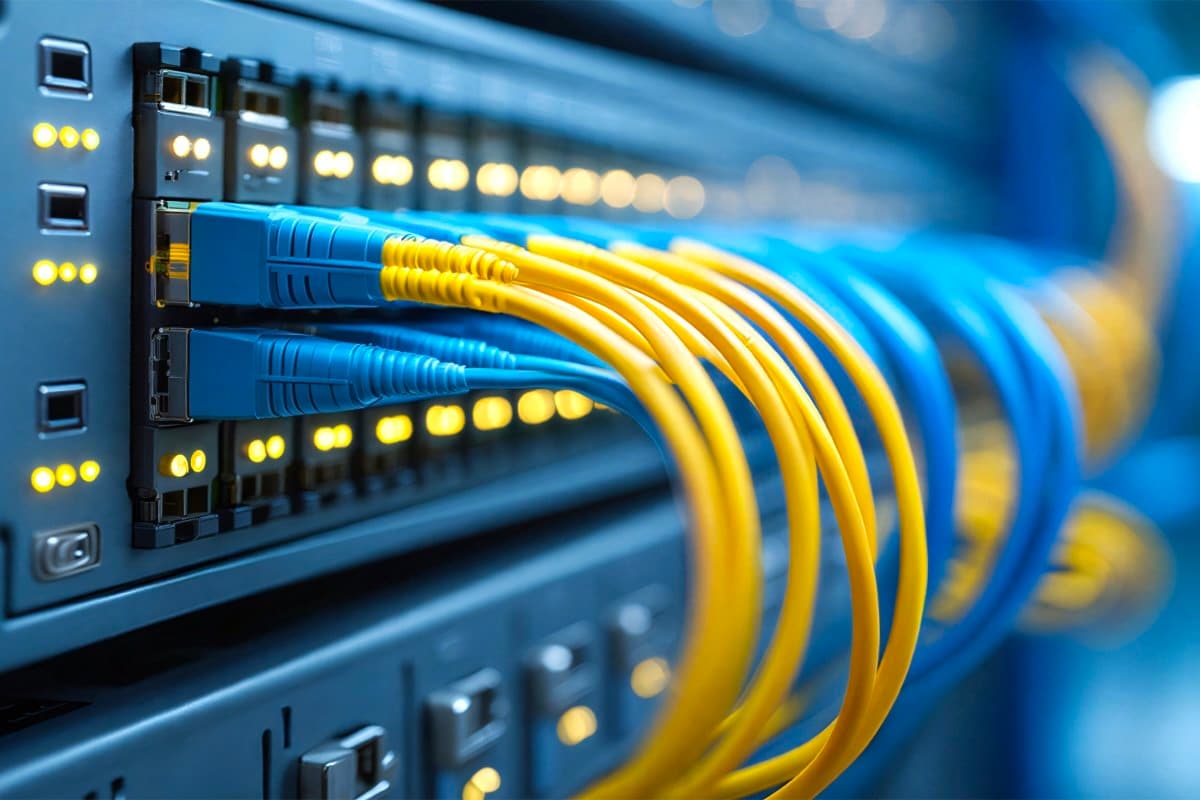
Stock market investor interest is shifting from long-distance data center connections (where Fujikura had led) to high-speed communication technology within data centers themselves. Furukawa Electric is positioned as a key beneficiary, having acquired Hakusan (the #2 global player in MT ferrule connectors) in 2024 and announcing a new factory for next-generation connectors in June, while also developing external light sources (ELS) essential for next-generation optical communication (CPO).
Why it matters
As AI workloads expand, the volume of data exchanged between servers is growing exponentially. Traditional focus on fiber-optic networks connecting separate data centers is giving way to recognition that internal rack-to-rack and server-to-server connections are now critical to GPU performance. Furukawa Electric supplies the optical cables and connectors (the "nerves and blood vessels") that enable this internal communication, making it a likely beneficiary as the AI investment cycle matures.
What to watch
Furukawa Electric's stock has become more accessible to retail investors after a stock split, and the company is actively expanding its connector and optical communication capabilities to serve the next generation of AI infrastructure demand.
Summaries like this, in your inbox every morning.
The Japanese stock market's AI-related rally is entering a new phase as semiconductor and data center construction themes mature. Early investor enthusiasm centered on companies like NVIDIA and Fujikura, which serve the foundational infrastructure—chips and the external networks connecting facilities. However, as the body of AI infrastructure becomes operational, the market's attention is shifting to a constraint that was previously secondary: the internal communication architecture within each data center.
This shift is driven by a concrete technical reality the body outlines: GPUs generate exponentially more data exchange as generative AI advances, and the speed of internal connections now determines whether those GPUs can fully utilize their computational power. The article uses a human-body analogy—GPUs are the "brain," but the optical connectors and cables are the "nerves and blood vessels." If internal communication bottlenecks, raw processing power cannot translate to useful output. Furukawa Electric has positioned itself to capture this demand through recent acquisitions (Hakusan, the #2 MT ferrule connector maker globally) and announced factory expansion in June for next-generation connector products, plus ongoing development of external light sources for next-generation optical communication. A secondary factor mentioned is a stock split that has reduced the share price, potentially making the stock more accessible to retail investors and attracting new capital inflows.
Pick your industry and the AI tools you use, and get news related to your work every day.
Free · 30 seconds with Google · unsubscribe anytimeWhat is AIToday? →
Ask AI anything about this article. The AI reads this article, earlier AIToday articles, and Wikipedia, and cites its sources. Q&As are published on this page for other readers too.
Amazon introduced Bee Frontier, a wearable personal AI, for $74.99 in Onyx, Lavender and Sage, and Bee Eclipse…
Wall Street ended down sharply, with worries about the AI trade and high oil prices weighing on the market

Citi has become the latest US bank to restrict AI agents from accessing accounts, per the Financial Times

AI-related stocks faced heavy selling pressure on concerns over capital expenditure levels and slowing revenue…

Dell says its AI Data Platform uses a four-engine architecture and a Unified Semantic Layer to connect siloed…

Microsoft and Nvidia are promoting RTX Spark, a new class of Windows PCs for local AI, with a top configuratio…