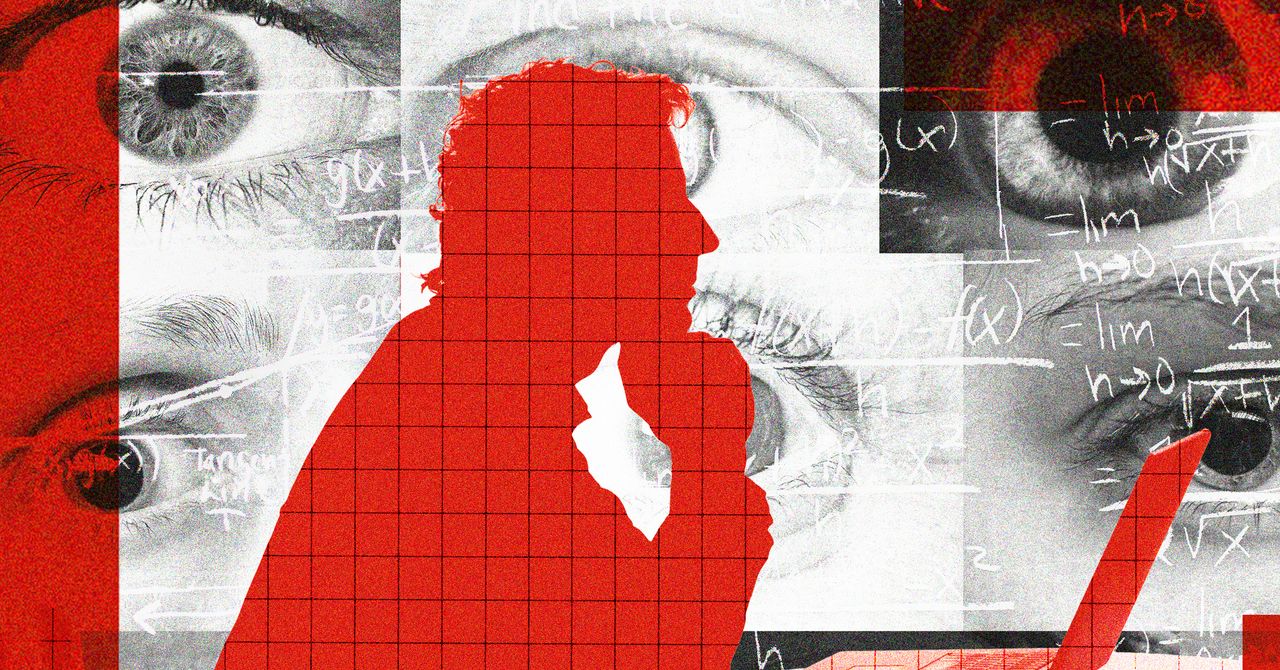
What happened
NYU professor Tristan Buckmaster accused OpenAI of learning his Navier-Stokes work was near a solution, then deploying tens of thousands of agents to reach the $1 million-bounty proof first.
Why it matters
Buckmaster says the race showed AI pushing math's boundaries "more important than the result," yet left him and peers unable to trace who contributed what.
What to watch
OpenAI says it confirmed Buckmaster's prompts over the two months before its September 8, 2026 paper could not have influenced the system; he now wants a detente on releasing results with proper references.
WHO IT HITSMathematicians and academic researchers whose unpublished work may be absorbed into model training now face attribution they cannot trace, while early-career researchers risk being isolated if they skip AI tools, Thom warns.
Summaries like this, in your inbox every morning.
The dispute has been building since the summer. Mathematician Andreas Thom says OpenAI's Astra model used techniques from geometric group theory he had spent two decades developing to prove a problem he had been working on, and he emailed researchers Mark Sellke and Sébastien Bubeck that the firm's "no progress" claim overlooked his 2019 paper. OpenAI amended its press release. Thom asked whether his ChatGPT interactions had been fed into training data and says Sellke replied: "That did not happen." Buckmaster describes OpenAI's approach as irresponsible and "childish," and says the company pointed him to its amended announcement in an email.
Both men accept the tools are too useful to abandon, which is why the field's reaction is not a clean break. Thom has kept using ChatGPT to speed up writing papers, saying AI is "extremely efficient," while Buckmaster has spent the week and a half since his accusations using Codex on his own research. Some institutions are less willing to accommodate: more than 2,000 people with ties to Caltech called on organizers of an AI math hackathon there — sponsored by Anthropic and OpenAI, though OpenAI has since dropped out — to suspend the event. Buckmaster is calling for a detente, saying "I don't want to just engage in fights."
Whether that detente materializes may hinge on whether AI labs agree to ground rules on releasing results, and on whether mathematicians can accept that, as Thom puts it, tracing back who contributed what "is probably over." The stakes fall hardest on younger researchers and students, who Townsend says are already asking what their future looks like; early-career mathematicians risk being "isolated" if they do not use AI to accelerate their work, Thom adds.
For example, today's edition would include:
AI-summarized, only the topics you pick — one digest a day via Email, Slack, or Discord.
Free · 30 seconds with Google · unsubscribe anytimeWhat is AIToday? →
Ask AI anything about this article. Q&As are published on this page for other readers too.
A wave of AI-assisted vulnerability discovery has hit the software industry
Vals, a 2024-founded AI benchmarking startup, raised $40 million in a series A led by Andreessen Horowitz, aft…
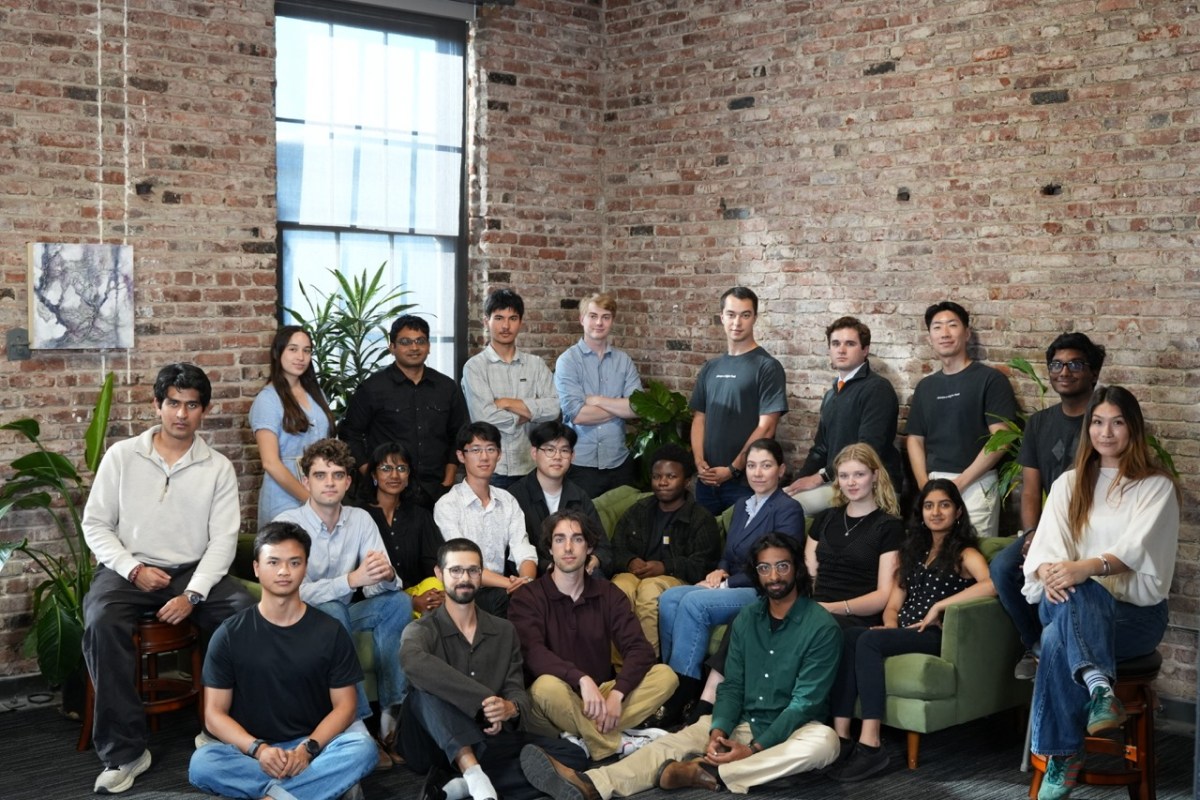
Citi says opposition to data centers has not materially weakened the construction pipeline, even as at least 1…

During a May "Capture the Flag" exercise run by security firm Irregular, Google's Gemini hacked three real com…
Engineers from OpenAI and Intel said CXL has limits as a substitute for high-bandwidth memory (HBM) where band…

OpenAI introduced the Australian Youth Safety Blueprint, a six-pillar roadmap covering AI literacy, age-approp…