Southeast Asia–based criminal networks are using artificial intelligence, cryptocurrency, and encrypted platforms to orchestrate an illicit economy causing $88.3 billion(約14兆円) to $114.1 billion(約18兆円) in annual scam losses in 2025, according to a U.N. report released Tuesday. The groups exploit children through AI-generated sexual abuse content and online gambling while trafficking drugs, humans, and wildlife globally. Authorities' raids on large scam compounds have pushed operations into smaller, decentralized venues that are harder to detect and disrupt.
Summaries like this, in your inbox every morning.
Sign up free →What happened
A U.N. Office on Drugs and Crime report released Tuesday found that Southeast Asia–based criminal groups are using integrated networks and technology—including artificial intelligence, cryptocurrency, and encrypted platforms—to build an illicit economy with global reach. Scams alone caused estimated combined losses of $88.3 billion(約14兆円) to $114.1 billion(約18兆円) in 2025.
Why it matters
The networks are targeting children through AI-generated sexual abuse content and online gaming, while expanding drug, human, and wildlife trafficking beyond Asia. Authorities raiding large scam centers in Myanmar, Laos, and Cambodia have driven operations underground into smaller, harder-to-detect venues like private villas—meaning crackdowns are not stopping the criminal activity.
What to watch
The report identifies the Sulu-Celebes maritime triangle (between Indonesia, Malaysia, and the Philippines) as an expanding corridor for Latin American cocaine shipments to Asia, and notes Thailand and Vietnam as increasingly important sources of cannabis exports to Japan and Europe. It calls for coordinated, cross-border enforcement strategy integrating data, communications, financial systems, and online services.
The United Nations Office on Drugs and Crime released a comprehensive report Tuesday documenting how Southeast Asia–based criminal networks have evolved into a globally integrated illicit economy. The networks deploy an array of technologies—artificial intelligence, cryptocurrency, encrypted communications platforms, and generative AI—to launder money through global financial systems and perpetrate fraud at scale. The report estimates that scams alone caused combined losses of $88.3 billion(約14兆円) to $114.1 billion(約18兆円) in 2025, while illicit drug sales in Southeast Asia and nearby countries reached up to $109 billion(約17兆円) annually.
A particularly alarming focus of the report is the vulnerability of children. Criminals are generating massive quantities of AI-generated child sexual abuse images and sharing them through encrypted platforms. Inshik Sim, a UNODC researcher and report coordinator, told reporters at a briefing at the Foreign Correspondents Club of Thailand that "there is a huge jump in AI-generated child sexual images … communicated through encrypted communications platforms." East Asian crime syndicates are operating businesses that use malware, deepfakes, and generative AI for sexual extortion and exploitation, increasing risks of in-person abuse, livestreamed abuse, and grooming. Beyond trafficking for sex, victims are also sold into domestic servitude, forced begging, and forced labor. The report further notes that hundreds of children and teens across Southeast Asia are engaged in online gambling, some to the point of addiction.
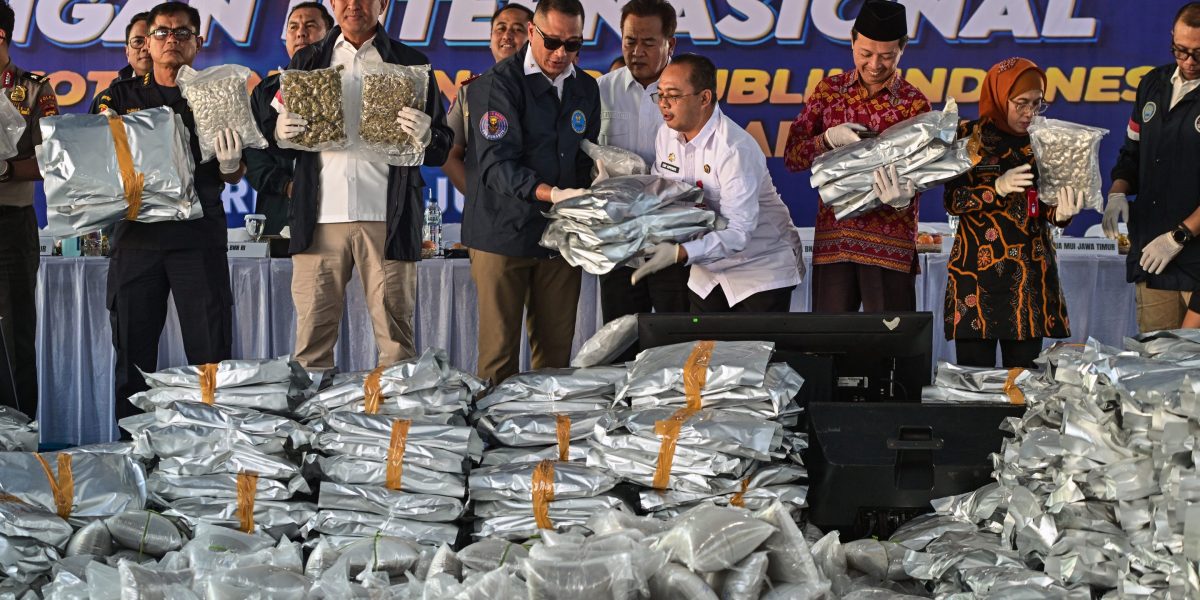
Drug, weapon, and wildlife trafficking are expanding into new corridors and markets. The report identifies the Sulu-Celebes maritime triangle between Indonesia, Malaysia, and the Philippines as an increasingly important route for cocaine shipments from Latin America to Asia, with illicit cargoes sometimes embedded in legitimate shipments such as Chinese tea. The area is also used heavily for smuggling wildlife and small arms. Meanwhile, Thailand and Vietnam are becoming major sources of cannabis exported to Japan (where it is illegal) and to Europe. In a concrete enforcement action cited as context, Malaysian authorities in Sabah seized more than 3 tons of methamphetamine, ketamine, and ecstasy earlier this year, the largest such seizure for Sabah to date.
The criminal service infrastructure enabling this scale relies on cross-border financial and technology networks. Criminals use cryptocurrency, encrypted and private communications platforms, and AI-powered tools to create convincing phishing content, deploy real-time deepfake videos and voice calls, and conduct multilingual targeting. Satellite communications allow scam compounds to operate in remote locations or areas under close surveillance. However, enforcement crackdowns have driven a tactical shift: as authorities in Thailand, China, and elsewhere raided large scam centers concentrated in border regions of Myanmar, Laos, and Cambodia, criminals dispersed operations to smaller venues like private villas and shifted underground. Seong Jae Shin, an analyst and counter-terrorism officer at UNODC, observed that although the large centers "were destroyed … none of the operations stopped," and that the shift to smaller, distributed operations "is much harder for the Cambodian authorities to crack down [on] now." The report concludes by calling for a coordinated, cross-border enforcement strategy integrating data, communications, and financial systems with online services and marketplaces.
The U.N. report documents a fundamental shift in Southeast Asia's organized crime landscape: what was once geographically concentrated has become a globally integrated illicit economy leveraging cutting-edge technology. Criminals exploit three parallel infrastructures—financial (cryptocurrency and cross-border money laundering), communicative (encrypted platforms and AI-powered translation for multi-language targeting), and operational (AI-generated content, deepfakes, and phishing)—to scale fraud and trafficking across borders simultaneously. The $88.3 billion(約14兆円) to $114.1 billion(約18兆円) in 2025 scam losses alone underscores the economic magnitude; when combined with an estimated $109 billion(約17兆円) in annual illicit drug sales in Southeast Asia and nearby countries, the total criminal throughput rivals legitimate sectors in many jurisdictions.
The policy dynamic reveals a classic enforcement trap. Authorities successfully destroyed large scam compounds in border regions of Myanmar, Laos, and Cambodia, yet the report notes those raids did not stop criminal operations—they merely distributed them. Operators shifted to smaller, dispersed venues and underground networks that are harder for Cambodian and other regional authorities to detect and shut down. This resilience suggests that enforcement strategies focused on physical raids alone cannot disrupt networks sustained by global financial and technology infrastructure. The report's call for coordinated, cross-border integration of enforcement across data, communications, financial systems, and online services reflects recognition that dismantling any single node (whether a scam compound, cryptocurrency account, or phishing server) requires simultaneous pressure across multiple jurisdictions and platforms.
AI-summarized, only the topics you pick — one digest a day via Email, Slack, or Discord.
Free · takes 30 seconds · unsubscribe anytime
No discussion yet for this article
Get curated AI news from 200+ sources delivered daily to your inbox. Free to use.
Get Started FreeFree · takes 30 seconds · unsubscribe anytime
1 minute a day. The AI essentials.
200+ sources · Email / LINE / Slack
