Anthropic's Fable 5, despite being marketed as the most capable AI model, is selling poorly among U.S. companies—capturing only 6 percent of tokens purchased from Anthropic in its first month, versus 25 percent for OpenAI's GPT-5.6 Sol.
Ramp's data suggests companies have hit a spending ceiling for premium AI pricing when the performance gains are hard to measure in practice.
While overall corporate AI spending continues to rise, growth at OpenAI and Anthropic is slowing as advanced users migrate to open-source alternatives.
What happened
Anthropic's Fable 5, billed as the most capable AI model available, captured only about 6 percent of tokens purchased from Anthropic in its first month post-launch and 11.4 percent of total Anthropic spending. By comparison, OpenAI's GPT-5.6 Sol commands 25 percent of tokens and 23 percent of spending at OpenAI. Fable 5 generated only about 75 percent of the revenue that GPT-5.6 Sol did, despite costing significantly more per token—roughly twice the price of GPT-5.6 Sol or other Anthropic flagship models, at about $10 per million input tokens and $50 per million output tokens.
Why it matters
Ramp economist Ara Kharazian attributes Fable 5's slow uptake to price, arguing that companies have hit a ceiling on what they will spend for AI performance gains that are difficult to measure in daily work. The data suggests corporations are willing to spend more on AI overall—the top 1 percent of U.S. companies spent a median of $7,400 per employee on AI in July—but they are resisting premium pricing for marginal capability improvements. This signals a hard limit on the revenue growth thesis that has underpinned investment in frontier AI labs.
What to watch
Growth at OpenAI and Anthropic is decelerating. In July, Anthropic reached 43.5 percent adoption among U.S. companies (up 1.1 percentage points month-on-month), while OpenAI grew only 0.23 percentage points to 39.7 percent. Advanced users, whose spending the two labs increasingly depend on, are shifting toward open-source models, which now trail frontier models by only a few months.
Anthropic's Fable 5 launched to considerable fanfare as the most capable AI model on the market, but sales data from financial services provider Ramp tell a starkly different story. In its first month after launch, Fable 5 accounted for only about 6 percent of the tokens purchased from Anthropic through its API, and 11.4 percent of total spending on Anthropic models. By contrast, OpenAI's flagship model, GPT-5.6 Sol, captures 25 percent of tokens and 23 percent of spending at OpenAI—and generates about 75 percent more revenue than Fable 5, even though Fable 5 costs significantly more per token. Fable 5 is priced at about $10 per million input tokens and $50 per million output tokens, roughly double the cost of GPT-5.6 Sol or other Anthropic flagship models.
Ramp economist Ara Kharazian attributes this weak adoption to price, arguing that companies have discovered a ceiling on what they are willing to spend for AI performance gains that are difficult to quantify in everyday work. The company notes that calculating AI return on investment remains murky—how do you put a dollar value on the performance difference between one model generation and the next?—and that many use cases may not benefit enough from Fable 5's marginal edge to justify the premium. The sample underlying Ramp's data skews slightly toward tech companies and comes from its proprietary token spend management product, suggesting actual Fable 5 adoption is likely even lower.
Corporate AI spending overall continues to rise: in July, the top 1 percent of U.S. companies spent a median of $7,400 per employee on AI, the top 10 percent spent $650, and the median company spent $11.95 per employee. Yet this growth masks troubling trends for the major AI labs. Anthropic reached 43.5 percent adoption among U.S. companies in July (up 1.1 percentage points month-on-month) and has passed OpenAI, but OpenAI's growth has slowed to just 0.23 percentage points. More significantly, advanced users—whose growing spending OpenAI and Anthropic increasingly depend on—are shifting toward open-source models, which now trail frontier models by only a few months. xAI posted faster growth than both, rising 0.94 percentage points to 4 percent, though it remains a niche provider. Ramp characterizes these trends as worrying signs for an AI industry whose investment thesis depends on fast-growing revenue from increasingly powerful models, and suggests that the willingness to pay sharply higher prices for performance gains that are hard to measure has, at least for now, plateaued.
Fable 5's weak sales reveal a structural tension in the frontier AI market. Anthropic and OpenAI have invested heavily on the assumption that each new generation of models would command steadily higher prices because their capabilities would translate directly into business value. Fable 5 tests this thesis and appears to fail it. The model is, by industry consensus, the most capable on the market—yet U.S. companies are not buying it at the premium pricing Anthropic set. Ramp's data shows this is not indifference to AI itself; companies are spending more on AI than ever, with top-tier firms allocating thousands per employee. Rather, the issue is that the marginal value of moving from a cheaper, slightly less capable model to Fable 5 is not tangible enough to justify the cost, at least in the use cases Ramp's sample (skewed toward tech companies) represents.
Simultaneously, the data reveals another threat: growth at both leading labs is decelerating, and open-source models are closing the performance gap. When advanced users—the segment whose spending drives profitability—begin to shift toward cheaper open-source alternatives that are only a few months behind frontier models in capability, the revenue model that justified billion-dollar valuations and sustained R&D spending comes under pressure. This does not mean frontier AI has hit a ceiling forever; the body notes that models with dramatically higher and more tangible value could still command premium pricing. But the current generation's marginal gains are no longer selling at the prices the labs hoped.
AI-summarized, only the topics you pick — one digest a day via Email, Slack, or Discord.
Free · takes 30 seconds · unsubscribe anytime
Ask AI anything about this article. Q&As are published on this page for other readers too.
Quanta Computer announced at its August 13 earnings call that it is raising its full-year 2026 capital expendi…
Salesforce spent $27 billion on stock buybacks in its first quarter ending in April—a record for the company—e…
Nebius Group and CoreWeave both reported Q2 2026 earnings this week showing strong AI compute demand

Bank of America analyst Vivek Arya lifted the 2030 server CPU total addressable market forecast to more than $…

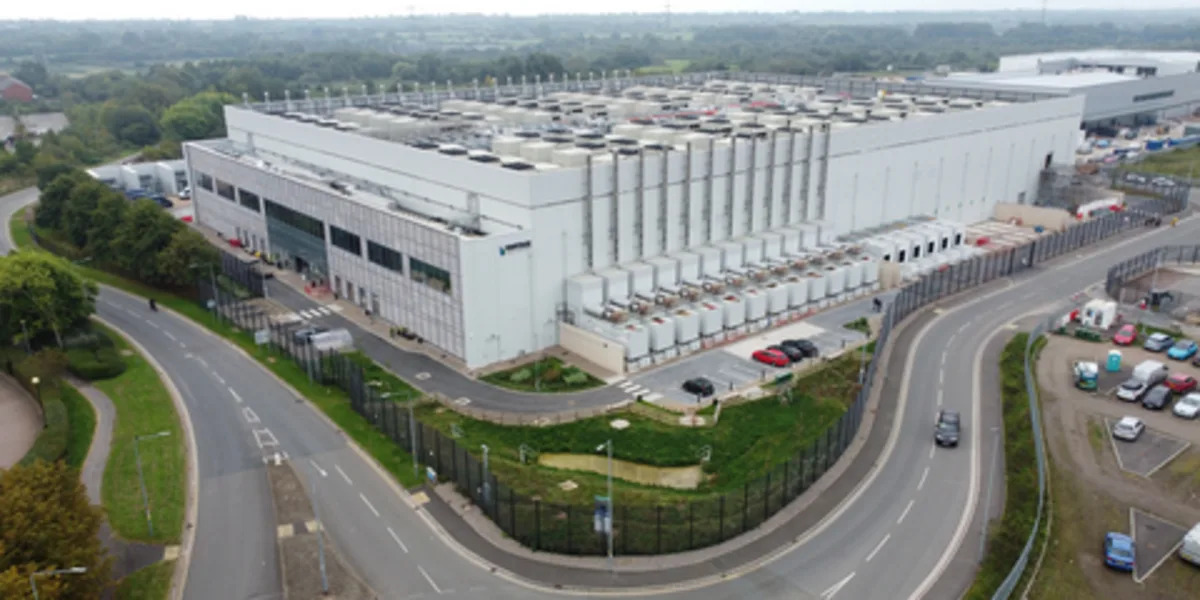
Nebius, an AI cloud company listed on Nasdaq, has agreed to lease high-density NVIDIA-powered AI infrastructur…
Cerebras Systems fell over 18% in premarket trading after its second earnings report as a public company showe…
The AI news that matters, in one minute each morning.
Sign up free