
A new proposal suggests paying 1,000 people to read AI transcripts.
It would cost $5M monthly and catch about 15 incidents per month.
The goal is to catch subtle misalignment without top talent.
What happened
A proposal outlines an AI safety organization that would pay about 1,000 people to read transcripts from AI models like Claude, focusing on flagged code, RL, and eval traces.
Why it matters
This approach could catch warning shots, reward hacking, and unusual behavior without absorbing top talent, and it appears such an organization does not currently exist.
What to watch
The estimated cost is $5M per month, which could process all tokens in a frontier RL run and catch about 15 serious incidents per month under bearish estimates.
Ask the AI about this article →
The proposal responds to a perceived gap: no existing organization pays people specifically to read through AI transcripts at scale. By focusing on a high-recall, low-precision monitor to flag suspicious traces, a large workforce could review the data without needing to hire away scarce AI safety experts.
The author argues that even with advanced models, humans are still needed for certain slices of detection, such as spotting obvious misalignment or subtle reward hacking. The suggested scale—1,000 people and $5M per month—would allow processing all tokens in a frontier reinforcement learning run, with an estimated yield of around 15 serious incidents per month.
The cost estimate suggests this could be a practical complement to existing safety measures, though the proposal does not detail implementation specifics or address potential privacy or logistical concerns beyond anonymization.
For example, today's edition would include:
AI-summarized, only the topics you pick — one digest a day via Email, Slack, or Discord.
Free · takes 30 seconds · unsubscribe anytimeWhat is AIToday? →
Ask AI anything about this article. Q&As are published on this page for other readers too.
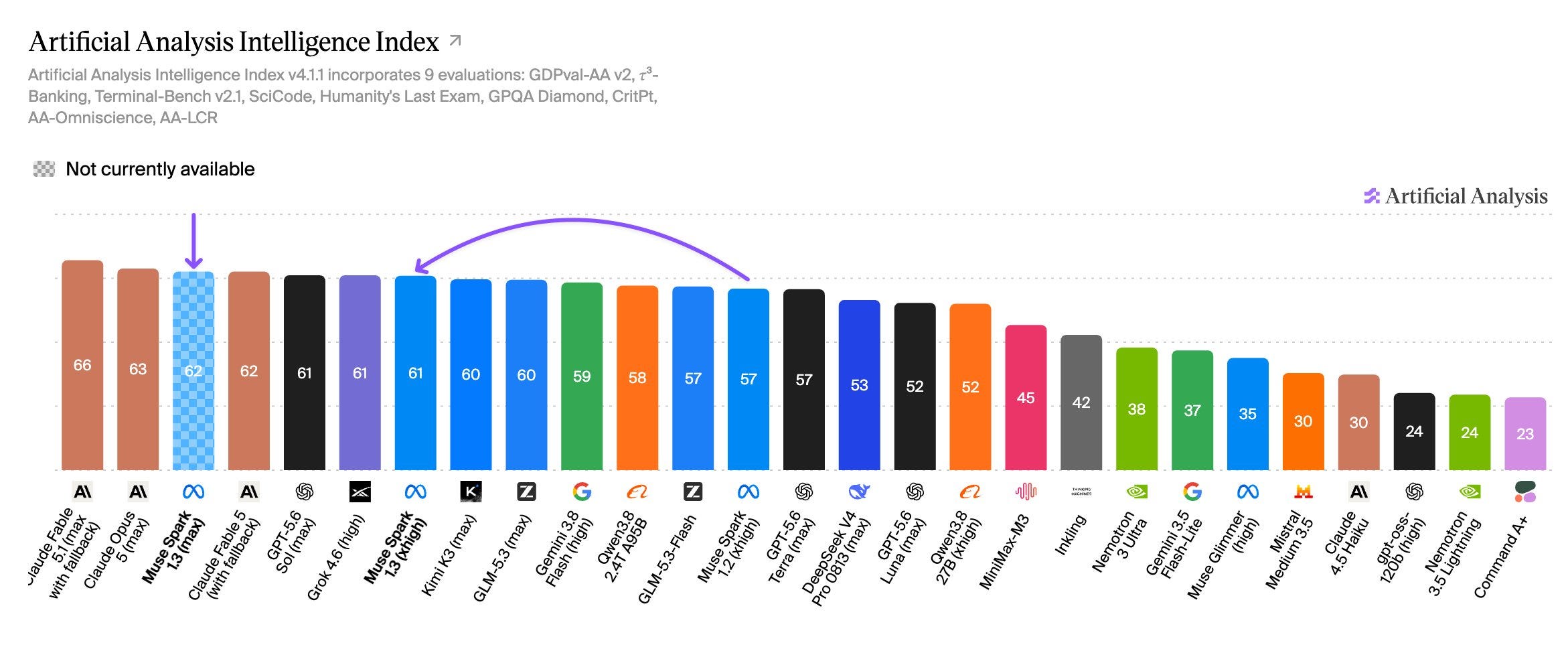
Meta released Muse Spark 1.3, which per AAII is now the #3 model in the world
The original author of CABiNet (ICRA 2021) rebuilt the repo and compared its performance against YOLO26-sem on…

A developer built Deepity, a C++ machine learning library, to test Predictive Coding Networks (PCNs), an alter…
Meta Platforms Inc. released Muse Spark 1.3, which it says puts it at the same level as the most recent models…

Google Threat Intelligence Group's May 2026 report found that AI is now used in nearly all stages of cyberatta…

A former Tokyo Metropolitan Police investigator with expertise in fraud cases warns that AI is being used in v…