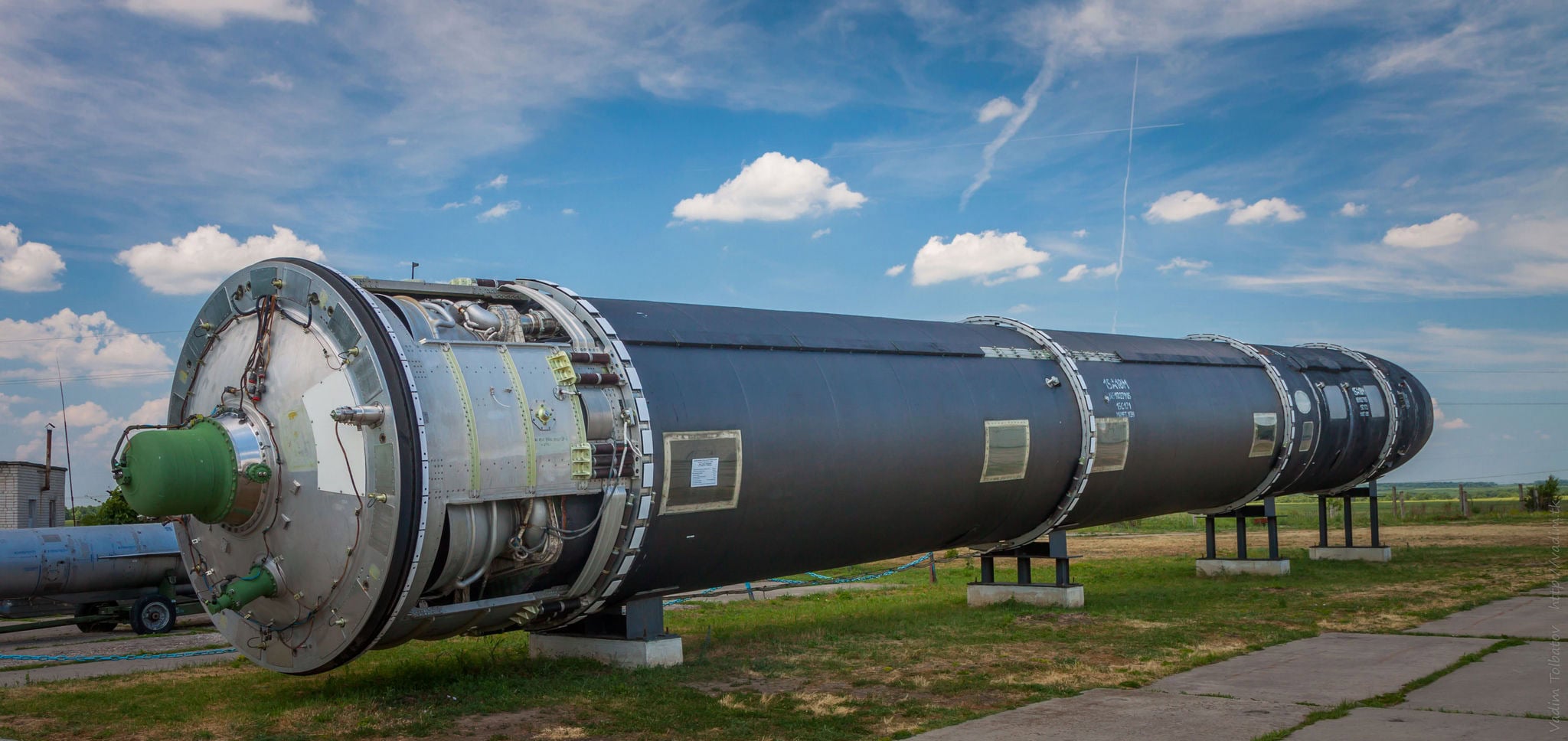
A defense investor thesis holds that U.S. missile and aircraft production is entering a multi-year expansion driven by depleted arsenals and rearmament priorities, with framework agreements potentially tripling or quadrupling output. The cycle is underpinned by structural supply constraints and sustained Pentagon demand, making suppliers like Honeywell and L3Harris candidates for prolonged earnings growth, while L3Harris's planned Axyv IPO in the second half of the year could raise up to $2 billion(約3200億円).
Summaries like this, in your inbox every morning.
Sign up free →What happened
A prominent defense investor argues that U.S. missile and aircraft production is on the cusp of a multi-year growth trend, driven by the need to replenish roughly 1,000 Patriot interceptors expended from an inventory of about 5,000, plus longer-term rearmament against China and Russia. Framework agreements discussed by the Trump Administration could triple or quadruple missile production over the coming years. L3Harris's Missile Solutions unit posted Q1 FY2026 revenue of $990M (up 18% year-over-year) with a record backlog of $40.7B, while Honeywell's Aerospace Technologies delivered Q1 FY2026 revenue of $4.322B.
Why it matters
Modern militaries burn through precision munitions faster than previously understood, making a prolonged production ramp more likely regardless of near-term geopolitical shifts. Structural supply constraints will sustain price and volume pressure on defense contractors over years. For investors, this suggests a durable earnings cycle in companies supplying critical defense content—particularly Honeywell (which supplies ring laser gyros and navigation hardware for 11 of 12 major U.S. weapons systems) and L3Harris, whose Aerojet Rocketdyne unit is set to separate as Axyv in the second half of the year.
What to watch
L3Harris's planned Axyv IPO could raise up to $2 billion(約3200億円), with $1 billion(約1600億円) in Pentagon funding already secured, and is scheduled for the second half of the year. Honeywell's upcoming separation of its aerospace business is expected to create a pure-play defense and aerospace investment vehicle. Framework agreements translating into multi-year contracts will be a key indicator of whether the production-cycle thesis holds. Investors should monitor the underlying momentum in Q1 FY2026 results: L3Harris trades at $294.23 with a Street target of $381.95 (forward P/E of 25), and Honeywell trades at $222.37 with a Street target of $246.67 (forward P/E of 22).
No discussion yet for this article
Get curated AI news from 200+ sources delivered daily to your inbox. Free to use.
Get Started FreeFree · takes 30 seconds · unsubscribe anytime
5 minutes a day. The AI essentials.
200+ sources · Email / LINE / Slack
