AIToday

Esther Perel warns: AI and remote work are eroding workplace relationships

Fortune AI3h ago
Esther Perel warns: AI and remote work are eroding workplace relationships

Key takeaway

Esther Perel, a psychotherapist known for her work on human relationships, warns that workplaces are experiencing social atrophy—the slow disappearance of everyday human contact—driven by hybrid work, remote collaboration, and AI adoption. Three in 10 employees have lost patience for small talk, struggle to read colleagues' emotions, or feel higher anxiety over spontaneous calls since AI arrived in their workplace. Perel says leaders must rebuild human connection through direct conversation rather than leaning further into automation, and must stop framing teams as families, which backfires when the business faces challenges.

Summaries like this, in your inbox every morning.

Sign up free →

3 Key Points

  • What happened

    Psychotherapist Esther Perel told Fortune that workplaces are suffering from social atrophy—the slow erosion of everyday human contact—driven by hybrid work, remote collaboration, and AI adoption. Europe has the lowest employee engagement globally at 12%, compared with the global average of 20%, which is at its lowest point since 2020.

  • Why it matters

    Three in 10 employees report less patience for small talk, difficulty reading colleagues' emotions, higher anxiety over phone calls, or reduced conflict-resolution skills since AI was introduced in their workplace, according to Workday's Human Connection Workplace Index. Perel warns that automation is removing routine entry-level tasks that historically helped junior workers build skills and workplace relationships—and companies are using AI as justification for large-scale layoffs, potentially creating a talent pipeline gap.

  • What to watch

    Perel urges leaders to rebuild human connection by asking basic questions like 'How are you doing?' rather than skipping to agendas, and to stop describing their teams as families—a framing that sets people up for disappointment when companies face challenges. She argues that cultural change, not better tools or shorter meetings, is the real solution.

In Depth

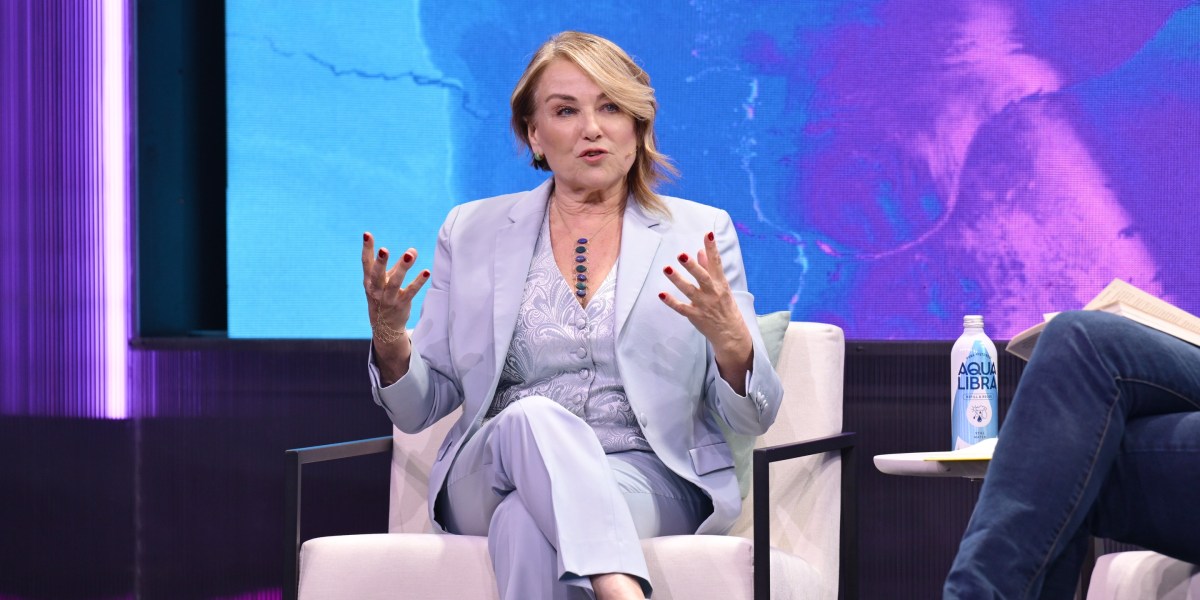
Esther Perel, a psychotherapist whose career has explored the complexities of human relationships, is turning her attention to the workplace. Her seminal book, "Mating in Captivity," examined the tension between love and desire; now she is examining how AI, hybrid working, and declining engagement are reshaping how colleagues connect.

The data underscores her concern. Europe has the lowest employee engagement of any region in the world at 12%, according to Gallup's 2026 State of the Global Workplace report. This compares with the global average of 20%, which is itself at its lowest point since 2020. Perel believes this is a symptom of what she calls social atrophy—the slow, invisible erosion of everyday human contact that used to hold organizations together. "I think what's happening in our personal lives is mirrored in the workplace," she told Fortune. "There is a general state of social atrophy creeping up on us and we don't even notice it."

Several factors drive this disconnect. Remote and hybrid work reduce the physical proximity that scaffolds professional relationships, while distributed global teams make it harder for colleagues to build rapport. Perel is particularly critical of the polished, decontextualized nature of modern video calls. "In the early days of video calls, people were unintentionally visible in each other's homes, which paradoxically created more intimacy than the polished, decontextualized version we have now," she says. On contemporary Zoom calls, she observes, no one says hello; people pretend to do something else while waiting; and the moment the task ends, the meeting ends. "You can only handle difficult and important conversations as a leader if you've built up a foundation of small, insignificant ones first," Perel warns. Economic anxiety compounds the problem: employees are staying in their current roles out of fear rather than exploring new ones—"job hugging instead of job hopping," in her phrase—which eliminates the social risk-taking that once came with switching jobs and meeting new teams.

Perel is skeptical that AI will solve these problems. In fact, she argues it is making them worse. "I think AI is absorbing time that used to be spent with other people. Asking a chatbot a quick question instead of asking a colleague doesn't just remove that one interaction, it removes all the important conversations that follow." Workday's Human Connection Workplace Index quantifies the damage: three in 10 employees say they have less patience for small talk, more difficulty reading colleagues' emotional tone, higher anxiety over spontaneous phone calls, or a decline in their ability to resolve conflict without digital mediation, since AI was introduced in their workplace. Meanwhile, companies are using AI as justification for major layoffs—Oracle, Amazon, and BT have all announced sizeable cuts. Perel warns that by eliminating the routine entry-level tasks that AI now automates, companies risk removing the traditional paths by which junior workers learn skills and form workplace relationships. "I was at a major business conference recently where everyone kept talking about reducing hiring for entry-level roles and all the ways AI was reshaping headcount," she says. She notes that Gen Z employees are the least connected among all generations in the workplace and are 12 times more likely than Gen X colleagues to feel completely disconnected from their co-workers.

Perel's recommendations center on restoring human intentionality to workplace culture. She compares the moment facing today's executives to that of a parent with a frightened child: "You don't say 'everything's okay.' You don't do pep talks. What you need to do is create a container for the anxiety." She encourages managers to ask basic questions—"How are you doing?" or "What's happening in people's lives right now?"—rather than skipping straight to the agenda. She also warns leaders against calling their teams families. "Stop calling your team a family. It's not true, and it sets people up for disappointment. Family members compensate for the weaknesses, absences, or incompetence. A team is not organized that way." The real solution, she insists, is cultural change and rebuilding patience for human imperfection in workplaces increasingly designed to minimize personal interaction. "A big question for CEOs is how they're going to deal with the fact that other humans are imperfect, unpredictable, and messy," Perel concludes.

Context & Analysis

Perel's argument rests on several interconnected observations about the modern workplace. Europe's employee engagement at 12%—nearly half the global average of 20%—signals a systemic problem that extends beyond cyclical economic swings. The psychotherapist connects this disengagement to three overlapping trends: the structural changes imposed by hybrid and remote work, the psychological erosion of small social interactions, and the accelerating adoption of AI as a replacement for human-to-human contact.

The mechanism Perel identifies is subtle but cumulative. Hybrid work removes the informal moments—hallway conversations, unplanned encounters, the ambient awareness of colleagues' lives—that once scaffolded professional relationships. Polished Zoom calls with blurred backgrounds eliminate the accidental intimacy of early video work. AI chatbots and task automation compress further the space where junior employees learn skills and build networks. Layoffs justified by AI adoption remove the very entry-level roles that historically served as on-ramps to professions. Each individually small, these trends compound into what Perel calls a crisis of human capacity—people are losing the "muscle" to handle awkward small talk, spontaneous connection, and the messiness of working alongside imperfect humans.

Her prescription addresses the root cause, not the symptoms. Rather than more tools, more efficiency, or shorter meetings, Perel insists that leaders must consciously restore the conditions for human contact—asking genuine questions, containing workplace anxiety without false reassurance, and abandoning the "family" framing that masks the transactional nature of employment. This is a call for cultural intentionality in an era of frictionless design.

FAQ

What does Perel mean by social atrophy in the workplace?
Perel describes it as the slow, invisible erosion of everyday human contact that used to hold organizations together. It results from reduced physical proximity in hybrid and remote work, blurred video call backgrounds that create less intimacy than unintentional home visibility did early on, and the elimination of small, inconsequential conversations that build rapport before difficult discussions arise.
How is AI specifically affecting workplace relationships, according to Perel?
Perel argues that AI absorbs time that used to be spent with colleagues—asking a chatbot a question instead of a colleague removes not just that one interaction, but all the important conversations that follow. Workday's Human Connection Workplace Index found that three in 10 employees report less patience for small talk, more difficulty reading colleagues' emotional tone, higher anxiety over spontaneous phone calls, or decline in their ability to resolve conflict without digital mediation since AI was introduced.
What is Perel's main recommendation for leaders?
Perel calls on leaders to create space for human connection by asking basic questions such as 'How are you doing?' or 'What's happening in people's lives right now?' She also urges them to stop calling their teams families—a framing that sets people up for disappointment when companies face challenges—and to recognize that cultural change, not better tools, is the real solution.

Get AI news like this every morning

AI-summarized, only the topics you pick — one digest a day via Email, Slack, or Discord.

Free · takes 30 seconds · unsubscribe anytime

Discussion

No discussion yet for this article

Stay ahead with AI news

Get curated AI news from 200+ sources delivered daily to your inbox. Free to use.

Get Started Free

Free · takes 30 seconds · unsubscribe anytime

1 minute a day. The AI essentials.

200+ sources · Email / LINE / Slack

Get it free →