A new informal stock sector called "memi"—combining memory chips and semiconductors—has emerged as a $3 trillion(約480兆円) powerhouse driven by AI's demand for memory to power data centers. Three manufacturers (Micron, SK Hynix, and Samsung) each worth $1 trillion(約160兆円) or more are dominating gains across normally uncorrelated market segments, from U.S. small-caps to emerging markets and international stocks. While pricing power may hold through 2028, the memory market's historically cyclical nature means a sharp downturn is possible if tech companies reduce spending on AI infrastructure.
Summaries like this, in your inbox every morning.
Sign up free →What happened
Portfolio managers have identified a new informal sector called "memi" (memory + semiconductors) anchored by three dominant chipmakers—Micron, SK Hynix, and Samsung—each now worth $1 trillion(約160兆円) or more. Micron's stock is up 240% year-to-date with market cap at $1.1 trillion(約180兆円); SK Hynix raised $26.5 billion(約4.2兆円) in its Nasdaq debut (the largest U.S. listing ever by a foreign company); Samsung is up 116% year-to-date. The sector is fueled by major tech companies' $700 billion(約110兆円) AI buildout and their insatiable need for memory chips to train and run AI models.
Why it matters
Memory chips have become a hidden link across seemingly unrelated market segments—U.S. small-cap stocks, emerging markets, and developed markets outside the U.S. all saw outsized gains traced directly to memory-chip companies like Micron, SK Hynix, Samsung, and Japan's Tokyo Electron and Kioxia. This means portfolios that look diversified may carry much more concentrated exposure to memory-chip risk than investors realize, and pricing power for the big three could hold through 2028 (when larger memory supply is unlikely to become meaningful), but the sector faces its historically cyclical boom-bust pattern.
What to watch
Roundhill Investments' DRAM ETF (launched in April) is up 162% year-to-date after peaking at 180% in June. The real risk: if large tech companies pull back spending on data centers (which may already have begun given recent tech stock corrections), the memory market could face a painful return to earth, ending what some bulls hope will be an unprecedented break from its infamous boom-and-bust cycle.
The stock market is being transformed by an informal sector that portfolio managers have begun calling "memi"—a mashup of "memory" and "semiconductors" coined during Harbor Capital's 2026 midyear investor call. The sector has no official ticker but represents a $3 trillion(約480兆円) cluster anchored by three dominant memory-chip manufacturers: Micron Technology, South Korea's SK Hynix, and Samsung, each now worth $1 trillion(約160兆円) or more in market capitalization and climbing.
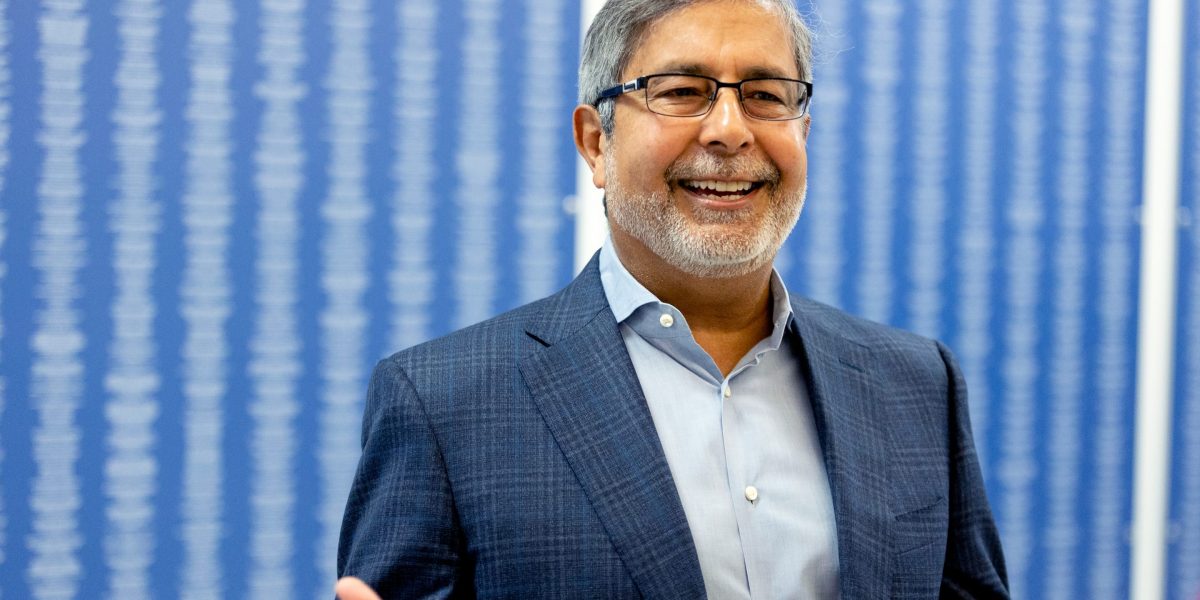
The catalyst is the $700 billion(約110兆円) AI buildout by major tech companies including Amazon, Google, Meta, and Microsoft. As these companies race to build data centers to train and deploy AI models, one critical bottleneck has emerged: obtaining memory chips. The most essential type is DRAM, which stores the data that AI models need to process. Micron CEO Sanjay Mehrotra described AI's appetite for memory bandwidth as "insatiable" during the company's third-quarter earnings call in June. The three dominant suppliers control most of the global memory supply, giving them extraordinary pricing power. Micron's results exemplify this dominance: total quarterly revenue reached $41.5 billion(約6.6兆円), up 74% from the previous quarter and 346% year-over-year. DRAM revenue alone was a record $31.3 billion(約5兆円), representing 343% year-over-year growth and 76% of total revenue for the quarter.
The market performance reflects this concentrated power. Micron's stock is up 240% year-to-date with a market capitalization of $1.1 trillion(約180兆円). SK Hynix made its Nasdaq debut this month after raising $26.5 billion(約4.2兆円), making it the largest U.S. listing ever by a foreign company. Samsung is up 116% year-to-date on the Korea Exchange. Roundhill Investments launched the first-ever memory ETF called DRAM in April with top holdings including Micron, SK Hynix, and Samsung; the fund is less than a year old and has gained 162% so far after hitting a peak of 180% in June.
What makes memi significant is its hidden reach across global equity markets. According to Spenser Lerner, Harbor Capital's head of multi-asset solutions, the same cluster of memory-chip companies is driving outsize gains in U.S. small-cap stocks, emerging markets, and developed markets outside the U.S.—market segments that normally move independently. In emerging markets, the index returned 43.51% over the trailing year, with most performance driven by Korea's Samsung and SK Hynix alongside Taiwan's Taiwan Semiconductor Manufacturing Company; Korea and Taiwan now represent 51% of the index. In developed markets outside the U.S. (including Europe, Australia, and the Far East), the relevant MSCI index returned 20.8% over the trailing year, with Japan driving most gains via its chip-equipment makers and memory manufacturers including Tokyo Electron and Kioxia (Toshiba's memory business, spun out in 2017). MSCI's Japan index returned 29.5% during the same period. Even among U.S. small-cap stocks, where MSCI's small-cap index posted 30.2% returns over the trailing year, the largest holding is SanDisk, which makes high-performance memory cards based on flash memory.
The bottleneck is expected to persist for years. Harbor Capital's outlook report notes that pricing for DRAM chips has remained "firm" and that a larger supply of memory chips is "unlikely to become meaningful before 2028." This two-year window gives the big three manufacturers substantial pricing power. However, the memory-chip industry is notoriously cyclical, subject to sharp boom-and-bust cycles as manufacturers ramp capacity to meet demand and eventually produce a glut that drives prices down. While some bulls argue that AI's unprecedented investment scale will finally break this cycle, recent corrections in tech stocks suggest large-cap spending may already be cooling—a potential signal that the current memory boom may eventually prove to be just that: a boom.
The emergence of the "memi" sector reflects a structural shift in how AI infrastructure investment is reshaping global equity markets. While headlines focus on Nvidia and the so-called Magnificent 7 tech companies, the real bottleneck in the race to build AI data centers lies in memory chips—a constraint that has catapulted three manufacturers (Micron, SK Hynix, and Samsung) into trillion-dollar valuations. The sector's significance lies not in its novelty but in its hidden pervasiveness: the same cluster of memory-chip companies is driving outsized returns across seemingly unrelated market segments, from emerging markets (where Korea's Samsung and SK Hynix dominate) to Japanese chip-equipment makers like Tokyo Electron that service the memory supply chain. This interconnection means that a portfolio constructed to look geographically or size-wise diversified may carry far more concentrated exposure to a single commodity cycle than its label suggests.
The pricing environment for memory chips remains exceptionally favorable, with DRAM prices described as "firm" and supply constraints unlikely to ease meaningfully before 2028. Micron exemplifies this pricing power: its third-quarter revenue of $41.5 billion(約6.6兆円) grew 74% sequentially and 346% year-over-year, driven almost entirely by DRAM revenue of $31.3 billion(約5兆円) (up 343% year-over-year). However, the memory market carries a well-documented risk: it is famously cyclical, prone to sharp boom-and-bust swings as manufacturers ramp capacity to meet demand and then flood the market with excess supply that crushes prices. Some market observers argue that AI's unprecedented scale and capital intensity will finally break this cycle, but history offers no guarantee—and recent tech stock corrections suggest that large-cap spending on data centers may already be cooling.
AI-summarized, only the topics you pick — one digest a day via Email, Slack, or Discord.
Free · takes 30 seconds · unsubscribe anytime
No discussion yet for this article
Get curated AI news from 200+ sources delivered daily to your inbox. Free to use.
Get Started FreeFree · takes 30 seconds · unsubscribe anytime
1 minute a day. The AI essentials.
200+ sources · Email / LINE / Slack
