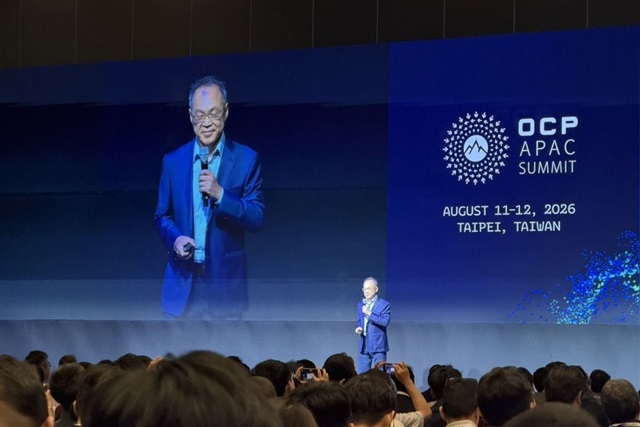
ASE presented its strategy for next-generation AI infrastructure at the 2026 OCP APAC Summit, emphasizing that advances in packaging, optics, and power delivery are essential to scaling AI systems globally.
The move reflects industry recognition that rising demand for AI infrastructure requires fundamental rethinking of how chipmakers and data-center operators design and build systems to manage computing costs, energy consumption, and bandwidth.
What happened
At the 2026 OCP APAC Summit, ASE outlined the role of next-generation packaging, optics, and power delivery in scaling AI systems for global markets.
Why it matters
Demand for AI infrastructure is forcing chipmakers and data-center operators to rethink how systems are built, with implications for computing costs, energy use, and bandwidth worldwide.
What to watch
The three pillars—packaging, optics, and power delivery—are positioned as critical to meeting the infrastructure requirements of AI scaling globally.
Ask the AI about this article →
The announcement reflects a broader industry reality: the explosion in AI workloads has exposed limitations in current infrastructure architecture. Chipmakers and data-center operators can no longer rely on incremental improvements to existing designs. Instead, they must fundamentally reconsider how systems are assembled and operated to handle the computational and power demands of AI at scale.
ASE's focus on three distinct pillars—packaging, optics, and power delivery—suggests that no single innovation will solve the problem. Packaging efficiency determines how closely and effectively components can be integrated; optics handle the massive data movement between processors and memory; and power delivery ensures systems can sustain the electrical loads required. Each domain faces distinct engineering challenges, and solving them in concert is essential for the next wave of AI infrastructure deployment.
For example, today's edition would include:
AI-summarized, only the topics you pick — one digest a day via Email, Slack, or Discord.
Free · takes 30 seconds · unsubscribe anytimeWhat is AIToday? →
Ask AI anything about this article. Q&As are published on this page for other readers too.
Visko raised $10 million in pre-seed funding from Llama Ventures and opened public access to its first foundat…

U.S. markets ended August higher, with the S&P 500 up 2.6% and the Nasdaq up 3.9%

Neurovia AI, an Abu Dhabi-based company, is pitching Saudi security agencies software that it says can compres…

AI company Runway has unveiled Solaris, the first model in a new category it calls "Interface World Models." I…

John Deere introduced JD, a conversational AI tool that lets farmers ask open-ended questions about their hist…
Nvidia CEO Jensen Huang said on Fox Business that AI is creating 'hundreds of thousands' of jobs, including in…