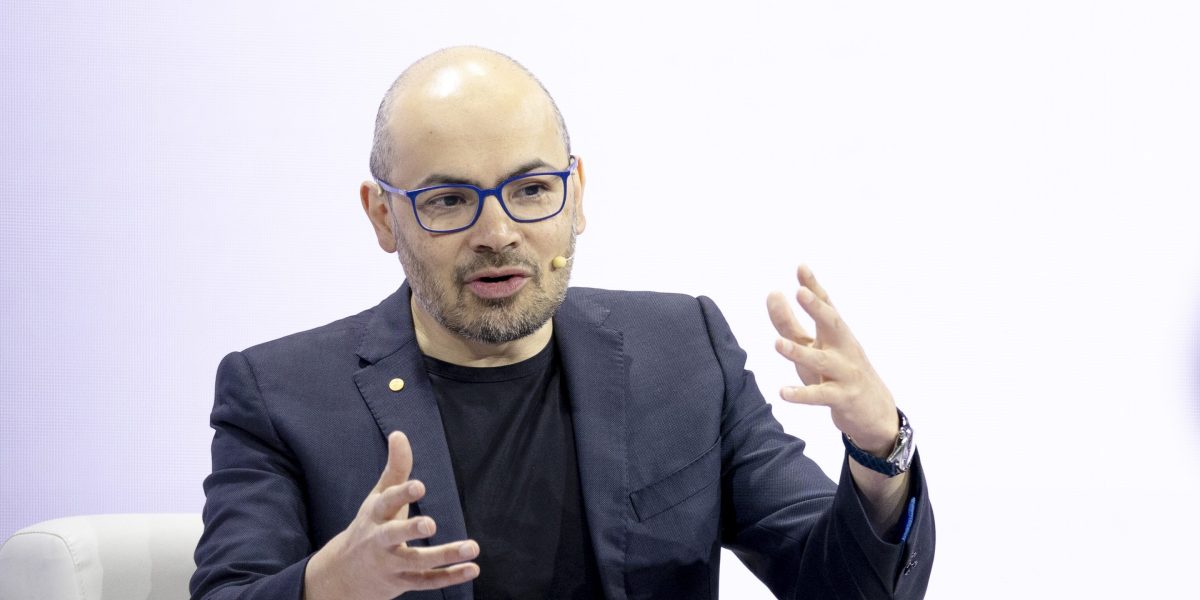
Google DeepMind CEO Demis Hassabis has proposed creating a self-regulatory AI body modeled on FINRA, and the Trump administration is actively considering the idea, according to Bloomberg reporting. The proposal has won backing from major tech leaders and offers a politically palatable alternative to direct government regulation, but critics warn that self-regulatory bodies have historically favored the companies they oversee, and voluntary compliance may be insufficient to manage the risks of powerful AI models.
Summaries like this, in your inbox every morning.
Sign up free →What happened
Demis Hassabis, cofounder and CEO of Google DeepMind, proposed in a social media essay that the U.S. create a self-regulatory body modeled on FINRA (the Financial Investment Regulatory Authority) to oversee AI labs. The proposal has garnered support from Microsoft CEO Satya Nadella, Block CEO Jack Dorsey, Box CEO Aaron Levie, OpenAI's Sam Altman, and Elon Musk. Bloomberg reported that the Trump administration itself is considering establishing such a body, with Treasury Secretary Scott Bessent helping develop the proposal and White House Chief of Staff Susie Wiles currently reviewing it.
Why it matters
The idea appeals across the political spectrum because it sidesteps the Trump administration's stated opposition to direct government AI licensing by making it industry-funded and initially voluntary—a pragmatic middle ground. However, critics warn that self-regulatory bodies historically suffer from conflicts of interest: FINRA has faced repeated accusations from Senator Elizabeth Warren and others of favoring the brokerages that fund it over the investors it protects. Tech analysts argue that voluntary governance may not be stringent enough and that the model offers no clear path to mandatory compliance or international enforcement.
What to watch
Hassabis proposed that AI companies would initially be encouraged to voluntarily submit models for testing at least 30 days prior to release, but the system could become mandatory once evaluations prove effective. The body would develop capability benchmarks for "frontier AI" and require companies to publish model system cards, maintain strong cybersecurity, and fund safety research. If established, the SEC would oversee the new standards body, mirroring its relationship with FINRA.
Demis Hassabis, cofounder and CEO of Google DeepMind, posted an essay on social media last week proposing the creation of a U.S. self-regulatory body modeled on FINRA to oversee AI development. The proposal has catalyzed rapid endorsement from across the tech and policy landscape. Microsoft CEO Satya Nadella, along with Hassabis's own DeepMind cofounder Mustafa Suleyman (now CEO of Microsoft AI), threw their support behind the idea. Block CEO Jack Dorsey, Box CEO Aaron Levie, and OpenAI's Sam Altman also backed the concept, with Altman calling it "thoughtful." Even Elon Musk, who cofounded OpenAI partly out of concern that Google would control superintelligent AI and later launched X.ai, endorsed the framework as "thoughtful" and "a good starting point for discussions." Former Trump administration AI czar David Sacks, generally opposed to tech regulation and licensing regimes, acknowledged the proposal had merit and was preferable to direct government regulation of frontier AI.
Bloomberg reported that the Trump administration itself is actively considering exactly this model. According to unnamed sources cited by the outlet, Treasury Secretary Scott Bessent helped develop the proposal, which was then sent to White House Chief of Staff Susie Wiles for review. The new standards body would be overseen by the Securities and Exchange Commission, the same federal agency that maintains oversight of FINRA. The SEC is the only federal agency with explicit statutory authority to delegate powers to and maintain oversight of self-regulatory organizations.
Hassabis outlined how the body would function. Funding would come from leading AI labs. The board would include independent technical experts, representatives from the open-source AI community, and presumably representatives from AI vendors. The organization would develop assessment protocols for "frontier AI," including capability benchmarks to determine which models qualify for that designation. It would conduct independent safety and security testing of powerful AI models in conjunction with U.S. government agencies and laboratories on matters touching national security. Hassabis proposed that AI companies be encouraged to adopt governance standards including publishing model system cards, adhering to strong cybersecurity protocols, and funding safety and security research. Most significantly, companies would initially be encouraged to voluntarily submit models to the standards body for testing at least 30 days before release. Once evaluations proved effective, the system could transition to mandatory submission for any model a vendor wanted to distribute in the U.S.
However, the analogy to FINRA drew swift criticism from securities regulation scholars and AI safety experts. Massachusetts Senator Elizabeth Warren has repeatedly criticized FINRA for acting more in the interest of the brokerage firms that pay its bills than the individual investors it is meant to protect. Whistleblowers have accused FINRA of doing little to go after problematic brokers from major financial firms such as JPMorgan Chase. Brad Bennett, a former FINRA enforcement chief, stated that FINRA's fines are too low and that some larger brokerages see periodic multimillion-dollar penalties as cheaper than devoting resources to compliance. SLCG Economic Consulting found that in the first year after FINRA gained power to label high-risk securities brokers as "restricted"—a designation meant to warn investors—the agency applied it to zero firms, despite identifying at least 13 brokerages that should have received the label based on public records of client complaints and regulatory events.
Nader Henein, VP analyst at Gartner, told industry publication CIO that "self-regulation is not viable" and that "most tech vendors don't have the capacity to self-regulate," predicting such a structure would breed conflicts of interest. Independent tech analyst Carmi Levy characterized the proposal as a "self-serving roadmap for an industry bent on racing to the AI horizon regardless of the harms caused along the way."
Deep learning pioneer Yoshua Bengio, scientific director of the nonprofit AI safety research organization LawZero, criticized the voluntary architecture. While acknowledging "the argument from a pragmatic standpoint," Bengio said "we absolutely need a clear and precise roadmap to transition from a voluntary to a mandatory model" and called for independent auditing to verify whether companies met the body's standards. The proposal also leaves open the question of how such a body would function internationally. If meeting its standards became a requirement for U.S. distribution, foreign vendors seeking American users would have to comply. If standards proved stringent, the body could become a de facto global standard-setter—much as the FDA's pharmaceutical decisions guide regulatory choices in other countries. Yet the model would not prevent governments from developing powerful AI models for military or government use outside the commercial distribution regime, potentially sidestepping the entire oversight framework and creating catastrophic risks.
Hassabis's proposal arrives at a politically opportune moment: the Trump administration has repeatedly stated it opposes AI licensing regimes, making a self-regulatory model more palatable than direct government oversight. The fact that AI labs would fund the new body rather than taxpayers further aligns with the White House's deregulatory stance. By endorsing the concept, major AI leaders—including rivals like Altman and Musk—signal that industry consensus around some form of governance is possible.
Yet the FINRA analogy carries significant baggage. The brokerage regulator has faced sustained criticism for prioritizing industry interests: FINRA's enforcement chief Brad Bennett observed that some major brokerages view multimillion-dollar fines as cheaper than compliance, and a 2024 analysis by SLCG Economic Consulting found the agency failed to apply a "restricted" label meant to warn investors about high-risk brokers to any firm in its first year of authority, despite identifying at least 13 candidates. Yoshua Bengio and independent analyst Carmi Levy both flagged that voluntary governance risks becoming a "self-serving roadmap" that allows companies to race ahead with minimal constraint.
A further tension looms internationally: if the body's standards became a de facto requirement for U.S. distribution, they might influence global AI governance much as the FDA shapes pharmaceutical approval worldwide. However, this model could not prevent governments from developing powerful AI models for military or government use outside the commercial approval regime—a gap the proposal does not address.
AI-summarized, only the topics you pick — one digest a day via Email, Slack, or Discord.
Free · takes 30 seconds · unsubscribe anytime
No discussion yet for this article
Get curated AI news from 200+ sources delivered daily to your inbox. Free to use.
Get Started FreeFree · takes 30 seconds · unsubscribe anytime
1 minute a day. The AI essentials.
200+ sources · Email / LINE / Slack
