What happened
Apple filed a lawsuit Friday against OpenAI after discovering that Chang Liu, an engineer who left Apple for OpenAI in January 2026, exploited an authentication bug on February 9 to access and download dozens of Apple's confidential hardware files—including details on unreleased products, engineering presentations, and technical specifications—over several weeks while the bug remained unknown to Apple.
Why it matters
Apple alleges OpenAI conspired with former employees to "take an unlawful shortcut" and develop AI-powered hardware to compete with Apple's iPhone. The stolen files reportedly included sensitive information about circuit boards that Apple claims would be "invaluable to anyone developing hardware," raising concerns that OpenAI may gain a competitive advantage in hardware development.
What to watch
Apple confirmed the bug was "quickly fixed" after discovering Liu's messages and stated that other users affected by the bug do not appear to have stolen confidential information. Apple is seeking injunctions to block OpenAI from using the stolen information and is demanding steep penalties.
Summaries like this, in your inbox every morning.
Apple's lawsuit centers on what the company describes as a rare authentication vulnerability that Liu discovered shortly after joining OpenAI. Rather than reporting the flaw, Liu allegedly used the Apple-issued work laptop he had not yet returned to systematically download files related to Apple's hardware roadmap and engineering—information Apple characterizes as invaluable to anyone developing competing hardware devices. The lawsuit frames this not as a lone insider acting independently, but as part of a broader effort by OpenAI to recruit Apple talent and gain access to proprietary information as a shortcut to building hardware that could rival Apple's consumer products.
Apple's discovery of the breach came through internal messages between Liu and another current employee, Yu-Ting "Alyssa" Peng, in which Liu reportedly joked about his access. The company has since patched the bug and confirmed that it was not widely exploited beyond Liu's documented downloads. The lawsuit seeks injunctions preventing OpenAI from using any of the stolen files and is requesting substantial penalties—framed by Apple as necessary to deter what it characterizes as a calculated scheme to bypass the years of engineering work required to develop competitive hardware.
Pick your industry and the AI tools you use, and get news related to your work every day.
Free · 30 seconds with Google · unsubscribe anytimeWhat is AIToday? →
Ask AI anything about this article. The AI reads this article, earlier AIToday articles, and Wikipedia, and cites its sources. Q&As are published on this page for other readers too.
AI-related stocks faced heavy selling pressure on concerns over capital expenditure levels and slowing revenue…

Dell says its AI Data Platform uses a four-engine architecture and a Unified Semantic Layer to connect siloed…

Amazon introduced Bee Frontier, a wearable personal AI, for $74.99 in Onyx, Lavender and Sage, and Bee Eclipse…

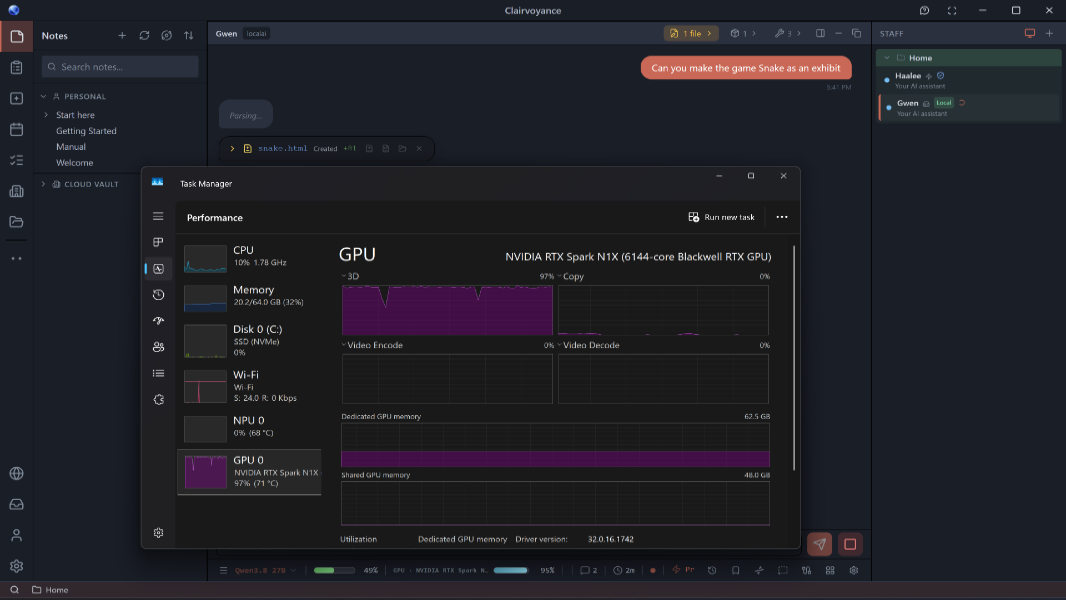
Microsoft and Nvidia are promoting RTX Spark, a new class of Windows PCs for local AI, with a top configuratio…
A Seeking Alpha analyst published a piece titled "GE Vernova: AI's Next Bottleneck Is Electricity," arguing th…
Microsoft AI CEO Mustafa Suleyman told employees that MAI-Base-2, announced Thursday, is a stronger pre-traine…