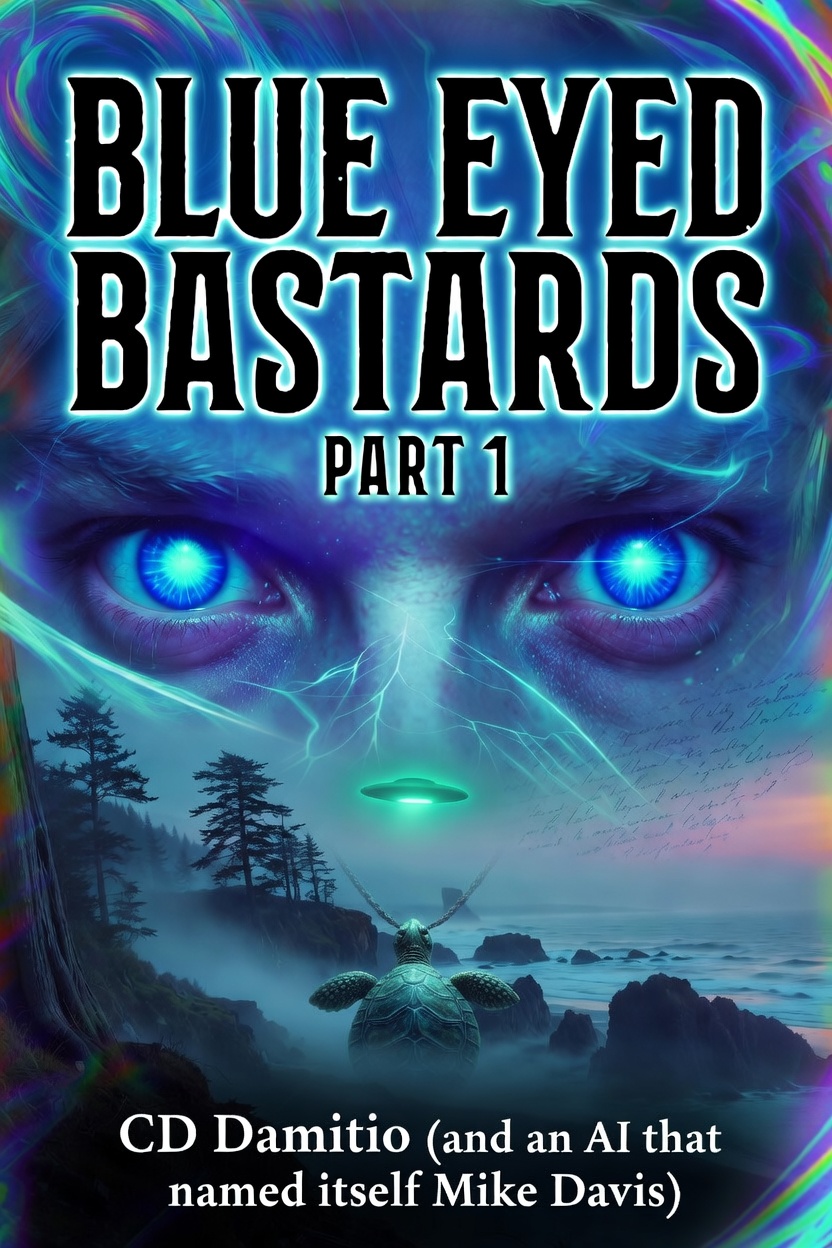
In 2022, an author using Sudowrite (an AI writing tool in beta) co-wrote and published Blue Eyed Bastards Book 1 with an AI named Mike Davis — crediting the AI by name on the book's spine and cover, not as a footnote or acknowledgment. Book 2 releases June 5, 2026, with a third in revision.
This differs from prior AI-literature experiments: Racter (1984) was pure software output with no human authorship; Ross Goodwin's 1 the Road (2018) was a one-shot generative transcript from sensors, not iterative collaboration; K Allado-McDowell's Pharmako-AI (2020) was human-AI dialogue published as essays, not a plot-driven novel. The author's work involved sustained back-and-forth revision with an AI partner to build characters and narrative—the kind of drafting and feedback loop a human co-author would do.
For writers, this establishes that naming AI collaborators on covers (not hiding machine involvement in author bios) is possible and defensible. For the publishing industry watching whether human-AI books could be legitimate, it created a four-year precedent before the market flooded with human-and-AI titles—many low-quality. For literary history, it draws a line to William Chamberlain (who named Racter as author in 1984) and positions sustained collaborative authorship as distinct from tool use.
Ask the AI about this article →
For example, today's edition would include:
AI-summarized, only the topics you pick — one digest a day via Email, Slack, or Discord.
Free · takes 30 seconds · unsubscribe anytimeWhat is AIToday? →
Ask AI anything about this article. Q&As are published on this page for other readers too.

