
The telecoms industry is moving toward AI-powered 6G networks expected to roll out by 2029, with Nvidia, Nokia, and Ericsson running trials.
However, industry experts warn that the real challenge is not whether to use AI, but where to place AI computation within the network architecture—and whether the added cost and complexity will actually deliver benefits over existing, cheaper approaches.
Standards decisions in September will shape how deeply AI integrates into 6G infrastructure.
What happened
The 3GPP standards body will meet in Madrid this September to decide how AI gets built into 6G networks, which are slated to begin rolling out by 2029. Nvidia invested $1 billion in Nokia last October to embed AI-capable chips into radio access networks (RANs); Nokia and Ericsson are running trials with T-Mobile, and Ericsson began selling an AI software upgrade in June that works with existing hardware.
Why it matters
The telecoms industry risks overspending on unproven AI-enhanced infrastructure that may not lower costs or survive real outdoor conditions, and may duplicate capabilities already available through cheaper existing technology. Network operators face a coordination risk: multiple independent AI systems with no clear command structure could work against each other rather than improve performance. The core question is not whether AI belongs in 6G, but where inside the network intelligence should actually run.
What to watch
Nokia's broader commercial trials are expected to start later this year, with commercial rollout expected next year. The September Madrid standards meeting will set the direction for how deeply AI integrates into 6G's radio equipment. A credible architecture may be hierarchical—small models inside radios for real-time decisions, capable models at edge sites, and large models at regional or central levels—rather than making every tower an AI data center.
Ask the AI about this article →
The shift toward AI in 6G reflects a broader industry push to squeeze more efficiency from wireless networks that have spent decades approaching theoretical performance limits. Nvidia's $1 billion investment in Nokia signals that hardware makers see significant commercial opportunity, and the proof-of-concept trials by Nokia, Ericsson, and Nvidia with T-Mobile demonstrate that AI workloads can technically coexist with radio network operations. However, the trials have not yet proven that AI must be deeply integrated into the core RAN architecture to deliver benefits—they show that AI and RAN can share resources, a narrower claim.
The crux of the debate, as framed by industry engineers like Kim Kyllesbech Larsen at United Group, is not ideological but pragmatic: operators need evidence that AI-RAN delivers capabilities or economics unavailable through simpler, existing approaches. Companies like Opanga Networks already deliver some of the efficiency gains that AI-RAN aims for without new hardware. The coordination risk—that multiple independent AI systems optimizing for different goals (energy, speed, coverage) could undermine each other—adds a technical complexity that goes beyond mere hardware deployment.
The September Madrid standards meeting will be consequential because it will establish the baseline architecture for 6G, influencing which vendors succeed and which operators are forced to invest in unproven systems. The question of where AI intelligence should reside—inside towers, at edge sites, or in regional data centers—is not yet settled, and the answer will shape both the cost and viability of 6G rollout.
For example, today's edition would include:
AI-summarized, only the topics you pick — one digest a day via Email, Slack, or Discord.
Free · takes 30 seconds · unsubscribe anytimeWhat is AIToday? →
Ask AI anything about this article. Q&As are published on this page for other readers too.
Israeli startup DataAgent Ltd

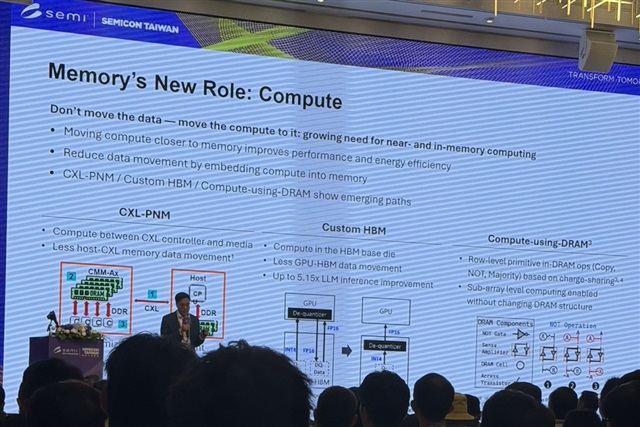
SK Hynix presented a custom HBM concept at SEMICON Taiwan 2026, where compute functions are placed in the base…
Taoyuan is positioning itself as a northern hub for AI data centers (AIDC), citing the Tatan area and an LNG c…
The U.S. Department of Defense announced on August 31 that it has deployed ChatGPT Mil, a customized version o…

Nvidia reported earnings that were both remarkable and boring, reflecting its focus on avoiding a consolidated…

Anthropic has agreed to a $35bn cloud-computing contract with Lambda, a Nvidia-backed cloud provider