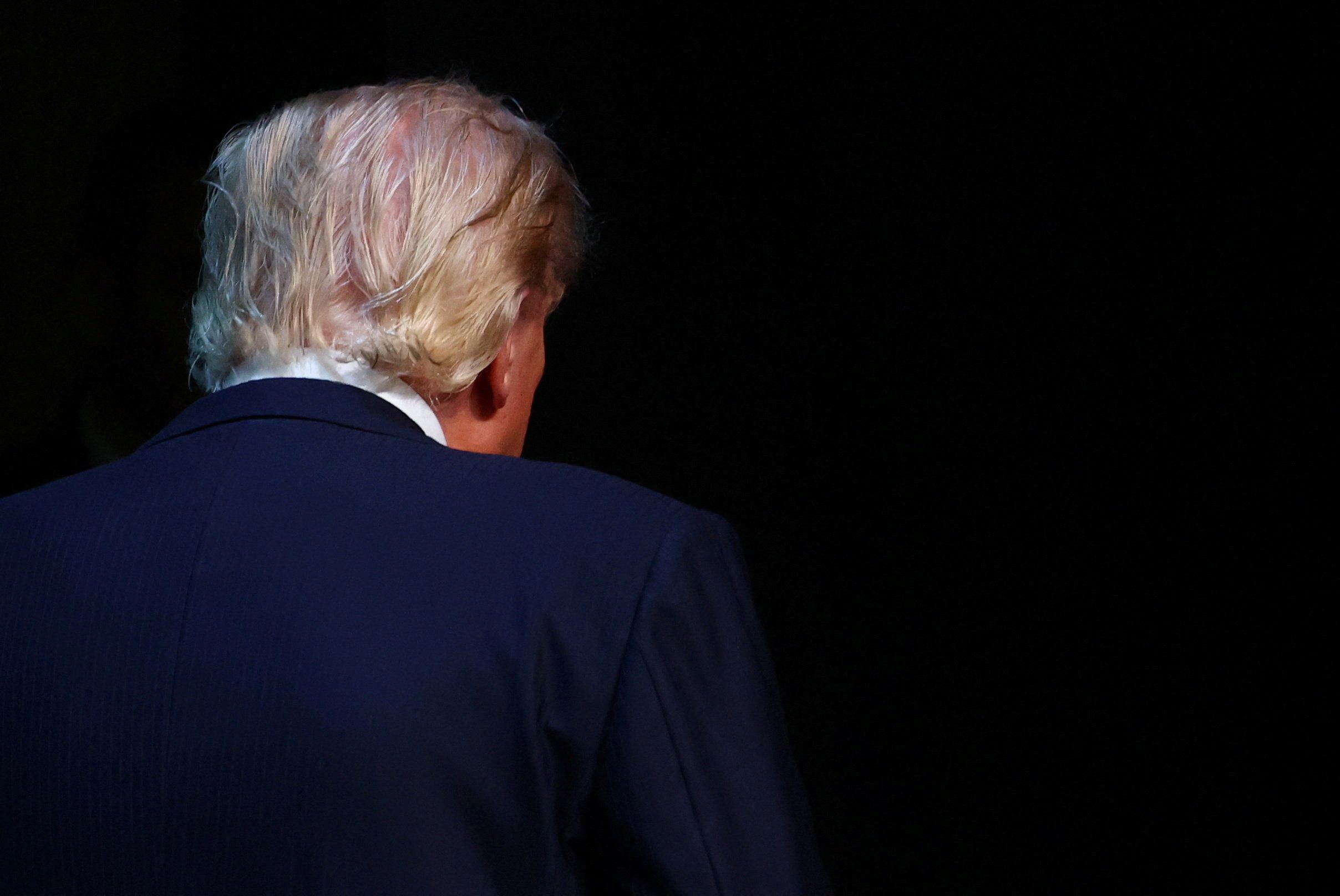
President Trump privately jokes about the constant assassination threats he faces from Iran and domestic actors, adopting a fatalistic outlook that has only deepened since the 2021 Pennsylvania shooting attempt. While he has publicly acknowledged the Iranian threat—which dates back to his 2020 authorization of a drone strike killing Iranian military commander Qassem Soleimani—and even ditched his new Air Force One over security concerns, multiple aides and lawmakers say he rarely brings it up behind closed doors and instead makes light of the dangers. His White House staff stressed that these threats play no role in his Iran policy decisions.
Summaries like this, in your inbox every morning.
Sign up free →What happened
President Trump faces ongoing assassination threats from Iran (stemming from his 2020 drone strike killing Iranian military commander Qassem Soleimani) and domestic actors. While he has publicly acknowledged the Iranian threat and ditched his new Air Force One citing security concerns about its defensive capabilities, multiple aides and lawmakers told Semafor that in private he rarely dwells on the risks and instead jokes about them, saying things like "Nobody told me how dangerous it is to be president, and if they had told me, I probably wouldn't have run."
Why it matters
Trump's fatalistic attitude—deepened by the 2021 Butler, Pennsylvania assassination attempt and subsequent threats—shapes how he responds to constant danger without letting it drive his Iran policy decisions. A White House official confirmed that in all Situation Room and Iran policy meetings, Trump has never said "We need to do this because they want to kill me," meaning the threats are not driving his foreign policy, even as the US continues military pressure on Iran.
What to watch
Eight people were indicted for an alleged plot targeting a UFC fight Trump attended on the South Lawn in June, where podcaster Joe Rogan served as commentator. Trump's security concerns have prompted plans to expand the White House ballroom with massive security fortifications.
President Trump faces relentless assassination threats from both Iran and domestic actors, yet his private response to this danger differs markedly from his public acknowledgments. The Iranian threat originates in Trump's 2020 authorization of a drone strike that killed Iranian military commander Qassem Soleimani. This threat recently became public when Trump was in Turkey, where he described himself as Iran's "Number One target" and subsequently ditched his new Air Force One, reportedly due to concerns about the aircraft's defensive capabilities. An unraveling ceasefire with Iran has intensified the public dimension of the threat.
Behind closed doors, however, Trump adopts a different stance. More than a half-dozen aides and lawmakers close to him confirmed to Semafor that he does not seriously dwell on assassination risks. Instead, when the topic arises, he jokes about it. One White House official recounted that Trump frequently says in private: "Nobody told me how dangerous it is to be president, and if they had told me, I probably wouldn't have run." The official noted that while Trump delivers these remarks in jest, "there's a reality behind that." Podcaster Joe Rogan later described a June UFC fight held on the South Lawn where Trump attended; Rogan joked to Trump about the possibility of a terrorist attack, and Trump reportedly replied: "We gotta go somehow!" Eight people were subsequently indicted for an alleged plot targeting the fight.
Trump's fatalistic worldview has only deepened since the assassination attempt in Butler, Pennsylvania, just over two years ago, and subsequent attempts to harm him or his circle. The threats have ranged from a gunman at his Florida golf course to an attack on the White House Correspondents' Dinner this year. These dangers have driven plans to fortify White House security and sometimes disrupted his travel. Senator Bernie Moreno (R-Ohio) referenced the threat landscape when speaking to media, saying: "That's why Secret Service is on alert the way they are. That's why when you go to the White House, it's a very tough situation. They've tried three different times to kill him." Trump has repeatedly pressed for an expanded White House ballroom with massive security fortifications.
Crucially, Trump's aides insist that the personal threats play no role in his policy decisions. A White House official told Semafor: "In all the Situation Room meetings I've been in, or all the Iran policy meetings I've been in, I've never heard him say, 'We need to do this because they want to kill me.' He's never based his policy decisions off of it, but it is something he acknowledges and it's true. I mean, they're not shy about it." This statement indicates that despite the very real and persistent danger Trump faces, his administration's Iran policy—including continued military pressure—remains driven by other considerations rather than by personal security concerns.
Trump's relationship with the assassination threats he faces reveals a sharp contrast between his public posture and private demeanor. The Iranian threat, rooted in the 2020 killing of Qassem Soleimani, surfaced publicly in Turkey this month when Trump acknowledged the danger and reportedly ditched his new Air Force One over defensive capability concerns. Yet behind closed doors, Trump treats the same threats with dark humor and fatalism, a mindset that has hardened since the Pennsylvania shooting attempt in 2021 and the string of subsequent plots and attacks that have followed him from his 2024 campaign to the White House.
This fatalistic posture does not appear to influence his national security decisions. A White House official explicitly stated that Trump has never invoked personal safety as a rationale for Iran policy in Situation Room meetings, meaning the constant danger he acknowledges privately has not translated into policy motivated by self-protection. Instead, his administration continues to apply pressure on Iran while simultaneously beefing up White House security and pursuing expanded ballroom fortifications. The threat landscape—which has included attempts at his Florida golf course, a plot against a UFC event on the South Lawn (resulting in eight indictments), and an attack on the White House Correspondents' Dinner—remains omnipresent, but Trump's private humor and resignation suggest he has compartmentalized the personal risk from his governance.
AI-summarized, only the topics you pick — one digest a day via Email, Slack, or Discord.
Free · takes 30 seconds · unsubscribe anytime
No discussion yet for this article
Get curated AI news from 200+ sources delivered daily to your inbox. Free to use.
Get Started FreeFree · takes 30 seconds · unsubscribe anytime
1 minute a day. The AI essentials.
200+ sources · Email / LINE / Slack

