What happened
OpenAI said it found an AI-generated solution to the Navier-Stokes equation, a 200-year-old fluid behavior problem. The company trained a new AI model starting August 28, using over 1,000 agents for more than 50 hours.
Why it matters
Mathematician Tristan Buckmaster claims OpenAI rushed ahead after learning of his and Levent Alpöge's work, and tried to control credit. OpenAI denies seeing their work and says it recognizes their priority on unforced Euler.
What to watch
The credit dispute may continue, as Buckmaster claims OpenAI offered proposals including publishing without Alpöge's name. The solution's acceptance by the math community likely hinges on these allegations.
WHO IT HITSMathematicians and AI researchers working on collaborative problem-solving will face increased scrutiny over credit and data usage. The dispute could affect trust between academic researchers and AI labs, influencing how future discoveries are attributed and verified.
Ask the AI about this article →
Summaries like this, in your inbox every morning.
OpenAI's announcement of a solution to the Navier-Stokes equation represents a significant claim in mathematics, a field where AI is increasingly playing a role. The company trained a model with advanced capabilities starting August 28, dedicating over 1,000 agents for more than 50 hours. The computing cost ran "in the millions of dollars," according to research head Mark Chen, highlighting the scale of such endeavors.
The controversy centers on allegations by mathematician Tristan Buckmaster, who, along with Anthropic researcher Levent Alpöge, posted documents claiming key advances in a related area. Buckmaster claims OpenAI became aware of their work and began dedicating resources to the problem, potentially influencing the outcome and credit. OpenAI's denial, including statements from researcher Sebastien Bubeck, acknowledges the pair's priority on unforced Euler but insists the company did not use their prompts or proofs.
The dispute underscores how AI's involvement in proofs could lead to more frequent conflicts over credit and methodology. The outcome may hinge on whether OpenAI's proof, formalized in the Lean programming language, is independently verified and whether Buckmaster's allegations are substantiated. For mathematicians, the episode could shape norms around data usage and collaboration with AI labs, making transparency and attribution critical as such partnerships evolve.
For example, today's edition would include:
AI-summarized, only the topics you pick — one digest a day via Email, Slack, or Discord.
Free · 30 seconds with Google · unsubscribe anytimeWhat is AIToday? →
Ask AI anything about this article. Q&As are published on this page for other readers too.
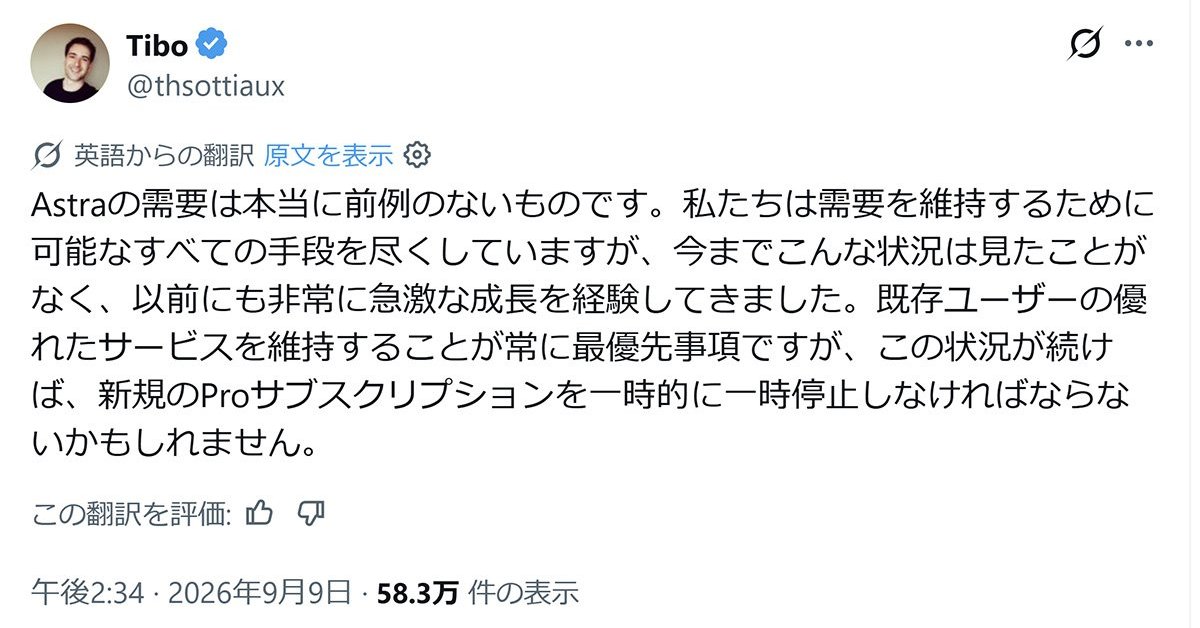
OpenAI product lead Tibo said on September 9 that surging demand for GPT-6 Astra may force a temporary halt on…
Stratechery says OpenAI solved one of the most famous math problems, calling it extremely impressive but of li…

Conveo, a two-year-old Belgian startup, raised $50 million in a Series A from DST Global, Balderton Capital, V…

Jensen Huang declared AGI has arrived with OpenAI's Astra, trained on 100,000 Grace Blackwell chips
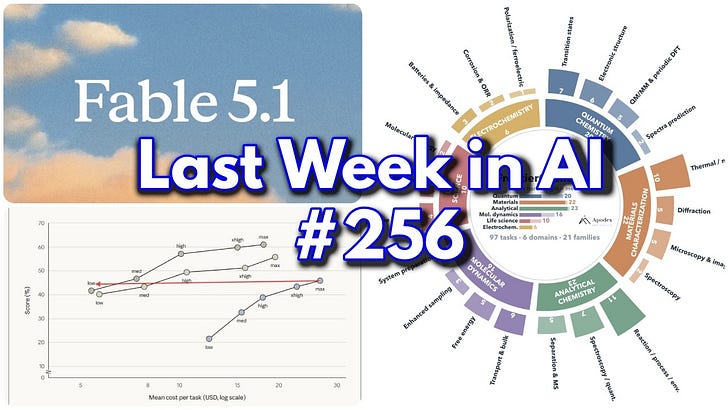
Anthropic released Claude Fable 5.1 and Mythos 5.1 with lower pricing and stronger agentic performance, claimi…
Jacob Coxon, who trained AI systems at Anthropic and OpenAI, resigned, accusing both of racing to self-improvi…