
A growing problem in software development is "cognitive surrender"—developers blindly accepting AI-generated code and explanations without critical examination.
The author argues that all current large language models suffer from fundamental flaws: they make unfounded leaps, forget instructions, and fabricate information, and these problems are intrinsic to the technology itself, not fixable by newer models.
The solution is to treat AI as an assistant tool that requires active oversight, challenge every claim with verifiable proof, and carefully review the code line-by-line to maintain your own skills and catch the AI's mistakes.
What happened
The author argues that blind trust in AI outputs—termed "cognitive surrender" or "meat proxy"—is a widespread problem in software engineering, where developers submit AI-generated code and explanations that sound convincing but contain fabricated claims and faulty logic upon inspection.
Why it matters
All current large language models (LLMs) regularly make unfounded assumptions, forget instructions, and generate false information as an inherent flaw of the technology—not a problem newer models will solve. If a developer simply relays whatever the AI produces without critical analysis, they add no value that a direct AI query wouldn't provide, and they risk shipping broken or poorly structured code.
What to watch
The author recommends three concrete practices: treat AI as an assistant requiring active oversight (especially for complex tasks), systematically challenge every AI claim with proof before accepting it, and review generated code line-by-line both to verify correctness and to maintain your own technical understanding.
Ask the AI about this article →
The article identifies a fundamental mismatch between AI capability and user expectation. Large language models are marketed by labs as increasingly powerful and reliable, but the author contends this framing obscures a technical reality: all current LLMs are prone to the same core failures—confabulation, instruction-forgetting, and unfounded reasoning—because these are inherent to how the technology works, not bugs to be fixed by scale or training. The author cites OpenAI's claim that GPT-2 was too dangerous to release as evidence of misleading marketing, noting the model could barely maintain coherence.
The practical consequence is that any developer or knowledge worker who treats an AI output as a finished product—who acts as a "meat proxy," passively relaying what the AI says—creates a logical paradox: they are adding no value beyond what a user could get by querying the AI directly. This is why the author frames critical thinking and verification as not optional or nice-to-have, but essential to having any professional value in an AI-assisted workflow. The solution is not to wait for better models, but to shift how humans interact with AI: supervisory, skeptical, and grounded in domain knowledge. Only then does the human-AI partnership work.
For example, today's edition would include:
AI-summarized, only the topics you pick — one digest a day via Email, Slack, or Discord.
Free · takes 30 seconds · unsubscribe anytimeWhat is AIToday? →
Ask AI anything about this article. Q&As are published on this page for other readers too.
Israeli startup DataAgent Ltd
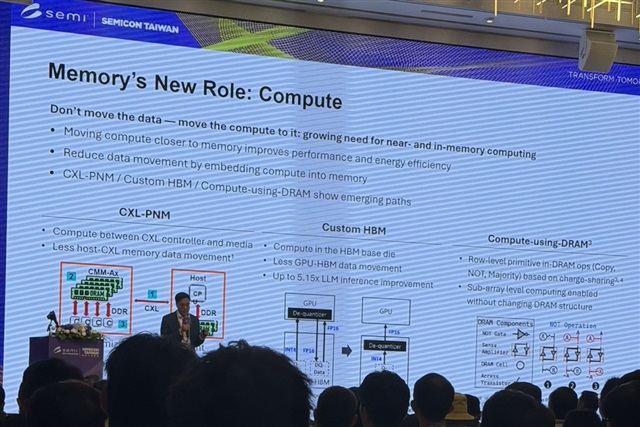
SK Hynix presented a custom HBM concept at SEMICON Taiwan 2026, where compute functions are placed in the base…
The U.S. Department of Defense announced on August 31 that it has deployed ChatGPT Mil, a customized version o…

Nvidia reported earnings that were both remarkable and boring, reflecting its focus on avoiding a consolidated…

Anthropic has agreed to a $35bn cloud-computing contract with Lambda, a Nvidia-backed cloud provider

The Supreme Court of Japan has included about ¥60 million in its fiscal 2027 budget request for AI-related exp…