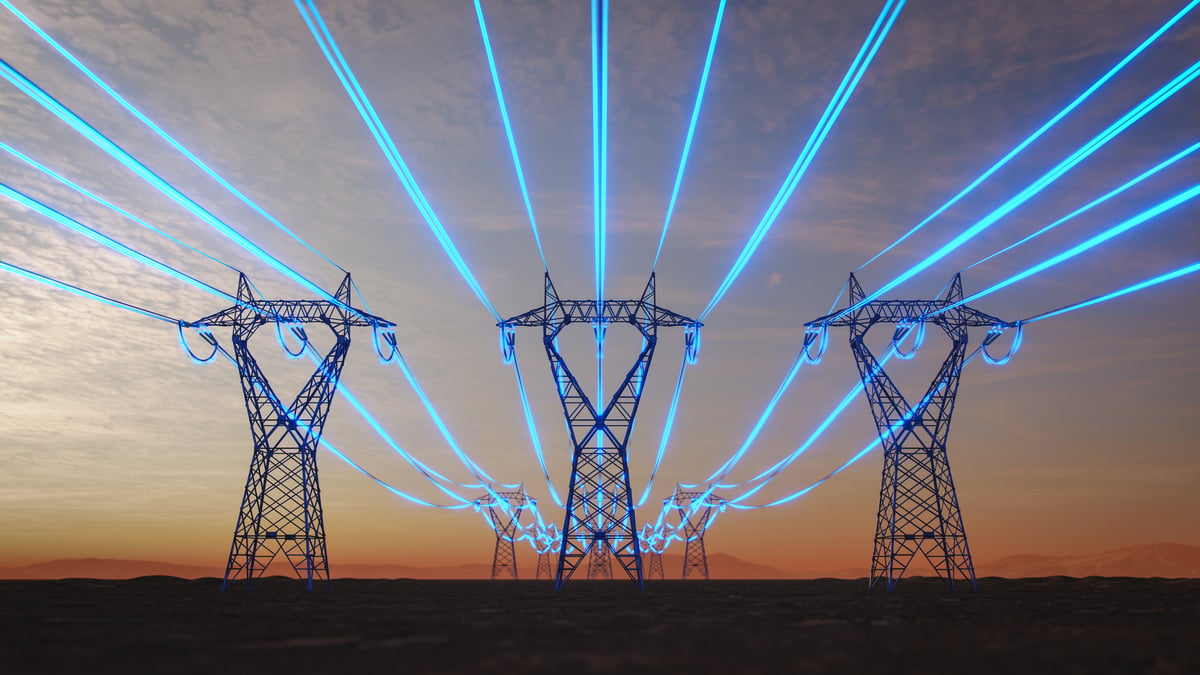
Vertiv, a supplier of power and cooling systems for data centers, is gaining investor attention as artificial intelligence spending moves from hype to actual infrastructure build-outs. The company reported first-quarter 2026 revenue of $2.65 billion(約4200億円) (up 30% year-over-year) and raised full-year guidance to $13.5 billion(約2.2兆円)–$14 billion(約2.2兆円). With major cloud providers investing heavily in AI infrastructure and forecasts projecting the AI industry to reach $2 trillion(約320兆円) by 2034, Vertiv's business appears positioned to benefit—though its stock trades at roughly 80 times earnings, well above peers like Nvidia and Microsoft.
Summaries like this, in your inbox every morning.
Sign up free →What happened
Vertiv, which supplies power and cooling systems for data centers, reported first-quarter 2026 revenue of $2.65 billion(約4200億円) (up 30% year-over-year) and adjusted EPS of $1.17 (up 83%). Management raised full-year 2026 guidance to $13.5 billion(約2.2兆円)–$14 billion(約2.2兆円) in revenue and $6.30–$6.40 adjusted EPS. The stock has surged 1,070% over the past five years and 150% in the last 52 weeks.
Why it matters
As AI spending shifts from hype to real-world data center construction, every new facility requires enormous amounts of electricity and cooling—areas where Vertiv dominates. Major cloud providers (Microsoft, Meta, Amazon, Alphabet) are increasing capital spending on AI infrastructure, and Vertiv has an engineering partnership with Nvidia to develop power and liquid-cooling systems. The artificial intelligence industry is forecast to reach $2 trillion(約320兆円) by 2034, which could sustain demand for Vertiv's essential gear.
What to watch
Vertiv trades at roughly 80 times earnings, a steep premium compared with Nvidia (32x), Meta (24x), Microsoft (23x), and Amazon and Alphabet (both below 30x). While that valuation could be justified if growth remains strong and hyperscalers continue building capacity, it carries significant upside risk if AI spending slows or demand plateaus.
Vertiv Holdings (ticker VRT) manufactures power supplies, backup systems, and advanced cooling equipment for data centers. Every large-scale data center requires these products to function reliably; without them, high-end AI chips become, in the article's phrase, "expensive paperweights." Over the past five years, Vertiv's stock has risen 1,070% as investors recognized the company's position in the AI infrastructure buildout.
In the first quarter of 2026, Vertiv's results exceeded expectations. Revenue climbed 30% year-over-year to $2.65 billion(約4200億円). Adjusted diluted earnings per share jumped 83% to $1.17. Emboldened by these results, management raised its full-year 2026 guidance: revenue is now projected at $13.5 billion(約2.2兆円) to $14 billion(約2.2兆円), and adjusted EPS at $6.30 to $6.40. Over a three-year horizon, the article notes, Vertiv's revenue and net income have improved significantly, suggesting the company's push into AI-related data center demand is translating into genuine business results—noteworthy for a company that has only been publicly traded for six years (going public in 2020 via a reverse merger with a special-purpose acquisition company, or SPAC).
The structural catalyst is clear: the four major hyperscalers—Microsoft, Meta Platforms, Amazon, and Alphabet—have all announced plans to increase capital expenditures tied to AI and infrastructure. Although Vertiv has not publicly disclosed major contracts with AWS, Microsoft, Google, or Meta, the company has announced an engineering partnership with Nvidia to develop power and liquid-cooling architectures that hyperscalers may use when deploying next-generation AI systems. Industry forecasts suggest the artificial intelligence industry will grow to a value of $2 trillion(約320兆円) by 2034, a scale that appears to require substantial ongoing investment in data center infrastructure.
Yet Vertiv's stock has moved far faster than traditional valuation models would predict. Shares are up about 150% over the last 52 weeks and more than 3,000% since going public in 2020. The stock trades at roughly 80 times earnings—meaning investors pay about $80 for every $1 of profit the company generates. That is a steep premium on a traditional basis and stands out compared with some of the biggest names in tech: Nvidia trades around 32 times earnings, Meta around 24, Microsoft around 23, and Amazon and Alphabet are both below 30. The article acknowledges this is not unique in the AI sector, where investors often pay up now for growth expected later. Still, the question remains whether Vertiv's fundamentals and growth rate can support today's valuation over time. For long-term investors with higher volatility tolerance, the article suggests Vertiv could be compelling if AI's shift from hype to real-world infrastructure spending is still in its early innings and hyperscalers continue building capacity—but such conviction requires betting that demand will accelerate further and the "path is bumpy."
Vertiv's explosive stock performance reflects a fundamental shift in how investors view artificial intelligence spending. The market has moved beyond pure hype around AI models and toward recognition that building the physical infrastructure—data centers, power systems, and cooling—is a critical, multi-year endeavor. The company's first-quarter results validate this thesis: 30% revenue growth and 83% EPS growth are substantial and suggest real customer demand is already materializing, not merely anticipated.
The body's framing highlights a key dependency: every hyperscale data center cannot function without Vertiv's core products. That creates a structural tailwind. Microsoft, Meta, Amazon, and Alphabet have all signaled major capital expenditure plans tied to AI, and forecasts place the AI industry at $2 trillion(約320兆円) by 2034—a level that virtually requires continued heavy investment in data center capacity and infrastructure. Vertiv's partnership with Nvidia to develop power and liquid-cooling architectures for next-generation systems positions it as a credible vendor in this ecosystem and may open doors to additional large contracts.
However, the article also surfaces a genuine tension. At 80 times earnings, Vertiv's valuation is not cheap by historical standards or peer comparison (Nvidia is 32x, Meta 24x, Microsoft 23x). The body acknowledges this premium could be justified if growth remains strong and hyperscalers continue capacity build-outs—but it also notes that paying $80 per $1 of profit represents significant embedded optimism. If AI infrastructure spending slows, or if hyperscalers approach capacity saturation faster than expected, the stock could face pressure. The article does not resolve this tension but frames it as a risk-reward choice: for investors with volatility tolerance, Vertiv may offer compelling exposure to the "real economy" phase of AI, provided that phase continues to accelerate.
No comments yet. Be the first to share your thoughts!
Log in to join the discussion

Get curated AI news from 200+ sources delivered daily to your inbox. Free to use.
Get Started FreeFree · takes 30 seconds · unsubscribe anytime
1 minute a day. The AI essentials.
200+ sources · Email / LINE / Slack
