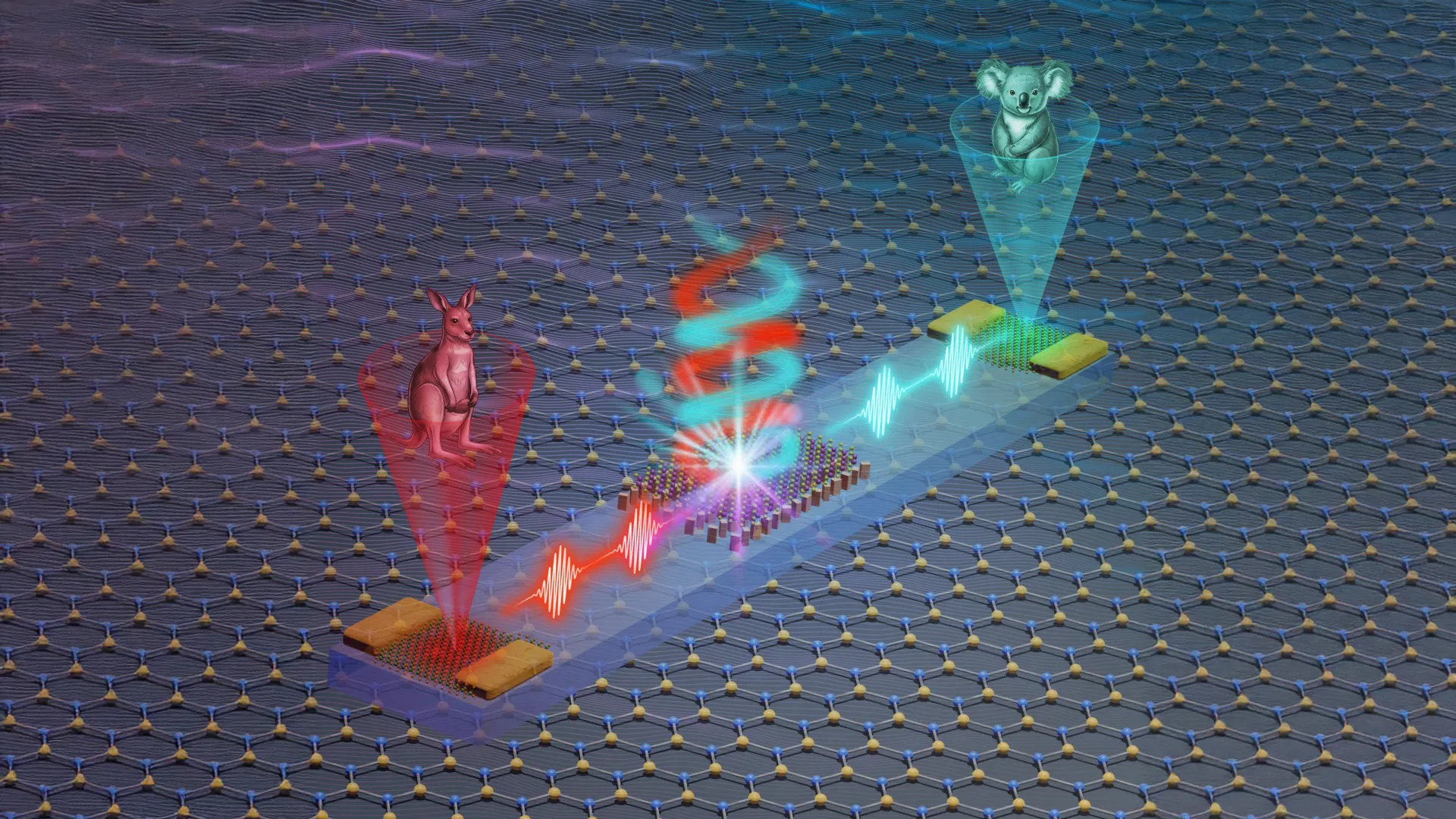
Researchers from Monash University's School of Physics and Astronomy built a fully integrated chip capable of producing specialized light signals, steering them along specific paths, and converting them into electrical signals within the same compact system. The findings were published in Nature Photonics.
The device uses ultra-thin materials only a few atoms thick paired with specially engineered nanostructures to control light at extremely small scales. It encodes information using the "valley degree of freedom," a quantum property, and operates at room temperature—unlike many quantum systems that require extremely cold environments.
The technology demonstrated the ability to encode and process two separate images simultaneously, showing the device can manage multiple streams of information at once. According to the researchers, the chip has potential applications in quantum computing, advanced imaging, and next-generation optical communication systems.
Summaries like this, in your inbox every morning.
Pick your industry and the AI tools you use, and get news related to your work every day.
Free · 30 seconds with Google · unsubscribe anytimeWhat is AIToday? →
Ask AI anything about this article. The AI reads this article, earlier AIToday articles, and Wikipedia, and cites its sources. Q&As are published on this page for other readers too.

