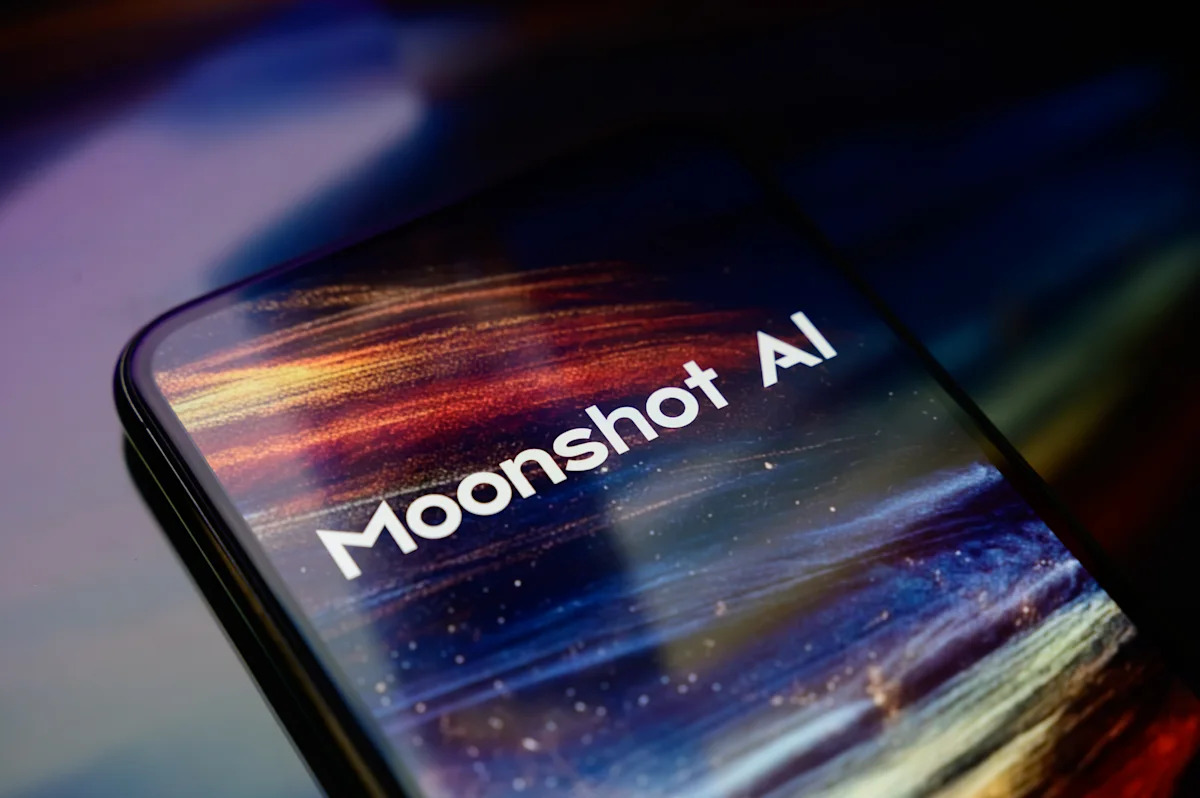
TSMC reported a 36% year-over-year revenue jump in the second quarter on the back of surging AI chip demand, while IBM missed earnings expectations as customers shifted spending to AI servers and memory. China's Moonshot AI announced its new K3 model surpasses OpenAI and Anthropic models on certain benchmarks, illustrating how quickly Chinese AI firms are closing the competitive gap through open-weight, lower-cost offerings.
Summaries like this, in your inbox every morning.
Sign up free →What happened
TSMC reported second-quarter revenue jumping 36% year over year and net income rocketing 77.4% higher, with the company planning to expand its US footprint. Meanwhile, IBM preannounced Q2 earnings Tuesday, reporting adjusted EPS of $2.93 on revenue of $17.2 billion(約2.8兆円)—both falling short of analyst expectations (adjusted EPS of $3.02 on revenue of $17.86 billion(約2.9兆円))—as customers shifted spending from mainframe systems to AI servers and memory chips. China's Moonshot AI also announced its new Kimi K3 model, which surpasses OpenAI's GPT-5.6 Sol and Anthropic's Fable 5 on certain benchmark tests, though it falls short in overall performance.
Why it matters
TSMC's 36% revenue jump underscores how central semiconductor supply has become to the AI boom—the company produces chips for Apple, AMD, Nvidia, and Qualcomm. IBM's shortfall reflects a real shift in enterprise spending priorities: businesses are moving capital away from traditional systems toward AI infrastructure. Moonshot AI's strong benchmark performance shows how quickly Chinese AI companies are closing the gap with US leaders like OpenAI and Anthropic, particularly through open-weight models and lower pricing that appeal to cost-conscious businesses.
What to watch
TSMC CFO Wendell Huang expects strong demand to continue into the current quarter as tech companies seek more AI chips. Moonshot AI's approach mirrors China's DeepSeek strategy: releasing free, customizable open-weight models undercut the pricing of Anthropic's Claude, OpenAI's GPT, and Google's Gemini, making them more attractive to price-sensitive enterprises.
TSMC delivered the week's biggest AI winner story. Taiwan Semiconductor Manufacturing Co. announced blowout earnings on Thursday, with second-quarter revenue jumping 36% year over year and net income rocketing 77.4% higher. The company also said it would increase spending to expand its US footprint. TSMC produces semiconductors for the world's most influential tech companies, including Apple, AMD, Nvidia, and Qualcomm. Annual revenue has surged from $75.99 billion(約12兆円) in 2022 to $122.56 billion(約20兆円) in 2025, a direct payoff from the AI boom. According to CFO Wendell Huang, TSMC's Q2 results were supported by strong demand, which he expects to continue into the current quarter as tech companies seek as many AI chips as they can get.
On the loser side, IBM preannounced its Q2 earnings on Tuesday with a stark warning: the company's revenue and earnings per share fell well below analyst expectations. Analysts had expected IBM to report adjusted earnings per share of $3.02 on revenue of $17.86 billion(約2.9兆円), but the company posted adjusted EPS of $2.93 and revenue of $17.2 billion(約2.8兆円). The culprit: customers are shifting their spending from IBM's mainframe systems to AI servers and memory and storage chips, signaling a fundamental reallocation of enterprise capital.
China's Moonshot AI also made waves this week. On Friday, the company revealed that its new Kimi K3 AI model has frontier-level capabilities. While it falls short in overall performance compared to state-of-the-art models like Anthropic's Fable 5 and OpenAI's GPT-5.6 Sol, K3 surpasses them on certain benchmark tests. The announcement underscores how quickly China's AI companies are catching up with the most well-funded organizations in the US. Like China's DeepSeek, Moonshot AI focuses on releasing open-weight models—models that users can download for free and customize—whereas Anthropic, OpenAI, and Google focus on proprietary models that users must pay to access. China's AI companies also generally undercut their US counterparts on usage pricing, making them more appealing to businesses that want to adopt AI without paying for access to Anthropic's Claude, OpenAI's GPT, or Google's Gemini.
The AI boom is reshaping corporate spending and global competitive dynamics. TSMC's 36% revenue jump reflects sustained demand from the world's largest tech companies—Apple, AMD, Nvidia, and Qualcomm—all racing to secure AI chips. CFO Wendell Huang's confidence that strong demand will continue suggests the chip supply chain remains a critical bottleneck as enterprises build out AI infrastructure. This same shift is devastating for legacy players like IBM, whose mainframe business is being cannibalized by customer demand for AI servers and memory storage.
Meanwhile, China's Moonshot AI represents a structural challenge to US AI dominance. By releasing open-weight models like Kimi K3—which surpass certain benchmarks of OpenAI's GPT-5.6 Sol and Anthropic's Fable 5—and undercutting US competitors on pricing, Chinese firms are winning over cost-conscious businesses that cannot justify proprietary model subscriptions. This mirrors the open-source playbook that has worked across software; the economics may shift pricing power away from the US incumbents toward lower-cost Chinese alternatives.
AI-summarized, only the topics you pick — one digest a day via Email, Slack, or Discord.
Free · takes 30 seconds · unsubscribe anytime
No comments yet. Be the first to share your thoughts!
Log in to join the discussion


Get curated AI news from 200+ sources delivered daily to your inbox. Free to use.
Get Started FreeFree · takes 30 seconds · unsubscribe anytime
1 minute a day. The AI essentials.
200+ sources · Email / LINE / Slack
