What happened
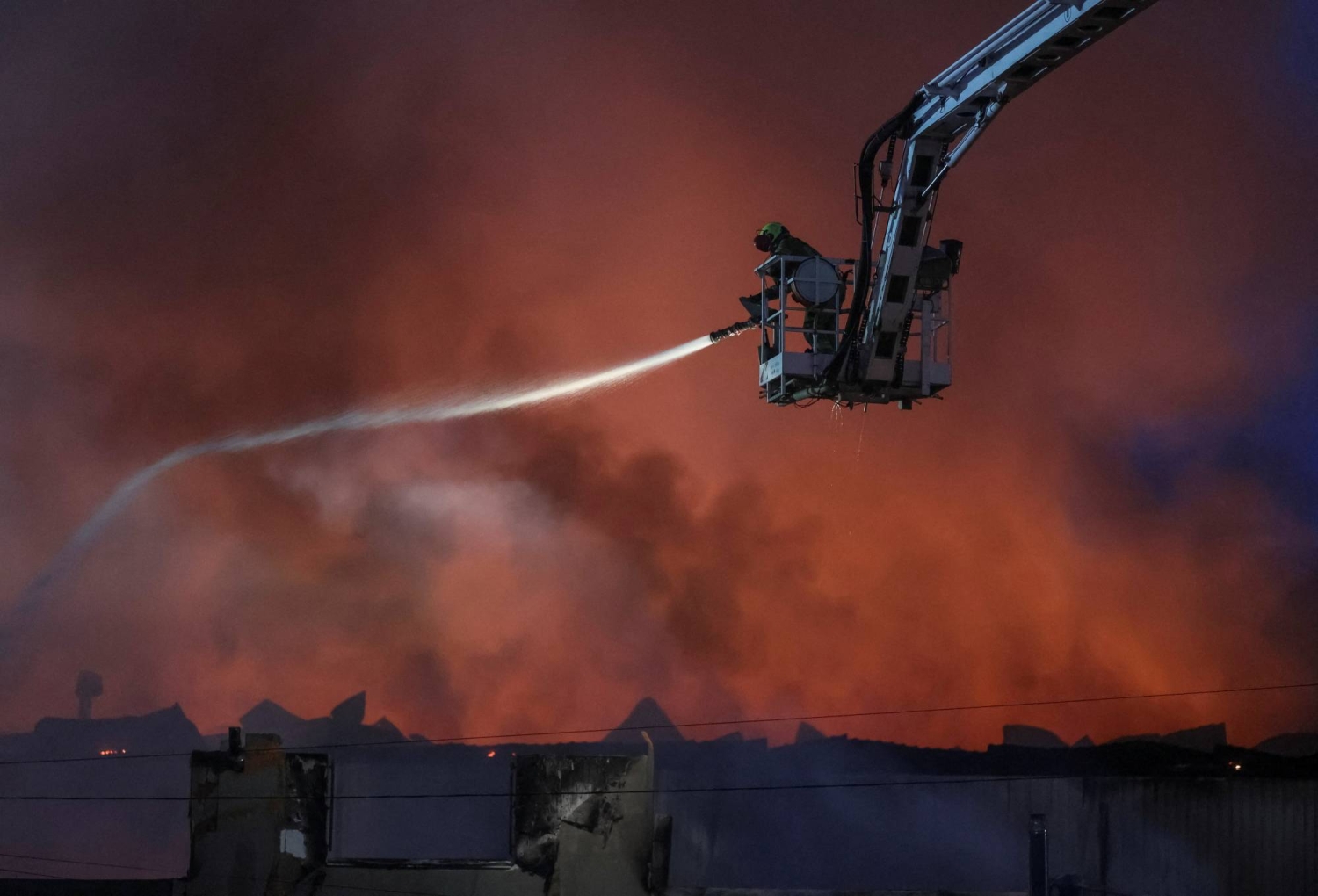
Russia fired ballistic missiles and 169 drones at Kyiv overnight, with Ukraine's air defenses intercepting more than 80% of the drones but unable to down any of the five ballistic missiles. The attack was the third on the capital in less than a week. One person was killed and two wounded in Kyiv; Kharkiv also came under missile attack.
Why it matters
Ukraine's critical shortage of U.S.-made air-defense interceptors — the only weapon capable of stopping ballistic projectiles — has left the country increasingly vulnerable to Russian strikes. President Zelenskyy is expected to raise the need for interceptors with U.S. President Trump during talks at the NATO summit on Wednesday.
What to watch
Moscow has stepped up its air war as its ground advances have stalled; in July alone, Russian strikes on Kyiv and surrounding areas have killed 60 people. Putin has said he will press ahead with the war despite mounting difficulties for Russia.
Summaries like this, in your inbox every morning.
Russia's repeated strikes on Kyiv underscore a critical asymmetry in the ongoing conflict: while Ukraine has demonstrated the ability to intercept the majority of drone attacks, it remains defenseless against ballistic missiles without access to specialized U.S. interceptors. The body notes that Moscow has shifted its strategy toward air bombardment precisely because its ground campaign has stalled over more than four years of fighting, suggesting the air war has become Moscow's primary lever. The timing of this attack — coinciding with the NATO summit where Trump is set to meet Zelenskyy — places immediate pressure on the U.S. position and Zelenskyy's diplomatic leverage.
The human cost has been mounting: the body reports that July alone saw 60 deaths from Russian strikes on Kyiv and surrounding areas, illustrating the toll of Ukraine's inability to defend against ballistic weapons. Zelenskyy has repeatedly pleaded for the interceptors that would change this calculus, and the NATO summit provides a concrete moment to press the case with Trump, who has stated his belief that the war could be "settled, hopefully soon." Meanwhile, Putin has signaled his intent to continue the campaign, demanding that Ukraine cede the remainder of its eastern Donetsk region — territory Russia has been unable to fully conquer despite years of effort.
Pick your industry and the AI tools you use, and get news related to your work every day.
Free · 30 seconds with Google · unsubscribe anytimeWhat is AIToday? →
Ask AI anything about this article. The AI reads this article, earlier AIToday articles, and Wikipedia, and cites its sources. Q&As are published on this page for other readers too.

