Most employees who have access to AI tools use them passively—for single tasks like drafting emails—rather than building reusable workflows or agents. While roughly half of U.S. workers now use AI at least occasionally, only about 15% are daily users and just 5% do sophisticated iterative work, according to Gallup and a KPMG study.
The gap exists not because people cannot build—no-code platforms now make it possible for anyone describing what they want in plain English—but because traditional enterprise culture has trained people to see themselves as technology consumers rather than creators.
Leaders can narrow this builder activation gap by requiring employees to build a real solution, making builders visible by having leaders and peers demonstrate their own work publicly, and measuring actual builds rather than just usage metrics.
What happened
A leadership team with AI training, access to tools, and a no-code platform showed that only one person had actually built something that changed how work gets done. Most see themselves as AI users—drafting emails, summarizing documents—rather than builders. Gallup reports roughly half of U.S. employees use AI at least occasionally, but only 15% are daily users; a KPMG study of 1.4 million AI interactions among 2,500 employees found only about 5% qualified as sophisticated users doing iterative, higher-impact work beyond casual prompting.
Why it matters
The distinction between using AI for one-off tasks and building reusable tools matters because assistance creates a one-time productivity gain, whereas building turns that gain into a workflow that scales. The real bottleneck is not access or capability—most employees can now build a working assistant or automation in plain English without code—but identity: enterprise work has long trained people to see themselves as technology consumers, not creators. Leaders who leave this gap unclosed miss a large pool of potential value creation.
What to watch
Three practices can narrow this gap. First, make the first build unavoidable: SharkNinja paused normal work for a company-wide AI hackathon involving roughly 4,000 employees, with leaders assigning about 20 major initiatives and employees adding roughly 400 projects of their own; the CEO noted the mindset shifted from waiting on IT to "I have a problem. I can fix the problem." Second, make builders visible—when leaders like Airtable's Howie Liu build in the open and share prompts, the definition of who builds expands. Third, measure the builds themselves: BBVA employees have built more than 20,000 custom GPTs, with roughly 4,000 now in frequent use, surfacing the builders already present and normalizing building outside IT.
Ask the AI about this article →
The gap between AI users and AI builders reveals a structural mismatch in how enterprises have organized work. For decades, a clear division of labor has placed system-building in the hands of specialists—engineers and product teams—while most employees operate within those systems. That division made sense when building required coding expertise and specialized knowledge. But no-code AI platforms have democratized the ability to create: nearly anyone who can articulate what they want in plain English can now build a working assistant or automation. The organizational structure and identity have not caught up. Most employees still see themselves as consumers of technology, not creators, and that self-perception is a stronger barrier than any technical limitation. Herminia Ibarra's research on reinvention—cited in the article—shows that people rarely think their way into a new identity; they act their way into it, and identity catches up. This means the solution is not more training in the abstract, but forcing the first build, making builders visible through example, and measuring what actually gets built rather than how many people have access.
For example, today's edition would include:
AI-summarized, only the topics you pick — one digest a day via Email, Slack, or Discord.
Free · takes 30 seconds · unsubscribe anytimeWhat is AIToday? →
Ask AI anything about this article. Q&As are published on this page for other readers too.
Israeli startup DataAgent Ltd
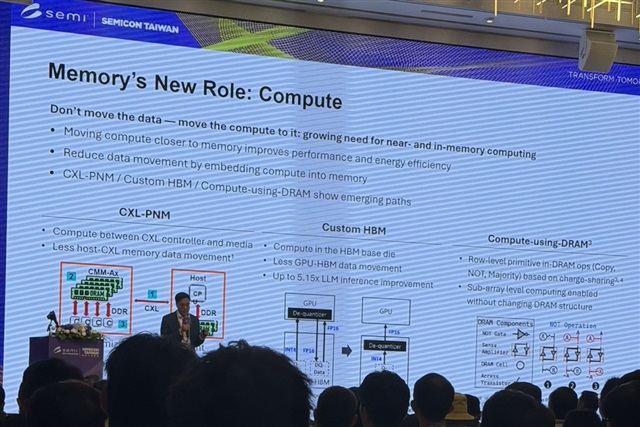
SK Hynix presented a custom HBM concept at SEMICON Taiwan 2026, where compute functions are placed in the base…
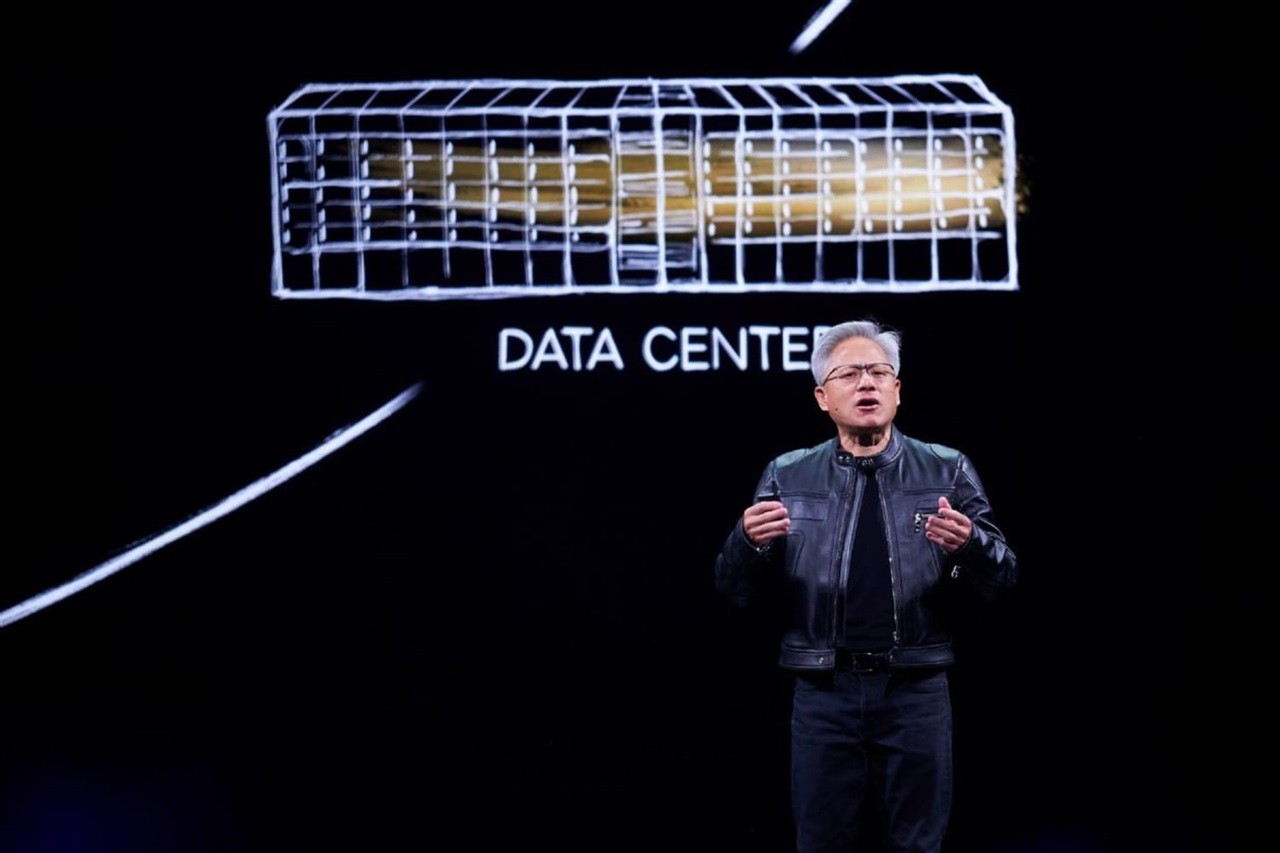
Taoyuan is positioning itself as a northern hub for AI data centers (AIDC), citing the Tatan area and an LNG c…
The U.S. Department of Defense announced on August 31 that it has deployed ChatGPT Mil, a customized version o…

Nvidia reported earnings that were both remarkable and boring, reflecting its focus on avoiding a consolidated…
Anthropic has agreed to a $35bn cloud-computing contract with Lambda, a Nvidia-backed cloud provider