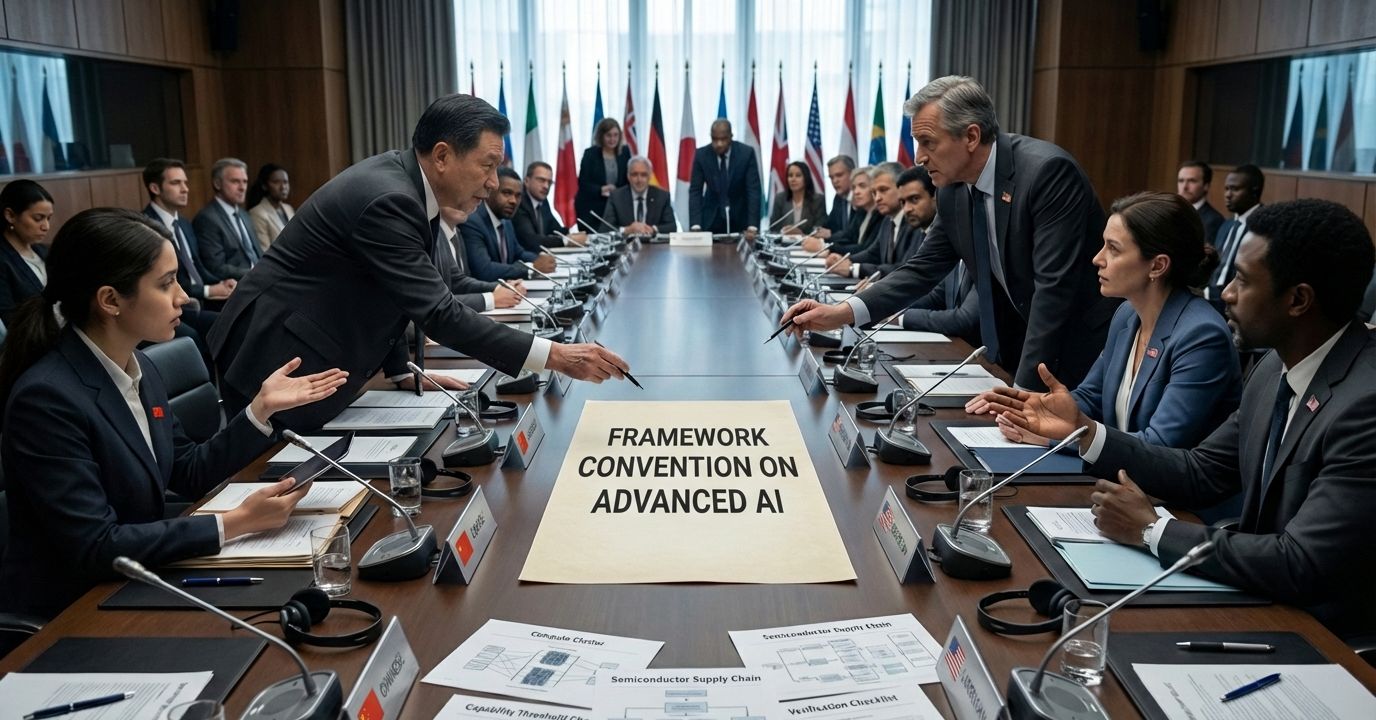
Critics argue it's unclear what specific rules an international AI treaty would contain, but this is not a valid obstacle to negotiation.
Successful treaties depend on countries having shared goals and agreement on joint risks—not on having all technical details figured out beforehand.
Experts agree there is genuine global AI risk requiring action and that verification and enforceability mechanisms are feasible.
The real challenge is achieving political agreement between nations, not solving technical problems—and international cooperation is possible despite common 'we can't act until everyone does' arguments.
Ask the AI about this article →
For example, today's edition would include:
AI-summarized, only the topics you pick — one digest a day via Email, Slack, or Discord.
Free · takes 30 seconds · unsubscribe anytimeWhat is AIToday? →
Ask AI anything about this article. Q&As are published on this page for other readers too.

