
Anthropic is making Auto Mode the default setting for Claude Code starting August 14, letting the AI execute development tasks without waiting for approval at each step—except for Enterprise customers who must opt in.
In testing, Auto Mode caught 89 percent of dangerous commands versus 13.6 percent caught by human reviewers, and teams generated about 25 percent more pull requests.
The move reflects confidence in the tool's safety, though Anthropic cautions that developers should still manually review changes to production infrastructure.
What happened
Anthropic announced that Claude Code will enable Auto Mode by default for Pro, Max, and Team plans starting August 14, allowing the AI to execute development tasks without manual approval at each step. Only Enterprise customers will still need to opt in. In controlled tests with 1,053 paid testers, Auto Mode caught 89 percent of dangerous commands compared to 13.6 percent caught by human reviewers.
Why it matters
The shift means developers spend less time writing code and more time reviewing AI-generated output. Teams using Auto Mode generated about 25 percent more pull requests, indicating higher productivity. However, Anthropic itself warns that while the classifier reduces risks, developers should still review actions for high-stakes changes to production infrastructure, creating a tension between efficiency and oversight.
What to watch
An independent audit by Trajectory Labs tested 72 attack scenarios against prompt injection attacks (where injected code tries to hijack the AI) ten times each, with none of the 720 attempts succeeding against Claude's current models (Fable 5, Opus 5, and Sonnet 5) in Auto Mode. By contrast, 5.83 percent of attacks got through against OpenAI's GPT-5.6 Sol in Codex Auto-Review mode.
Ask the AI about this article →
Anthropic's shift to Auto Mode as the default reflects growing confidence in AI-assisted development—and a strategic bet that developers will accept reduced hands-on involvement in exchange for higher throughput. The testing results are striking: a classifier-based safety system outperformed human review by a wide margin (89 percent vs. 13.6 percent detection of dangerous commands), and the independent audit against prompt injection attacks showed zero successful breaches across 720 test cases. Internally, Auto Mode has already proven its value, stopping the upload of confidential data and killing roughly 2,000 processes that would have disrupted GPU training jobs.
However, the announcement reveals an underlying tension that Anthropic itself acknowledges. While the classifier reduces risk, it does not eliminate it—and as developers step back from active coding, their ability to catch subtle problems may atrophy. Anthropic's own caution that "for high-stakes changes to production infrastructure, we still recommend reviewing Claude's actions yourself" suggests the company understands that automation and oversight must coexist, not one replace the other. This paradox will likely become more acute as Auto Mode becomes the norm: the less often developers intervene, the harder it becomes for them to maintain the contextual understanding needed to spot problems when they do review.
For example, today's edition would include:
AI-summarized, only the topics you pick — one digest a day via Email, Slack, or Discord.
Free · takes 30 seconds · unsubscribe anytimeWhat is AIToday? →
Ask AI anything about this article. Q&As are published on this page for other readers too.
Israeli startup DataAgent Ltd

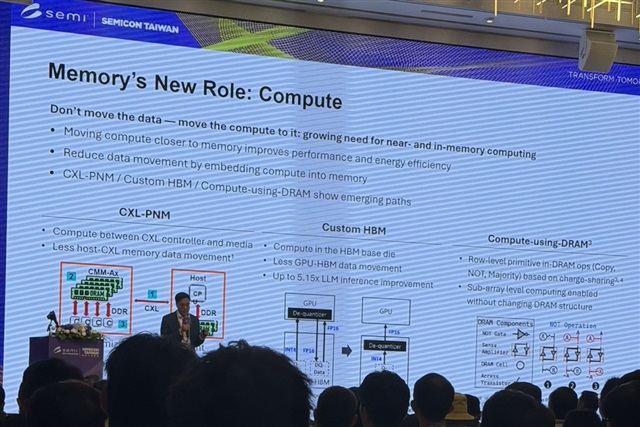
SK Hynix presented a custom HBM concept at SEMICON Taiwan 2026, where compute functions are placed in the base…
The U.S. Department of Defense announced on August 31 that it has deployed ChatGPT Mil, a customized version o…

Nvidia reported earnings that were both remarkable and boring, reflecting its focus on avoiding a consolidated…

Anthropic has agreed to a $35bn cloud-computing contract with Lambda, a Nvidia-backed cloud provider

The Supreme Court of Japan has included about ¥60 million in its fiscal 2027 budget request for AI-related exp…