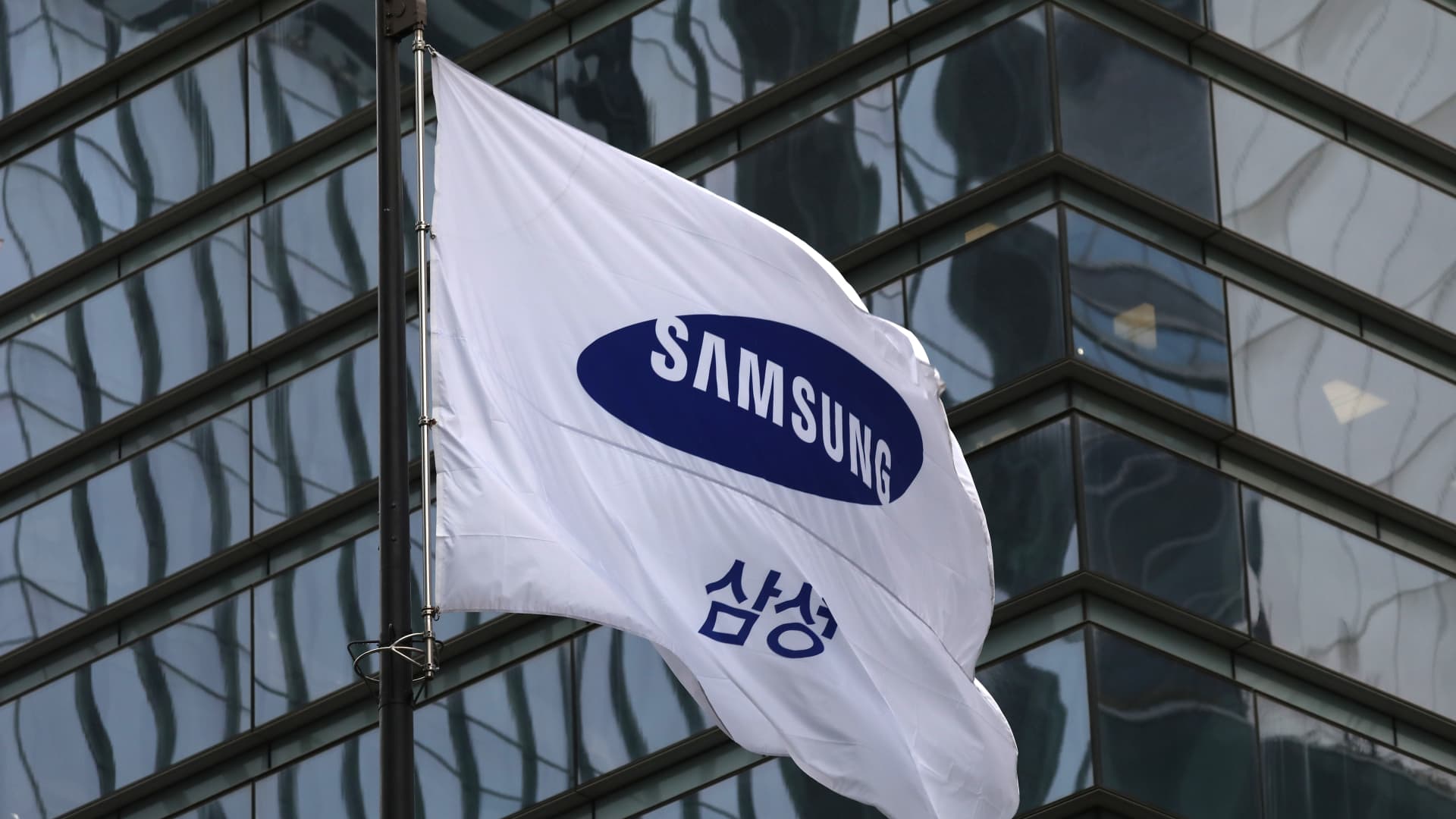
Samsung Electronics and Broadcom have announced a partnership expected to exceed $200 billion(約32兆円) through 2030, covering memory chips, contract manufacturing, and advanced packaging. The deal gives Broadcom access to Samsung's sub-2-nanometre process technology for next-generation communications chips and positions Samsung to compete more effectively with TSMC by securing long-term commitments from major AI chip designers as global tech companies increasingly develop custom AI accelerators.
Summaries like this, in your inbox every morning.
Sign up free →What happened
Samsung Electronics and Broadcom announced a partnership expected to exceed $200 billion(約32兆円) in value through 2030, covering memory chips, contract chip manufacturing, and advanced packaging. Broadcom's next-generation communications chips will be made using Samsung's sub-2-nanometre process technology, and the two will also collaborate on next-generation high-bandwidth memory (HBM) products.
Why it matters
Long-term production commitments from Broadcom, one of the world's leading custom AI chip designers, could boost utilization at Samsung's advanced manufacturing facilities and strengthen its foundry business as it competes with industry leader TSMC. The deal reflects the broader shift toward custom AI accelerators, driving demand for specialized chip design and manufacturing partnerships.
What to watch
Samsung's foundry ambitions hinge on winning major technology customers; the company said this year it expected to secure more advanced 2-nanometre foundry orders in the near term after discussions with major tech companies. Last year, Samsung won a $16.5 billion(約2.6兆円) contract to make logic chips for EV maker Tesla.
Samsung Electronics announced on Saturday a memorandum of understanding with Broadcom that is envisaged to exceed $200 billion(約32兆円) in value through 2030, spanning memory chips, contract chip making, and advanced packaging. The partnership pairs Broadcom's expertise in designing application-specific integrated circuits (ASICs)—chips optimized for specific tasks—with Samsung's state-of-the-art manufacturing capabilities. Under the deal, Broadcom's next-generation communications chips, which are designed for high-speed data transfer, will be manufactured using Samsung's sub-2-nanometre process technology. The two companies will also collaborate on next-generation high-bandwidth memory (HBM) products. Samsung described the expanded collaboration as reflecting "its focus on supporting customers with end-to-end semiconductor technologies across an increasingly diverse range of AI and high-performance computing applications." The partnership arrives as a strategic response to a broader industry trend: global technology companies are increasingly developing their own custom AI accelerators rather than relying solely on off-the-shelf graphics processors, a shift that is driving demand for specialized chip design and manufacturing partnerships. For Samsung, the deal could significantly strengthen its foundry business, the division that manufactures chips for other companies. Samsung competes with industry leader TSMC for these contracts, and securing long-term commitments from major customers like Broadcom helps boost utilization at Samsung's advanced facilities. Earlier this year, Samsung's co-CEO and chip division head Jun Young-hyun indicated the company's ambitions in this space by discussing next-generation foundry cooperation with Jensen Huang, Nvidia's chief executive, including future HBM4E and HBM5 memory products. Samsung also said it expected to secure more advanced 2-nanometre foundry orders in the near term following discussions with major tech companies. The company demonstrated its ability to land significant contracts last year when it won a $16.5 billion(約2.6兆円) deal to manufacture logic chips for EV maker Tesla, underscoring its position as a capable foundry partner for major technology customers.
Samsung's partnership with Broadcom reflects a structural shift in the semiconductor industry. Rather than relying on general-purpose graphics processors, global technology companies are increasingly developing custom AI accelerators tailored to specific workloads, creating new demand for specialized chip design and manufacturing. By securing long-term commitments from Broadcom—a world-class custom AI chip designer—Samsung gains both revenue certainty and proof points that it can serve the highest-tier customers in the AI ecosystem. This matters because Samsung's foundry business has historically trailed TSMC, and winning customers like Broadcom (and Tesla, which placed a $16.5 billion(約2.6兆円) order last year) is essential to bridging that gap. The deal also signals that Samsung's advanced manufacturing nodes (sub-2-nanometre and beyond) are now competitive enough to attract serious custom-chip work, not just commodity production.
AI-summarized, only the topics you pick — one digest a day via Email, Slack, or Discord.
Free · takes 30 seconds · unsubscribe anytime
No comments yet. Be the first to share your thoughts!
Log in to join the discussion




Get curated AI news from 200+ sources delivered daily to your inbox. Free to use.
Get Started FreeFree · takes 30 seconds · unsubscribe anytime
