Vertiv Holdings, a provider of power and cooling systems for data centers, is gaining recognition as AI infrastructure's next critical bottleneck.
The company reported 24% second-quarter sales growth and 60% adjusted earnings growth, with management raising its 2026 guidance, reflecting the intensifying demand for the power-management, thermal, liquid-cooling and integrated infrastructure equipment that every densifying AI data center must deploy.
As each new generation of AI chips increases rack-level power consumption and heat generation, Vertiv's broad, integrated suite of capabilities and established relationships with hyperscalers position it as a key enabler of the AI infrastructure buildout.
What happened
Vertiv Holdings Co. (NYSE: VRT), an Ohio-based provider of power-management, cooling and critical infrastructure equipment for data centers, has drawn fresh investor attention after second-quarter sales increased 24%, adjusted earnings soared 60%, and management raised its 2026 guidance.
Why it matters
As AI data centers densify and power consumption and heat generation rise with each generation of chips, power availability and thermal management are becoming the critical constraint on AI capacity deployment—not chip availability itself. Vertiv's integrated suite of power, cooling, liquid-cooling, monitoring and service capabilities across a data center's full lifecycle positions it uniquely to supply what hyperscalers cannot do without, and its established customer relationships and global execution capability create a durable competitive moat.
What to watch
Vertiv's stock remains volatile as investors weigh the timing and scale of hyperscaler capital spending; however, the company's operating performance—24% sales growth, 60% adjusted earnings growth, and raised 2026 guidance—continues to support the longer-term thesis that power and cooling infrastructure is becoming the binding constraint on AI buildout.
Ask the AI about this article →
The article frames Vertiv's opportunity within a structural shift in AI infrastructure constraints. While investors typically focus on chip availability and semiconductor supply, the author argues that as data centers deploy more accelerators, the binding constraint is shifting to power delivery, thermal management and cooling capacity. This thesis rests on a technical fact: each generation of AI computing increases rack-level power consumption and heat generation, and these requirements are becoming technically interdependent within high-density environments.
Vertiv's competitive position is built on breadth rather than a single component. The company combines power distribution, backup power, thermal management, liquid cooling, integrated modular systems, controls and lifecycle services—a combination difficult for competitors to replicate. Equally important are non-technical advantages: established relationships with hyperscalers and server manufacturers that give Vertiv a seat at the design table, a large installed base generating recurring maintenance and upgrade revenue, and global scale needed to execute multi-region projects. The article cites JPMorgan's assessment of a wide competitive moat, suggesting that these advantages are substantial and potentially sustainable over years.
The second-quarter results (24% sales growth, 60% adjusted earnings growth, and raised 2026 guidance) are presented as evidence that Vertiv's business is strengthening, not weakening, despite stock volatility. The article acknowledges that investor anxiety about the timing and scale of hyperscaler capital spending will likely persist, but distinguishes between share-price volatility and underlying operational strength.
For example, today's edition would include:
AI-summarized, only the topics you pick — one digest a day via Email, Slack, or Discord.
Free · takes 30 seconds · unsubscribe anytimeWhat is AIToday? →
Ask AI anything about this article. Q&As are published on this page for other readers too.
BHP, the world's largest mining company by market capitalization, has deployed AI across its operations
Team Liquid announced a new five-year extension of its long-running collaboration with Dell Technologies' Alie…
A University of Mississippi study published in Journal of Interactive Advertising found that AI ads succeed wh…

Goldman Sachs Research says AI supply and demand won't balance until the first half of 2028
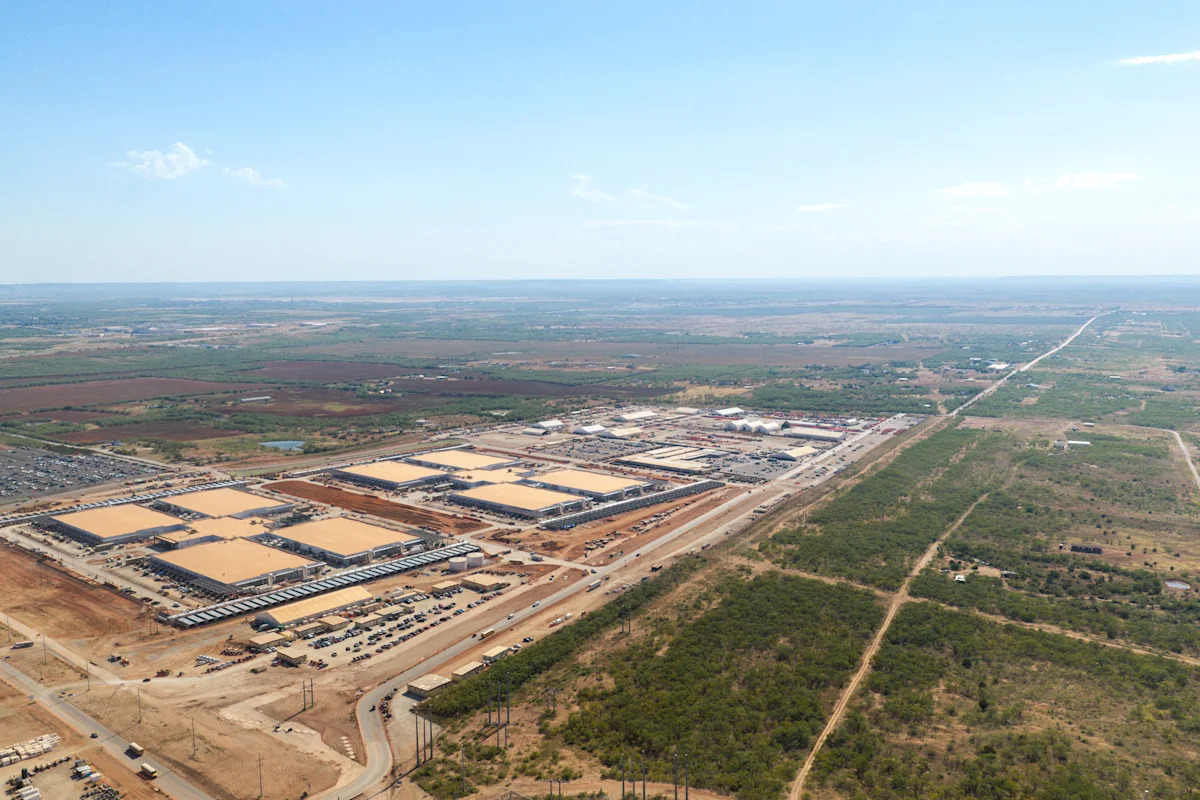
Lam Research broke ground yesterday on a new lab in Tualatin, Oregon

Visa, Mastercard, and Fiserv joined the Agentic Payments Alliance (APA), a 26-company coalition led by stablec…