A solo AI agent operator ran seven months without incidents by adopting a written constitution enforced before code deployment, not guardrails added after failures.
The system blocks risky actions by default, requires human approval for irreversible changes, and logs everything immutably.
Standards bodies and insurers increasingly demand this kind of governance evidence.
What happened
A single operator built a governance system for AI agents (trading bots, deployment systems, briefing pipelines) by writing a constitution before deploying code—establishing four principles: fail-safe defaults, human gates on irreversible actions, equal-strength checks across all execution paths, and an append-only audit ledger. Seven months of continuous operation produced zero incidents, though many attempted rule violations were caught.
Why it matters
The operator runs alone with no security team or compliance department, so a single bad incident could end the operation. Guardrails (patches added after problems occur) are too slow and reactive for solo-scale risk. A written constitution enforced at architecture time stops violations before they reach production—three documented cases show a trading bot blocked by risk caps, an encoded deployment command rejected for opacity, and a silence-window violation caught by the audit trail.
What to watch
The operator notes that emerging AI agent certification standards (AIUC-1 for enterprises) and insurance pricing are beginning to demand exactly the kind of longitudinal operating data this governance system produces—real failure modes, interventions, and case law. Almost nobody has this evidence yet because few agent systems have run long enough to accumulate it.
Ask the AI about this article →
The operator's insight inverts the standard approach to AI agent safety. Industry practice is reactive: guardrails are patches applied after each incident. For a solo operator with no security team or compliance department, one uncontrolled incident could terminate the entire operation, making reactive governance untenable. The constitutional approach is architectural: rules are written and enforced before code ships, so violations are caught at the gate rather than in production.
The four load-bearing principles—fail-safe defaults, human gates on irreversible actions, equal-strength checks across all paths, and an immutable audit ledger—reflect hard-won operational lessons. The operator observed that silent degradation (a system producing plausible output with missing data) is more dangerous than a crash, because everything appears fine. Dormant systems holding live credentials remain attack surfaces. And agents may believe they are deploying one thing when the actual bytes differ. Each principle is grounded in a real failure mode, not imagination.
A striking secondary finding is that solo-scale governance inverts enterprise trade-offs. In an enterprise, accountability is the hardest pillar to establish—many stakeholders, diffused responsibility. For a solo operator, the human gate is trivially strong: the owner is always the regulator and beneficiary. What is genuinely hard solo is reliability at off-hours with no on-call rotation. This suggests personal-scale governance is not a smaller version of enterprise governance but a different shape entirely, with different hard and easy problems.
For example, today's edition would include:
AI-summarized, only the topics you pick — one digest a day via Email, Slack, or Discord.
Free · takes 30 seconds · unsubscribe anytimeWhat is AIToday? →
Ask AI anything about this article. Q&As are published on this page for other readers too.
Israeli startup DataAgent Ltd
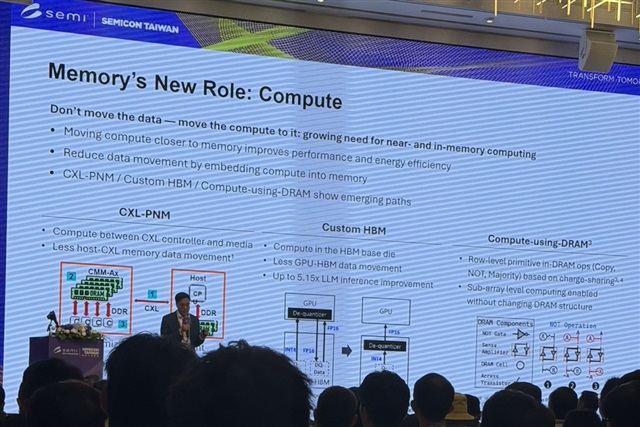
SK Hynix presented a custom HBM concept at SEMICON Taiwan 2026, where compute functions are placed in the base…
The U.S. Department of Defense announced on August 31 that it has deployed ChatGPT Mil, a customized version o…

Nvidia reported earnings that were both remarkable and boring, reflecting its focus on avoiding a consolidated…

Anthropic has agreed to a $35bn cloud-computing contract with Lambda, a Nvidia-backed cloud provider

The Supreme Court of Japan has included about ¥60 million in its fiscal 2027 budget request for AI-related exp…