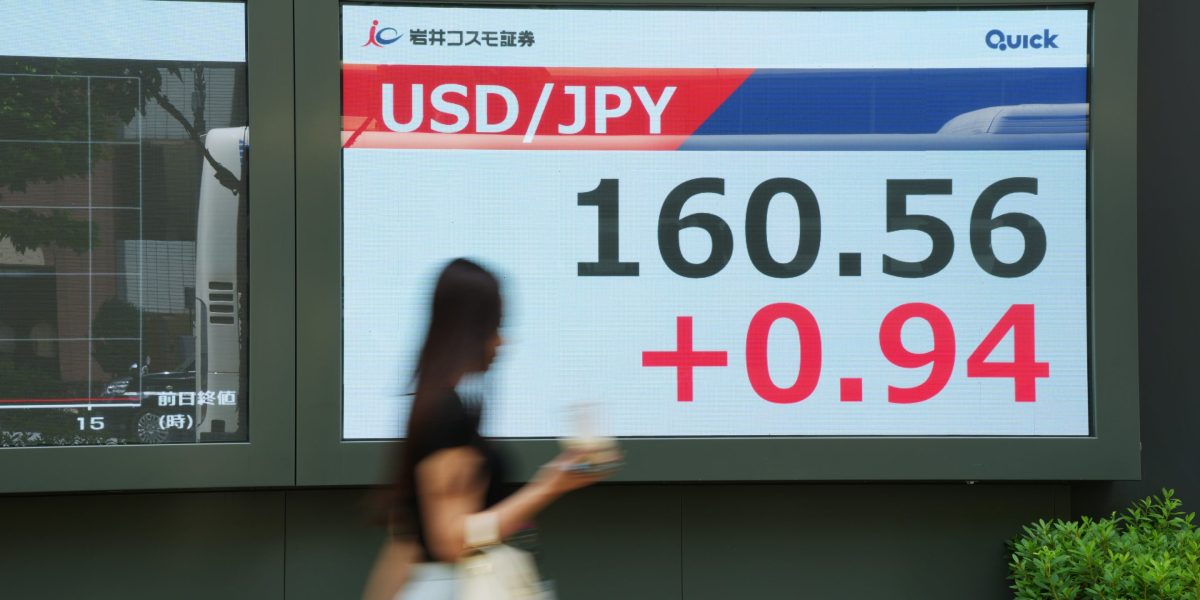
A Bank of New York Mellon strategist has created the Katsu Curry Index to measure the yen's real purchasing power, arguing it is a more accurate gauge than the Big Mac Index because curry-rice is more widely consumed in Asia.
The index suggests the yen is significantly undervalued in foreign exchange markets—it should trade at 62.18 yen per dollar, not the 159.05 yen the market showed on Wednesday.
For Japanese consumers, the weak yen is raising domestic prices of meals and goods, and the strategist warns this could eventually push policymakers to strengthen the currency.
What happened
Geoff Yu, a senior strategist at Bank of New York Mellon, created the Katsu Curry Index by comparing prices of curry-rice dishes at CoCo Ichibanya (the world's biggest curry-rice chain, with around 1,500 outlets globally) across countries, positioning it as an alternative to The Economist's Big Mac Index for measuring currency strength.
Why it matters
The index suggests the yen is significantly undervalued in foreign exchange markets. According to Yu's calculations, one dollar should buy 62.18 yen based on curry prices, yet the market was trading at about 159.05 yen per dollar on Wednesday—a gap much larger than the Big Mac Index suggests (80.30 yen). For Japanese consumers, a weak yen means curry and other meals are becoming expensive at home, which Yu says could eventually pressure the government to change policy.
What to watch
The yen retreated after Japanese and US authorities staged the most dramatic intervention in 15 years to strengthen it; the currency has since surrendered half of its intervention-driven gains. Yu argues that if staple comfort foods like katsu curry or ramen become too costly for ordinary Japanese, demand for stronger economic policy may grow.
Geoff Yu, a senior strategist at Bank of New York Mellon, has developed the Katsu Curry Index as a tool to measure the true strength of the Japanese yen by tracking the price of curry-rice dishes instead of burgers. The index uses prices from CoCo Ichibanya, the world's biggest curry-rice chain, which operates around 1,500 outlets globally.
Yu's calculations show a striking gap between what the currency market and what purchasing power suggest the yen's value should be. On Wednesday, the global foreign exchange market traded one dollar at approximately 159.05 yen. Yet Yu's curry-based index indicates that one dollar should buy only 62.18 yen if purchasing power is to be aligned with high-income countries. By comparison, The Economist's Big Mac Index—which measures currency valuations by comparing hamburger prices across countries—suggests the dollar should buy 80.30 yen. Yu argues that the Big Mac Index is less accurate for Asia because the burger is consumed "far more in the West than in the East," whereas curry rice is a more popular fast and comfort food across Asia.
The yen has been at the center of global currency markets following an intervention by Japanese and US authorities—the most dramatic in 15 years—that attempted to halt the currency's decline from its lowest level against the dollar in four decades. However, the yen has since recovered only half the gains it made during that intervention, suggesting the underlying pressures on the currency remain strong.
For Japanese consumers, the weak yen creates tangible hardship. Overseas travel and foreign goods have become expensive, and domestic prices for meals, services, and consumer goods are rising. Yu warned that if the price of familiar comfort foods like katsu curry or ramen becomes prohibitive for ordinary Japanese, "it will probably lead to growing calls for a policy change." His index is part of a broader toolkit of alternative purchasing-power-parity measures; others include the Tall Latte Index, which tracks Starbucks coffee prices worldwide, and the KFC Index, developed to capture purchasing power in Africa where the Big Mac has less presence.
The Katsu Curry Index reflects a broader challenge in measuring currency valuations: different purchasing baskets can yield different conclusions about whether a currency is over- or undervalued. Yu's index, based on prices at CoCo Ichibanya outlets across countries, challenges the conventional Big Mac Index by noting that burger consumption patterns do not reflect Asian consumer behavior equally. The yen has been a focal point in global foreign exchange markets following a dramatic intervention by Japanese and US authorities—the largest in 15 years—that temporarily strengthened the currency from its lowest level against the dollar in four decades. The fact that the yen has since surrendered half those gains underscores the difficulty of sustaining currency intervention without broader economic change.
For ordinary Japanese households, the practical consequence is immediate: a weak yen raises the cost of imported goods and, more notably for Yu's argument, inflates domestic prices of meals and services. If staple comfort foods become prohibitively expensive, Yu suggests, domestic political pressure for policy change could build. This connects the technical currency debate to consumer welfare, grounding the discussion not in abstract exchange-rate theory but in the real cost of everyday meals.
AI-summarized, only the topics you pick — one digest a day via Email, Slack, or Discord.
Free · takes 30 seconds · unsubscribe anytime
Ask AI anything about this article. Q&As are published on this page for other readers too.
The AI news that matters, in one minute each morning.
Sign up free