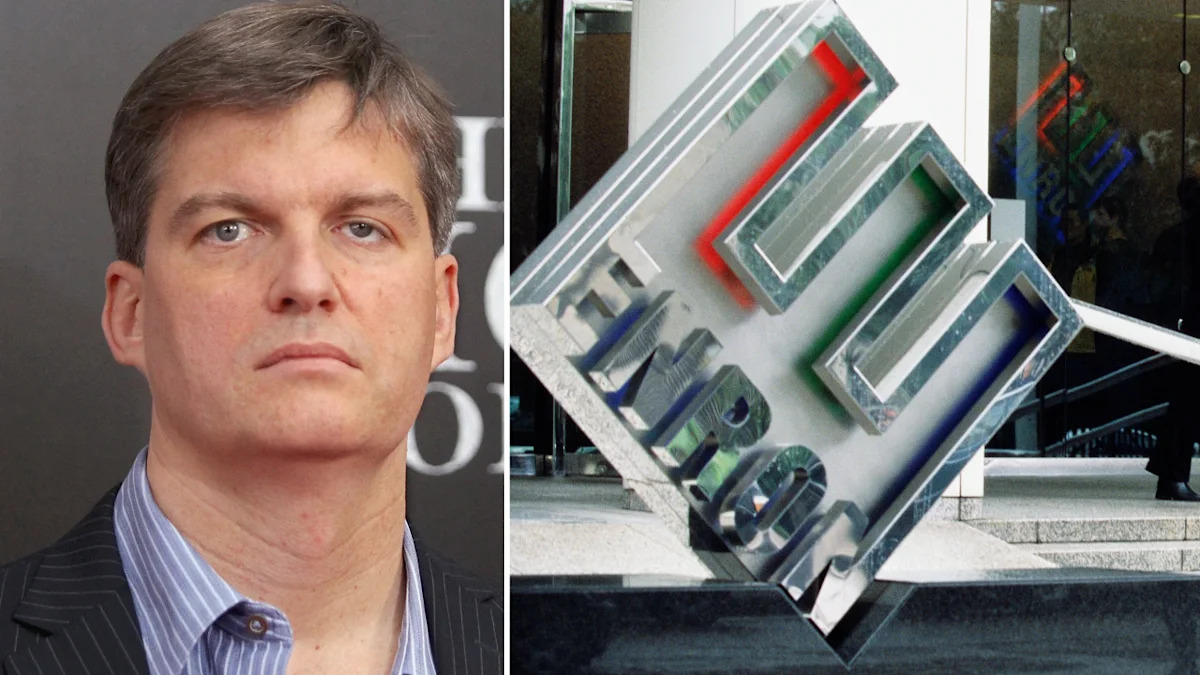
Michael Burry, the investor who predicted the 2008 crash, warns that Nvidia's $500 billion funding deal mirrors Enron's deceptive practices.
He says the arrangement with six major Wall Street firms creates circular financing that inflates sales and hides true demand.
Nvidia's credit risk has spiked amid these concerns.
What happened
Michael Burry, who predicted the 2008 housing crash, posted on Substack that Nvidia's $500 billion funding deal involves "circular" financing through six Wall Street firms (Apollo, BlackRock, Blackstone, Brookfield, Goldman Sachs, and KKR). Burry characterizes the announcement as a public relations stunt with "shades of Enron" rather than a solid investment.
Why it matters
Burry argues the deal creates a "financing feedback loop" that can artificially inflate sales and mask true market demand—echoing the opaque financial structures Enron used in the late 1990s and early 2000s to hide billions in debt before its 2001 collapse. Bloomberg has previously reported on the dangers of circular financing as capital circulates among America's largest companies.
What to watch
Nvidia's five-year credit default swap (CDS) spread—a measure of credit risk—has spiked over concerns about AI infrastructure buildout costs and the threat of circular financing. Burry deregistered his hedge fund, Scion Asset Management, in 2025 and now publishes market analysis on Substack while betting against multiple companies beyond Nvidia.
Ask the AI about this article →
Michael Burry's criticism comes as concerns about circular financing in the AI sector have drawn broader scrutiny. Bloomberg has previously reported on the practice, in which large capital flows circulate among a small group of America's top companies, creating potential risks. Burry's specific concern is that Nvidia's $500 billion announcement may be designed to manage perception rather than represent a genuine underlying market demand for AI infrastructure.
Burry's comparison to Enron is not an accusation of identical deceptive practices, but rather a warning about the structural mechanics: the use of complex financial arrangements to create an appearance of momentum and value. The timing of his warnings is notable given that Nvidia's five-year credit default swap spread—the market's price for insuring against the company's default—has risen amid concerns about the sustainability of AI infrastructure spending and the risks posed by circular financing itself.
For example, today's edition would include:
AI-summarized, only the topics you pick — one digest a day via Email, Slack, or Discord.
Free · takes 30 seconds · unsubscribe anytimeWhat is AIToday? →
Ask AI anything about this article. Q&As are published on this page for other readers too.
Israeli startup DataAgent Ltd
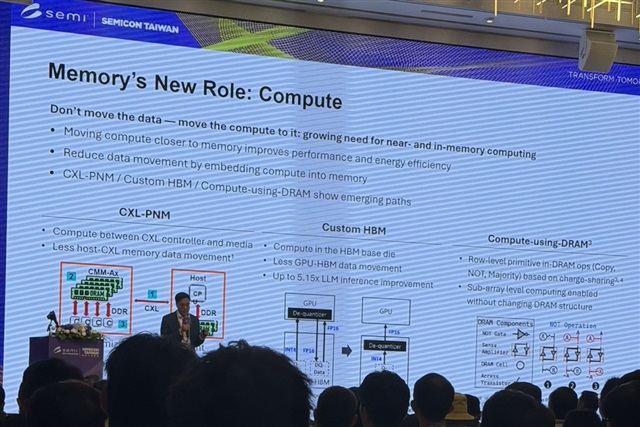
SK Hynix presented a custom HBM concept at SEMICON Taiwan 2026, where compute functions are placed in the base…
Taoyuan is positioning itself as a northern hub for AI data centers (AIDC), citing the Tatan area and an LNG c…
The U.S. Department of Defense announced on August 31 that it has deployed ChatGPT Mil, a customized version o…

Nvidia reported earnings that were both remarkable and boring, reflecting its focus on avoiding a consolidated…

Anthropic has agreed to a $35bn cloud-computing contract with Lambda, a Nvidia-backed cloud provider