What happened
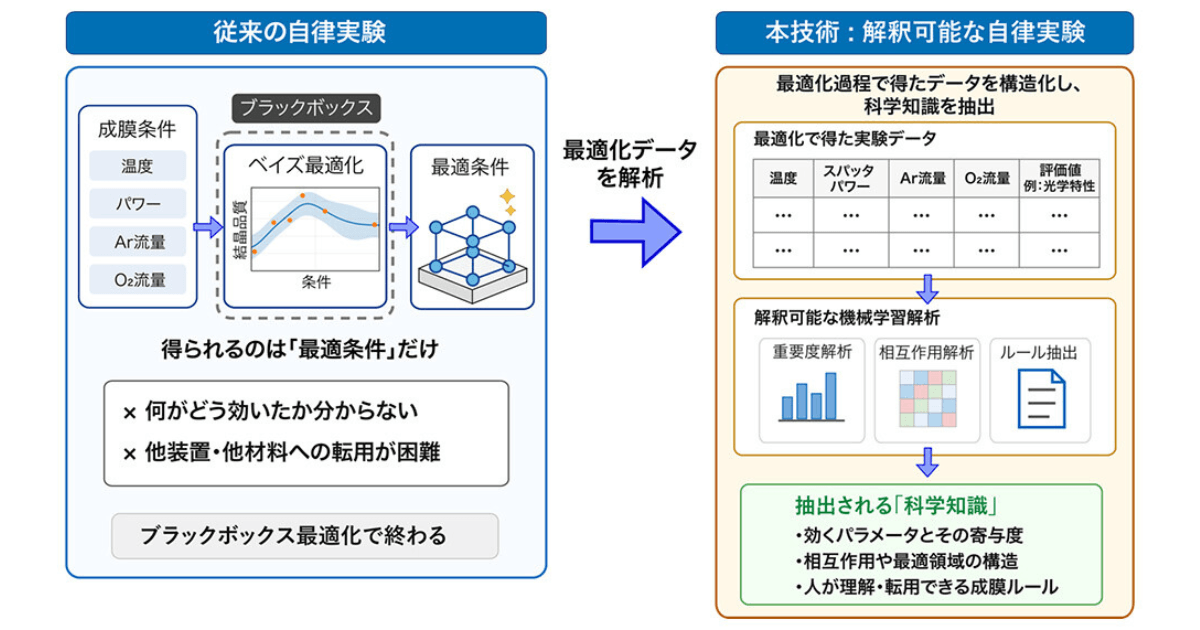
NTT demonstrated interpretable autonomous film formation, where AI and robots automate the cycle from deposition to evaluation to next condition selection, speeding it up about 3x versus human-run experiments.
Why it matters
It achieved a world first — a single-crystal β-Ga₂O₃ thin film made by sputtering — and turns black-box AI optimization data into rules humans can understand and apply to other equipment and materials.
What to watch
The outcome hinges on whether these rules transfer to complex materials like semiconductors and quantum materials, as NTT expects. NTT plans to add multi-objective optimization and AI models that incorporate material knowledge.
WHO IT HITSMaterials scientists and process engineers developing semiconductors, oxide materials, and quantum materials may benefit from faster condition exploration and reusable knowledge. They may no longer need to treat AI optimization as a black box.
Ask the AI about this article →
Summaries like this, in your inbox every morning.
NTT's demonstration addresses a known bottleneck in materials development: process conditions like temperature and gas flow affect film quality in complex ways, so finding the right settings is slow. Traditional AI accelerated the search but hid its reasoning. By pairing Bayesian optimization with automated sputtering and optical evaluation, NTT closed the loop without human intervention. Then, using random forest analysis on the gathered data, it extracted which parameters matter and how they interact.
The reported threefold speedup in the experiment cycle and the world-first single-crystal β-Ga₂O₃ film by sputtering are concrete results from this pipeline. β-Ga₂O₃ is positioned as a next-generation power semiconductor material, so the process advance may support its practical use. The company frames this as groundwork for AI-driven laboratories that turn autonomous experiments into scientific knowledge.
Looking ahead, the value of this approach will likely depend on whether the extracted rules transfer from one machine or material to another, which is the stated goal. NTT says it will pursue optimization with multiple evaluation metrics and AI models that incorporate material and process knowledge. Whether that leads to faster commercialization of high-performance power semiconductors remains to be seen, but the underlying logic is that interpretable rules accelerate development beyond what black-box optimization alone can achieve.
For example, today's edition would include:
AI-summarized, only the topics you pick — one digest a day via Email, Slack, or Discord.
Free · 30 seconds with Google · unsubscribe anytimeWhat is AIToday? →
Ask AI anything about this article. Q&As are published on this page for other readers too.
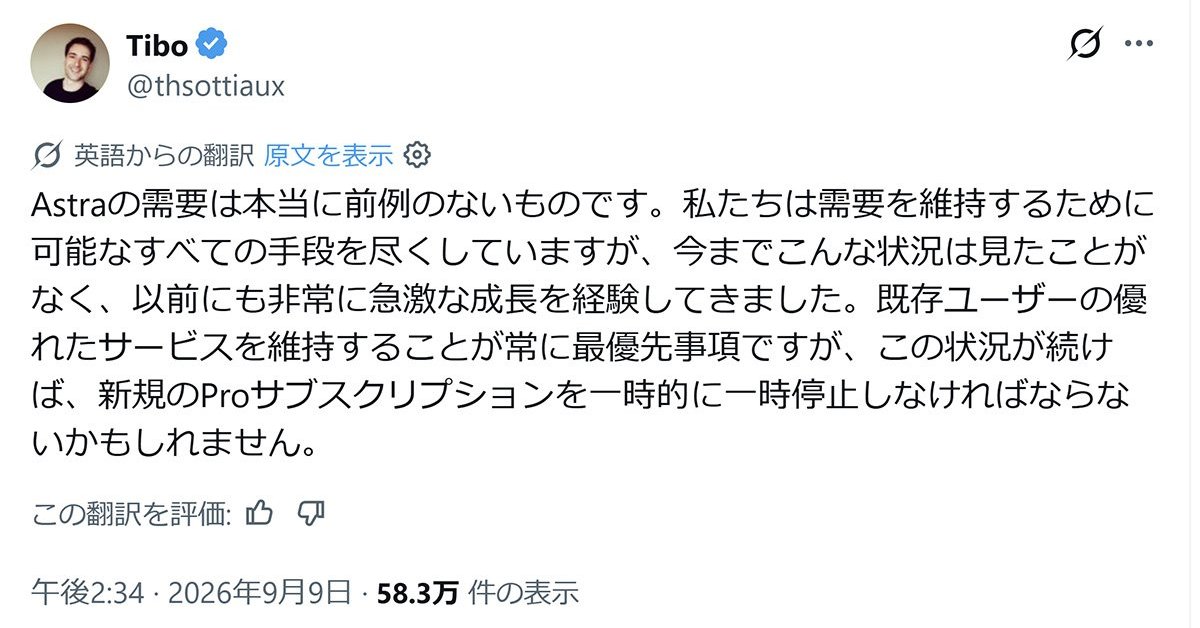
OpenAI product lead Tibo said on September 9 that surging demand for GPT-6 Astra may force a temporary halt on…
Stratechery says OpenAI solved one of the most famous math problems, calling it extremely impressive but of li…

Conveo, a two-year-old Belgian startup, raised $50 million in a Series A from DST Global, Balderton Capital, V…

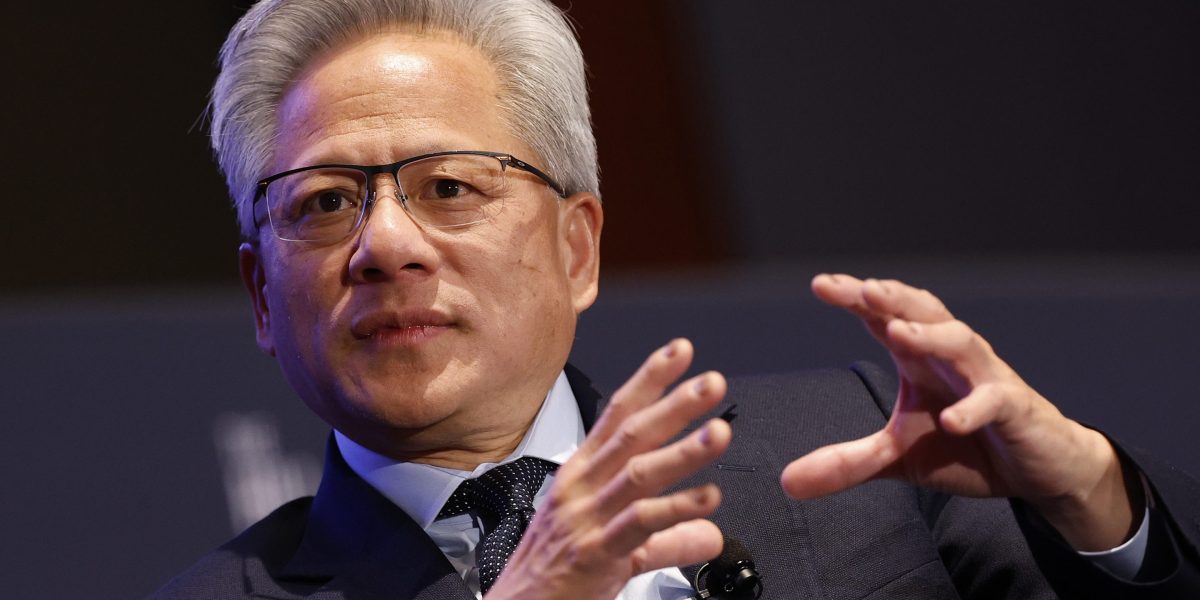
Jensen Huang declared AGI has arrived with OpenAI's Astra, trained on 100,000 Grace Blackwell chips
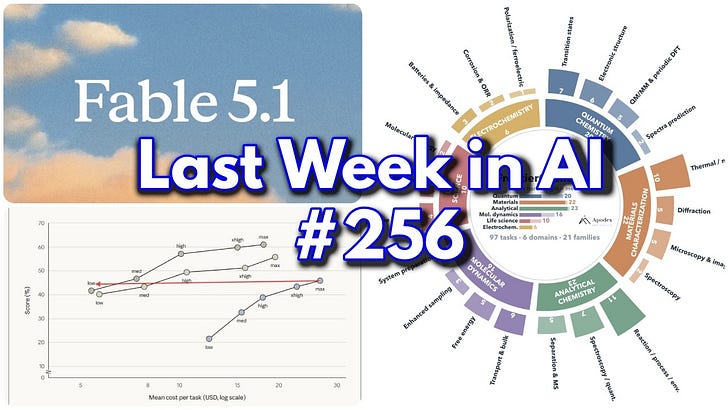
Anthropic released Claude Fable 5.1 and Mythos 5.1 with lower pricing and stronger agentic performance, claimi…
Jacob Kochson, 27, announced on X on September 8 that he left Anthropic, where he worked on pretraining for th…